Platform Updates
Platform Updates
Platform Updates
7
7
7
min
min
min
Dominic Valerio
Dominic Valerio
80 Features in 9 Months: How We Build at Vekta
80 Features in 9 Months: How We Build at Vekta
Between 1 January and 4 August 2026, we shipped 80 new features.
63 improvements and fixes came with them, across 23 published releases. The average gap between releases was 9 days. The shortest was 2.
That work was not scheduled a year in advance. Much of it came from coaches, athletes and WorldTour teams asking for capability their existing tools could not give them, and it reached the platform in weeks rather than years.
That is the difference between leading a category and following one. This is how we do it.
The category was built for a different era
TrainingPeaks launched in 1999. It did not enter this category. It created it. Structured planning, the coach and athlete relationship expressed in software, the idea that a training file was worth analysing at all.
Its changelog is public, and its help centre points users there as the record of what it ships. The most recent entry covers August 2025.
Read the 8 months up to that point and a pattern emerges. The log lists 192 updates to the web platform. In the company's own descriptions, 34 are bug fixes. 43 are internal maintenance, filed as behind the scenes upgrades, performance work, or removal of old code. Another 33 are preparation for features that had not yet arrived. Around eight introduced something a coach or athlete could open and use.
57% of eight months of published work reached nobody on the day it shipped. On mobile the shape repeats. Roughly twenty-five app releases, about five carrying anything new.
Some of that is unavoidable. 25 years of accumulated surface area consumes engineering time whether a company wants it to or not.
But their workforce is not small. Around 120 employees sit across TrainingPeaks and TrainHeroic, a number made public when Garmin acquired both in July 2026. 8 months of weekly releases, and roughly 8 things a coach or athlete could open.
The work goes in. The user never sees it.
The sport moved faster than the software built for it. That gap is not an opportunity we spotted. It is the reason we started Vekta.
Paul-Antoine Girard, Co-founder and CEO of Vekta
Nine months of releases, in full
Our changelog is public. What follows is the whole of 2026 to date, taken from that record and grouped by month.
Month | Releases | New features | Improvements and fixes |
|---|---|---|---|
January | 3 | 14 | 12 |
February | 4 | 16 | 8 |
March | 4 | 17 | 9 |
April | 2 | 4 | 4 |
May | 3 | 10 | 10 |
June | 2 | 4 | 3 |
July | 4 | 11 | 17 |
August | 1 | 4 | 0 |
Total | 23 | 80 | 63 |
17 of the 23 releases introduced something new rather than refining what existed. The longest gap between them was 25 days, in April. The shortest was 2, at the end of May.
Read that log the same way as the one in the previous section and the shape inverts. Of 143 published items, 80 are new capability a coach or athlete can open and use. The remaining 63 are improvements and fixes to things already in front of them.
56% of 9 months of our published work was new capability. The comparable figure from the log above is 4%.
The log is also a floor rather than a total. At Vekta we aim to release weekly and announce every fortnight, which means the changelog records the announcement cycle rather than the deployment cycle. More ships than appears there.
Volume on its own proves very little. Any team can ship quickly for a quarter by keeping the work small, and any team can post a long changelog by counting generously.
What matters is whether the rate holds, and whether what arrives is worth the arrival. Both come down to the same thing, and it is not effort. It is architecture.
One model, not a hundred features
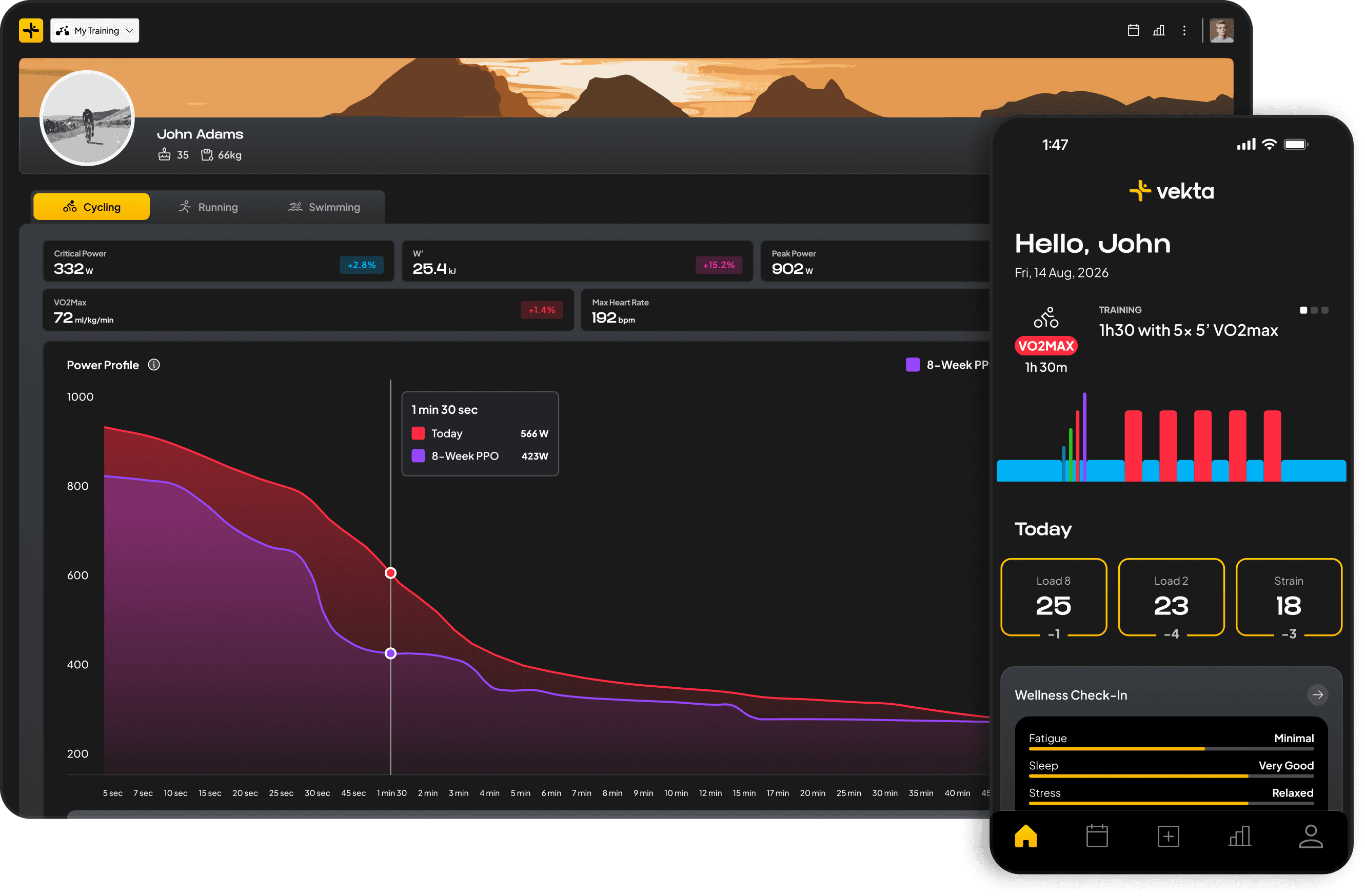
Vekta runs on a single physiological model. Critical Power, W′, D′, Pmax, Vekta Volume and Vekta Intensity are not numbers rendered on separate screens for separate purposes. They are shared state, and every feature in the platform reads from them and writes back to them.
Most training software is not built this way, and for understandable reasons. Features are added as self-contained units, each with its own logic, each maintained on its own. It works, and it scales for a long time. The cost only arrives later, when a new metric or a new discipline means opening every one of them.
Ours inverts that. Extending the model reaches everything at once.
Running is the proof. When we extended the model to running in July, it did not produce a running feature. Critical Power and critical speed began computing automatically, and D′, W′, zone generation, peak profiles and the Performance view in Insights all arrived with it. We built none of those individually. They were already there, waiting for the model to reach them.
The same compounding runs across years, not just months. Vekta Volume and Vekta Intensity shipped in 2025 as training load metrics. In 2026 they became a component of an automated carbohydrate prescription. We rebuilt nothing to make that possible, because the fuelling logic reads the same model that already knew the athlete's physiology and the demands of the session in front of them.
Every feature has to earn a place inside the performance model. If the only thing it can do is sit next to the model, we do not ship it.
Paul-Antoine Girard, Co-founder and CEO of Vekta
This is what building for the future means in practice, and it is the part that matters most to anyone choosing a platform now. Performance science is not finished. Durability, real-time physiological state, fuelling, heat, multi-discipline load: all of it is still moving. A platform of independent features has to be rebuilt each time the science moves. A platform with one model absorbs it.
A coach choosing software today is not choosing what is on the screen this morning. They are choosing what it will be capable of in three years.
The build cycle does not stop and restart
In January 2026, somebody told us a dialog close button was in the wrong place. We moved it. In February, somebody said the colours on the stream graphs were hard to read. We changed the palette.
None of those are features. Both are in our public changelog, described exactly that way, credited to the feedback that prompted them.
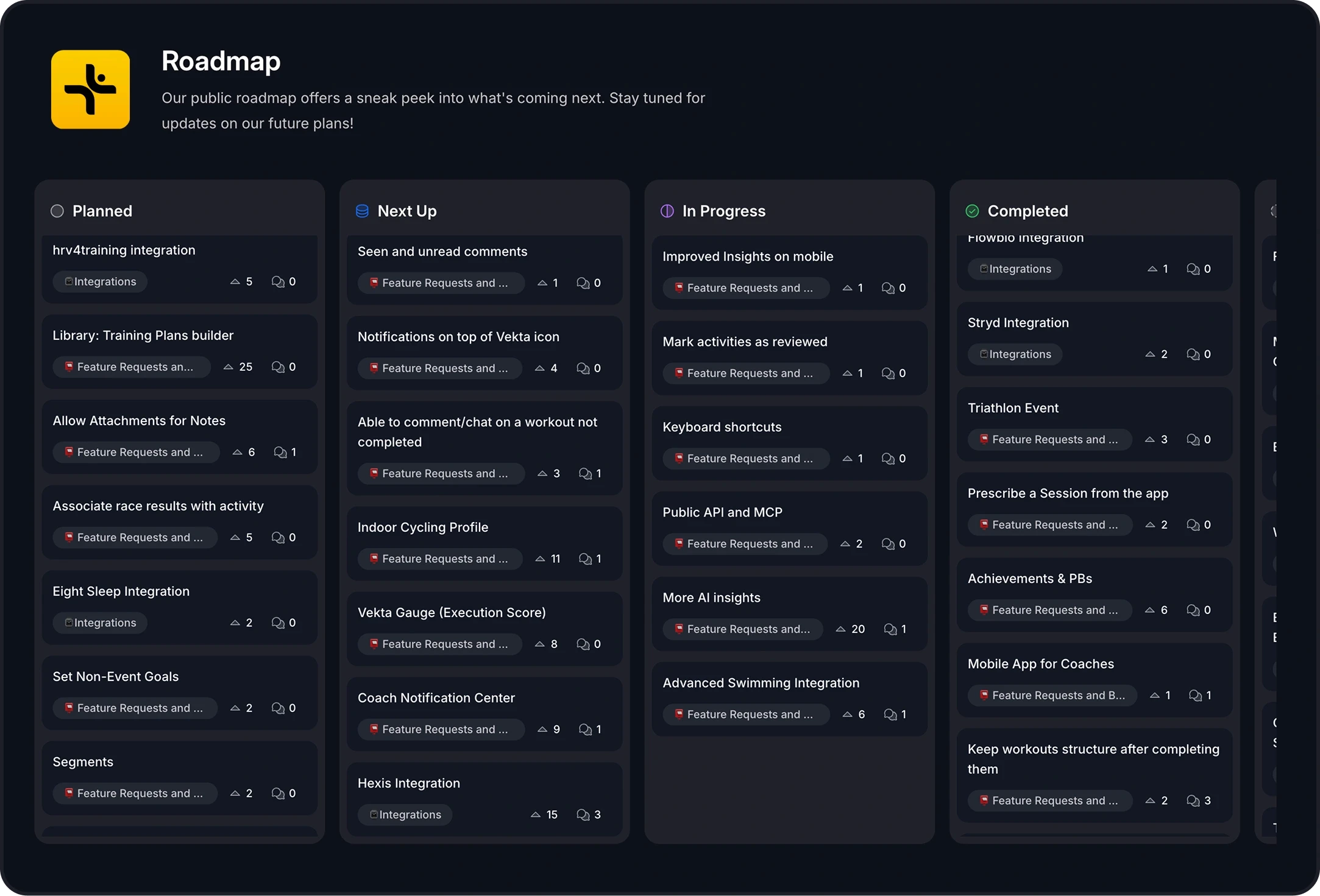
That is what a nine-day cycle means to the person on the other end of it. Feedback reaches us through product calls, sessions with WorldTour performance staff, conversations with coaches, and our Athlete Advisory Board. We triage it into a production roadmap rather than collect it in a backlog and revisit it next quarter. We test features internally, then externally with partner coaches and teams, then release them.
The cycle overlaps rather than resets. Our next set of features is already in development when the current set ships, which is why there is no release window to wait for and no quiet month in the table above.
We also publish the corrections. We replaced the sixteen-week performance profile window with an eight-week window in June, then again across mobile in July, because the shorter window turned out to be more useful in practice. That entry is a reversal of an earlier decision, and it sits in the log alongside everything else. A platform that only publishes its wins is not running a feedback loop. It is running a marketing channel.
10 of us sustain all of this, a figure that includes commercial, operations and marketing. We build with the same technologies we build into the product, using AI and large-scale data processing internally to compress work that would otherwise need a far larger team.
That is not a recent adjustment. Vekta was founded out of machine learning and data science rather than out of endurance software. We did not pick these tools up to keep pace with the industry. They are where we came from.
The teams are part of the research
Our feedback loop is not a support inbox. It runs through the performance departments of the teams using the platform at the highest level of the sport.
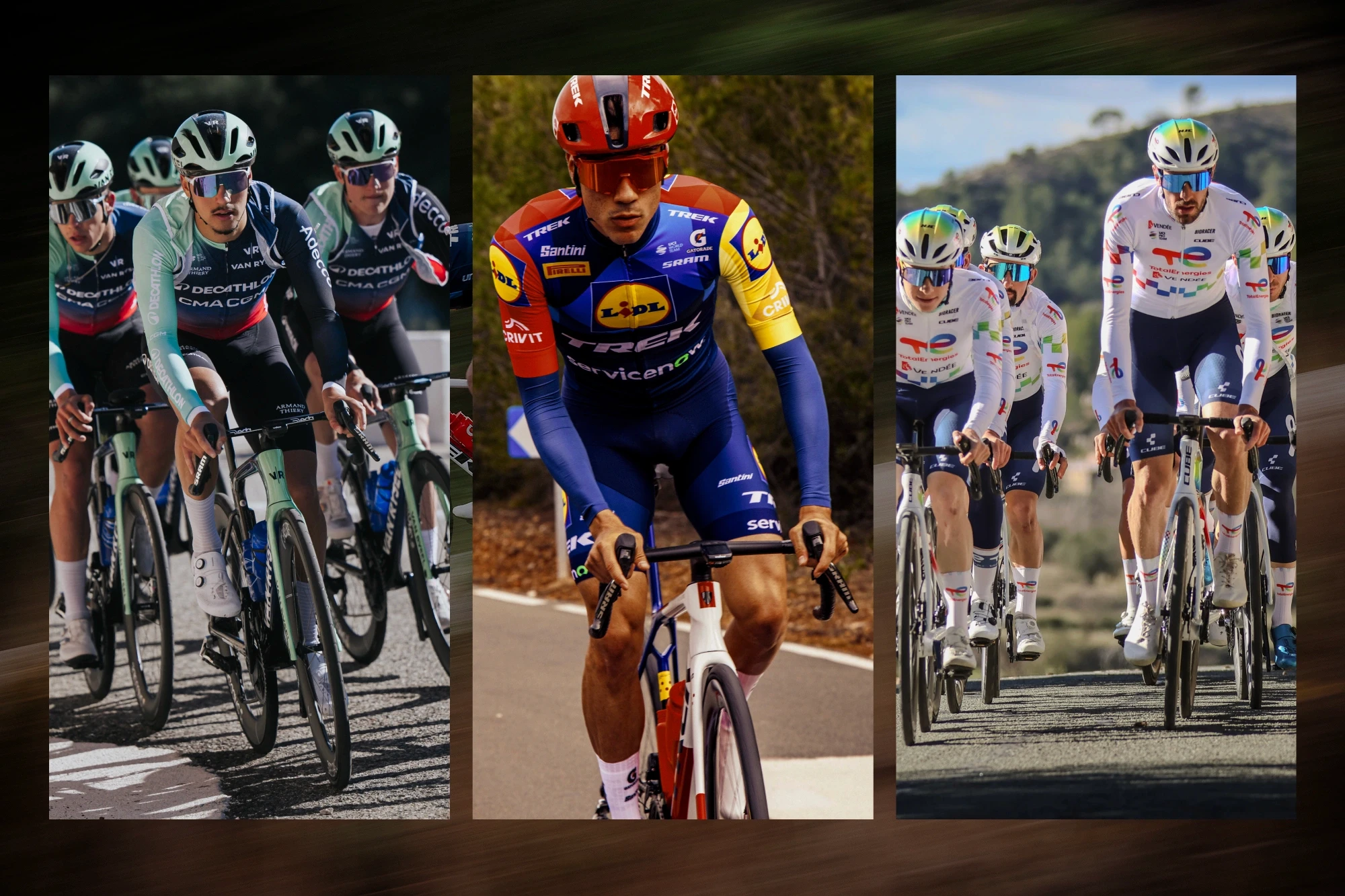
Vekta partners with Lidl-Trek, Team Jayco AlUla, Liv AlUla Jayco, Decathlon CMA CGM, TotalEnergies, FDJ-Suez and Team AMANI.
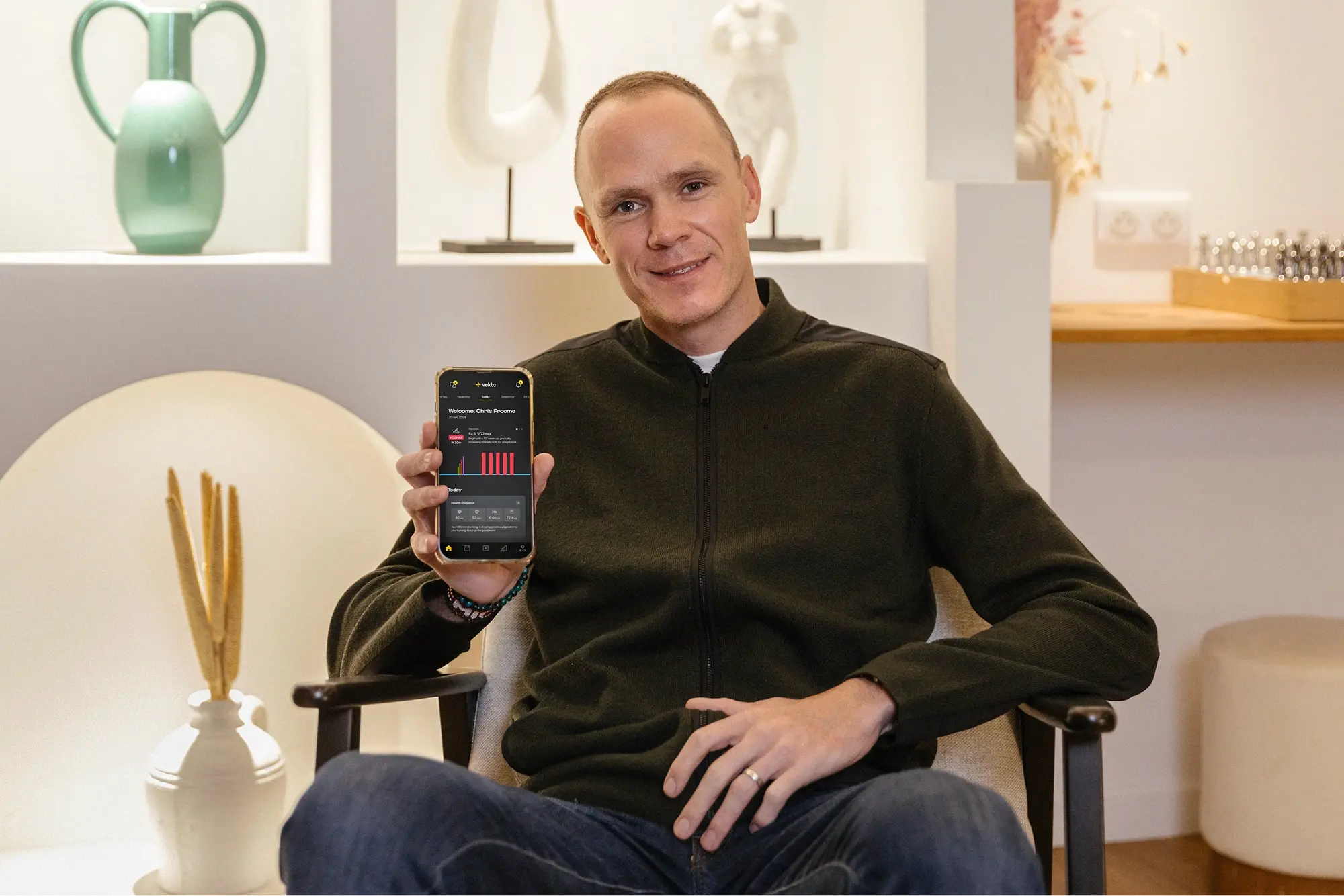
Chris Froome joined us as Chief Innovation Officer and chairs our Athlete Advisory Board. Eddie Dunbar and Valentin Madouas are founding members of that board, and all three are investors in the company.
Those relationships are not endorsements. They are inputs. Performance directors managing thirty riders across a nine-month calendar ask us harder questions than any internal roadmap session produces. They are competing for wins in the hardest races and the most demanding environments in the sport, and they meet the problems first. The answers reach every coach and athlete on the platform in the same release.
That is the engine. It is also why the record above is not a nine-month achievement we intend to repeat. It is a description of how we operate.
We cannot control what happens to the rest of this market. We can control whether an athlete who joins this month sees something new before their trial ends. That is the commitment.
Paul-Antoine Girard, Co-founder and CEO of Vekta
Our changelog is public and we are already building the next entry.
Explore our changelog or start your 14-day free trial.
Related reading
Between 1 January and 4 August 2026, we shipped 80 new features.
63 improvements and fixes came with them, across 23 published releases. The average gap between releases was 9 days. The shortest was 2.
That work was not scheduled a year in advance. Much of it came from coaches, athletes and WorldTour teams asking for capability their existing tools could not give them, and it reached the platform in weeks rather than years.
That is the difference between leading a category and following one. This is how we do it.
The category was built for a different era
TrainingPeaks launched in 1999. It did not enter this category. It created it. Structured planning, the coach and athlete relationship expressed in software, the idea that a training file was worth analysing at all.
Its changelog is public, and its help centre points users there as the record of what it ships. The most recent entry covers August 2025.
Read the 8 months up to that point and a pattern emerges. The log lists 192 updates to the web platform. In the company's own descriptions, 34 are bug fixes. 43 are internal maintenance, filed as behind the scenes upgrades, performance work, or removal of old code. Another 33 are preparation for features that had not yet arrived. Around eight introduced something a coach or athlete could open and use.
57% of eight months of published work reached nobody on the day it shipped. On mobile the shape repeats. Roughly twenty-five app releases, about five carrying anything new.
Some of that is unavoidable. 25 years of accumulated surface area consumes engineering time whether a company wants it to or not.
But their workforce is not small. Around 120 employees sit across TrainingPeaks and TrainHeroic, a number made public when Garmin acquired both in July 2026. 8 months of weekly releases, and roughly 8 things a coach or athlete could open.
The work goes in. The user never sees it.
The sport moved faster than the software built for it. That gap is not an opportunity we spotted. It is the reason we started Vekta.
Paul-Antoine Girard, Co-founder and CEO of Vekta
Nine months of releases, in full
Our changelog is public. What follows is the whole of 2026 to date, taken from that record and grouped by month.
Month | Releases | New features | Improvements and fixes |
|---|---|---|---|
January | 3 | 14 | 12 |
February | 4 | 16 | 8 |
March | 4 | 17 | 9 |
April | 2 | 4 | 4 |
May | 3 | 10 | 10 |
June | 2 | 4 | 3 |
July | 4 | 11 | 17 |
August | 1 | 4 | 0 |
Total | 23 | 80 | 63 |
17 of the 23 releases introduced something new rather than refining what existed. The longest gap between them was 25 days, in April. The shortest was 2, at the end of May.
Read that log the same way as the one in the previous section and the shape inverts. Of 143 published items, 80 are new capability a coach or athlete can open and use. The remaining 63 are improvements and fixes to things already in front of them.
56% of 9 months of our published work was new capability. The comparable figure from the log above is 4%.
The log is also a floor rather than a total. At Vekta we aim to release weekly and announce every fortnight, which means the changelog records the announcement cycle rather than the deployment cycle. More ships than appears there.
Volume on its own proves very little. Any team can ship quickly for a quarter by keeping the work small, and any team can post a long changelog by counting generously.
What matters is whether the rate holds, and whether what arrives is worth the arrival. Both come down to the same thing, and it is not effort. It is architecture.
One model, not a hundred features
Vekta runs on a single physiological model. Critical Power, W′, D′, Pmax, Vekta Volume and Vekta Intensity are not numbers rendered on separate screens for separate purposes. They are shared state, and every feature in the platform reads from them and writes back to them.
Most training software is not built this way, and for understandable reasons. Features are added as self-contained units, each with its own logic, each maintained on its own. It works, and it scales for a long time. The cost only arrives later, when a new metric or a new discipline means opening every one of them.
Ours inverts that. Extending the model reaches everything at once.
Running is the proof. When we extended the model to running in July, it did not produce a running feature. Critical Power and critical speed began computing automatically, and D′, W′, zone generation, peak profiles and the Performance view in Insights all arrived with it. We built none of those individually. They were already there, waiting for the model to reach them.
The same compounding runs across years, not just months. Vekta Volume and Vekta Intensity shipped in 2025 as training load metrics. In 2026 they became a component of an automated carbohydrate prescription. We rebuilt nothing to make that possible, because the fuelling logic reads the same model that already knew the athlete's physiology and the demands of the session in front of them.
Every feature has to earn a place inside the performance model. If the only thing it can do is sit next to the model, we do not ship it.
Paul-Antoine Girard, Co-founder and CEO of Vekta
This is what building for the future means in practice, and it is the part that matters most to anyone choosing a platform now. Performance science is not finished. Durability, real-time physiological state, fuelling, heat, multi-discipline load: all of it is still moving. A platform of independent features has to be rebuilt each time the science moves. A platform with one model absorbs it.
A coach choosing software today is not choosing what is on the screen this morning. They are choosing what it will be capable of in three years.
The build cycle does not stop and restart
In January 2026, somebody told us a dialog close button was in the wrong place. We moved it. In February, somebody said the colours on the stream graphs were hard to read. We changed the palette.
None of those are features. Both are in our public changelog, described exactly that way, credited to the feedback that prompted them.
That is what a nine-day cycle means to the person on the other end of it. Feedback reaches us through product calls, sessions with WorldTour performance staff, conversations with coaches, and our Athlete Advisory Board. We triage it into a production roadmap rather than collect it in a backlog and revisit it next quarter. We test features internally, then externally with partner coaches and teams, then release them.
The cycle overlaps rather than resets. Our next set of features is already in development when the current set ships, which is why there is no release window to wait for and no quiet month in the table above.
We also publish the corrections. We replaced the sixteen-week performance profile window with an eight-week window in June, then again across mobile in July, because the shorter window turned out to be more useful in practice. That entry is a reversal of an earlier decision, and it sits in the log alongside everything else. A platform that only publishes its wins is not running a feedback loop. It is running a marketing channel.
10 of us sustain all of this, a figure that includes commercial, operations and marketing. We build with the same technologies we build into the product, using AI and large-scale data processing internally to compress work that would otherwise need a far larger team.
That is not a recent adjustment. Vekta was founded out of machine learning and data science rather than out of endurance software. We did not pick these tools up to keep pace with the industry. They are where we came from.
The teams are part of the research
Our feedback loop is not a support inbox. It runs through the performance departments of the teams using the platform at the highest level of the sport.
Vekta partners with Lidl-Trek, Team Jayco AlUla, Liv AlUla Jayco, Decathlon CMA CGM, TotalEnergies, FDJ-Suez and Team AMANI.
Chris Froome joined us as Chief Innovation Officer and chairs our Athlete Advisory Board. Eddie Dunbar and Valentin Madouas are founding members of that board, and all three are investors in the company.
Those relationships are not endorsements. They are inputs. Performance directors managing thirty riders across a nine-month calendar ask us harder questions than any internal roadmap session produces. They are competing for wins in the hardest races and the most demanding environments in the sport, and they meet the problems first. The answers reach every coach and athlete on the platform in the same release.
That is the engine. It is also why the record above is not a nine-month achievement we intend to repeat. It is a description of how we operate.
We cannot control what happens to the rest of this market. We can control whether an athlete who joins this month sees something new before their trial ends. That is the commitment.
Paul-Antoine Girard, Co-founder and CEO of Vekta
Our changelog is public and we are already building the next entry.
Explore our changelog or start your 14-day free trial.
Related reading
Try Vekta free
Put the theory to work
Vekta is where coaches and athletes plan the work, see the numbers, and track what actually changes.
Try Vekta free
Put the theory to work
Vekta is where coaches and athletes plan the work, see the numbers, and track what actually changes.
Frequently asked questions
Frequently asked questions
Brand Director