Vekta
Vekta
Vekta
12
12
12
min
min
min
Dominic Valerio
Dominic Valerio
Introducing Vekta Load and Strain
Introducing Vekta Load and Strain
A New Framework for Training Load
If you strip endurance sport down to its bones, everything we chase, robustness, resilience, speed, durability, is the product of accumulated stress. Not the single breakthrough session. Not the heroic Tuesday night. The weight of work across weeks and months. The strain that shapes us.
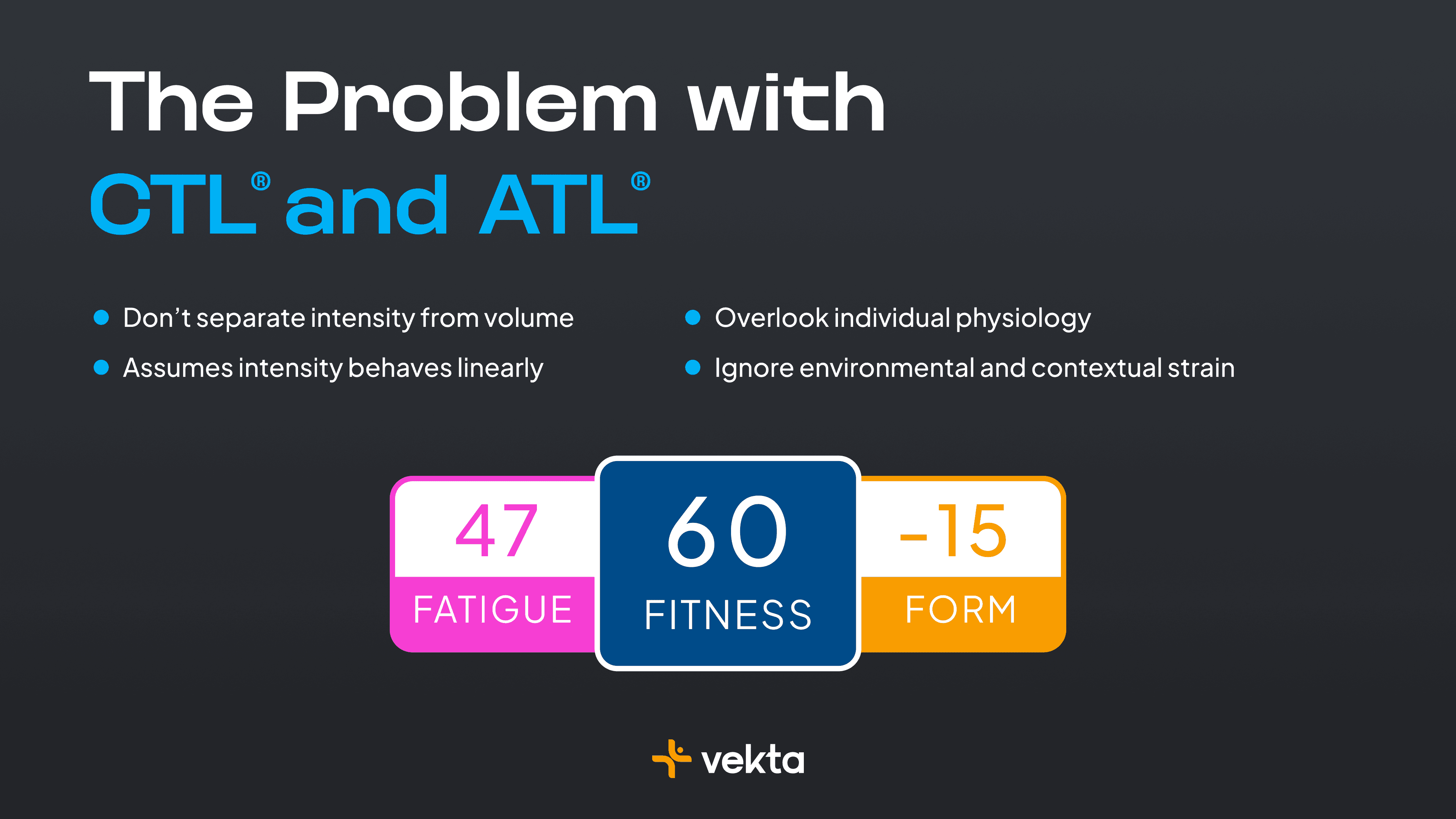
Coaches have known this for decades. Athletes have felt it in their bodies long before the science caught up. Yet the tools we’ve relied on to measure long term training load have barely moved in twenty years. CTL® and ATL® became the default simply because they were the only option. Born from TSS® and its assumption that volume and intensity can be collapsed into one number, these models painted training in broad strokes. Useful. Familiar. But shallow.
Training today is not shallow. Our understanding of physiology isn’t either.
Critical Power, W Prime, torque characteristics, durability decline, neuromuscular strain the sport has evolved. Our tools need to evolve with it.
That’s why we built Vekta Load and Strain.
Why Long Term Metrics Needed a Rethink
If training is the application of stress over time, then any long term metric must be honest about what that stress really is. And stress is not one thing.
Volume matters. Intensity matters. But they do not behave the same way. They do not affect the body the same way. They should never be blended into a single score. When you collapse volume and intensity into one number, you lose the texture of training. You lose the story.
Two athletes with the same CTL® can be living entirely different realities: one dragged there by big volume, the other by violent intensity spikes. The score might match. The physiology won’t.
This is the gap we set out to close.
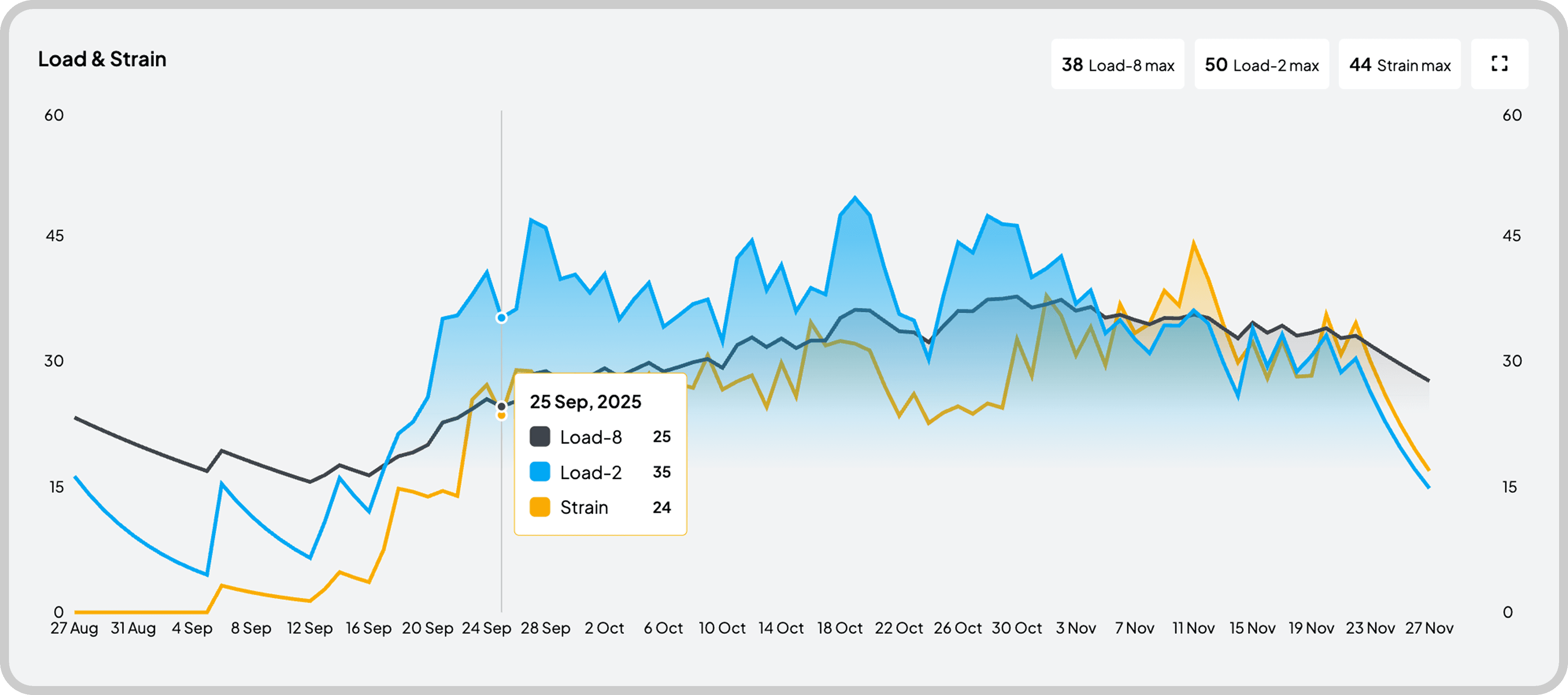
Vekta Approach: Separate The Signals
Performance isn’t shaped by guesswork. It’s shaped by the interaction between the work you do and the systems that respond to it. That’s why Vekta Load and Strain are built on the same foundation as our session level metrics: treat Vekta Volume and Intensity as independent physiological drivers, because they are.
Rather than blending them into a single score, each is tracked separately using exponentially weighted moving averages (EWMA), allowing the metrics to respond quickly to meaningful changes while smoothing the day to day noise that obscures long term trends. This mirrors how the body itself reacts: rapid to spikes in stress, slower to deep, structural shifts in workload.
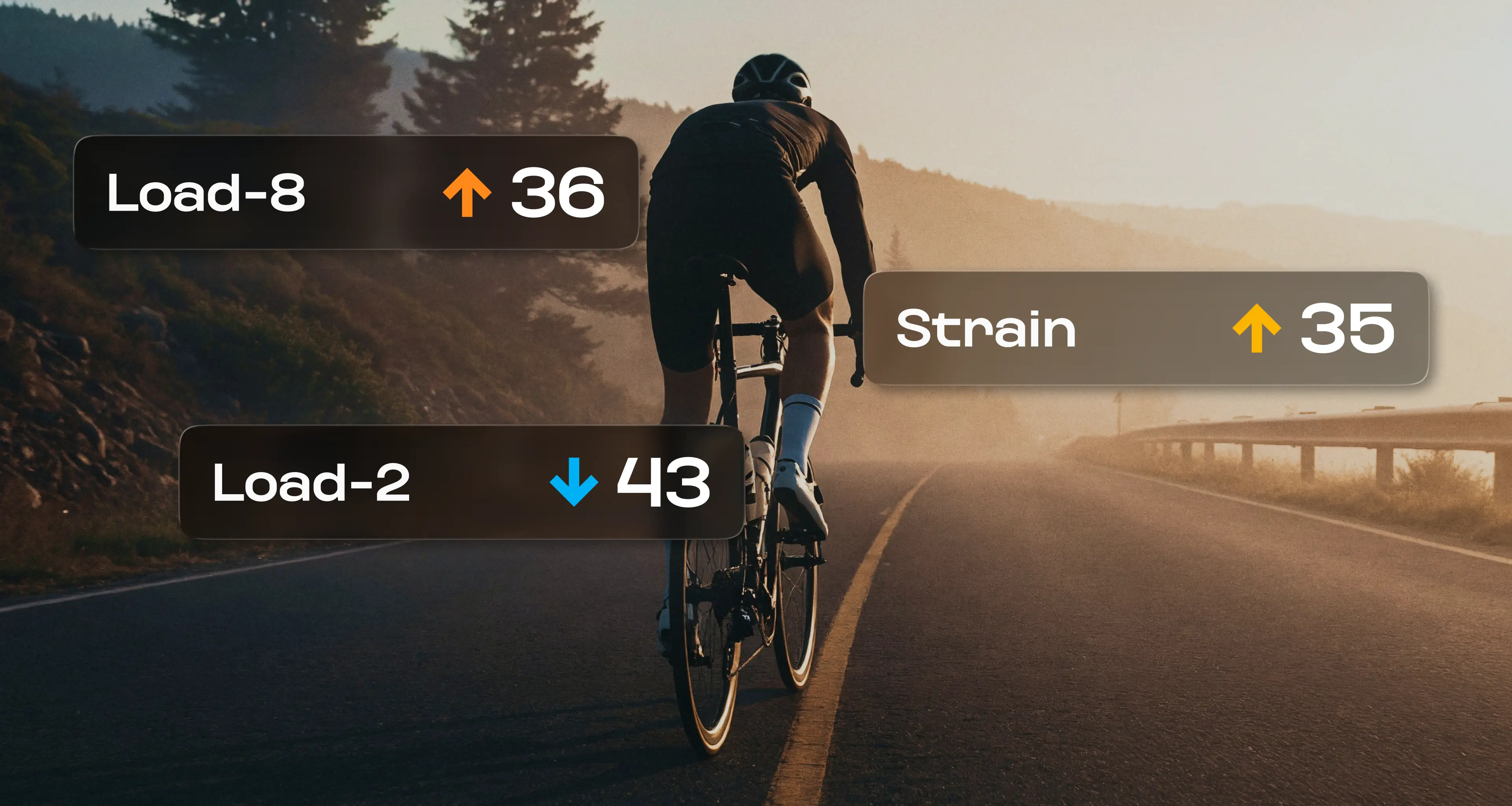
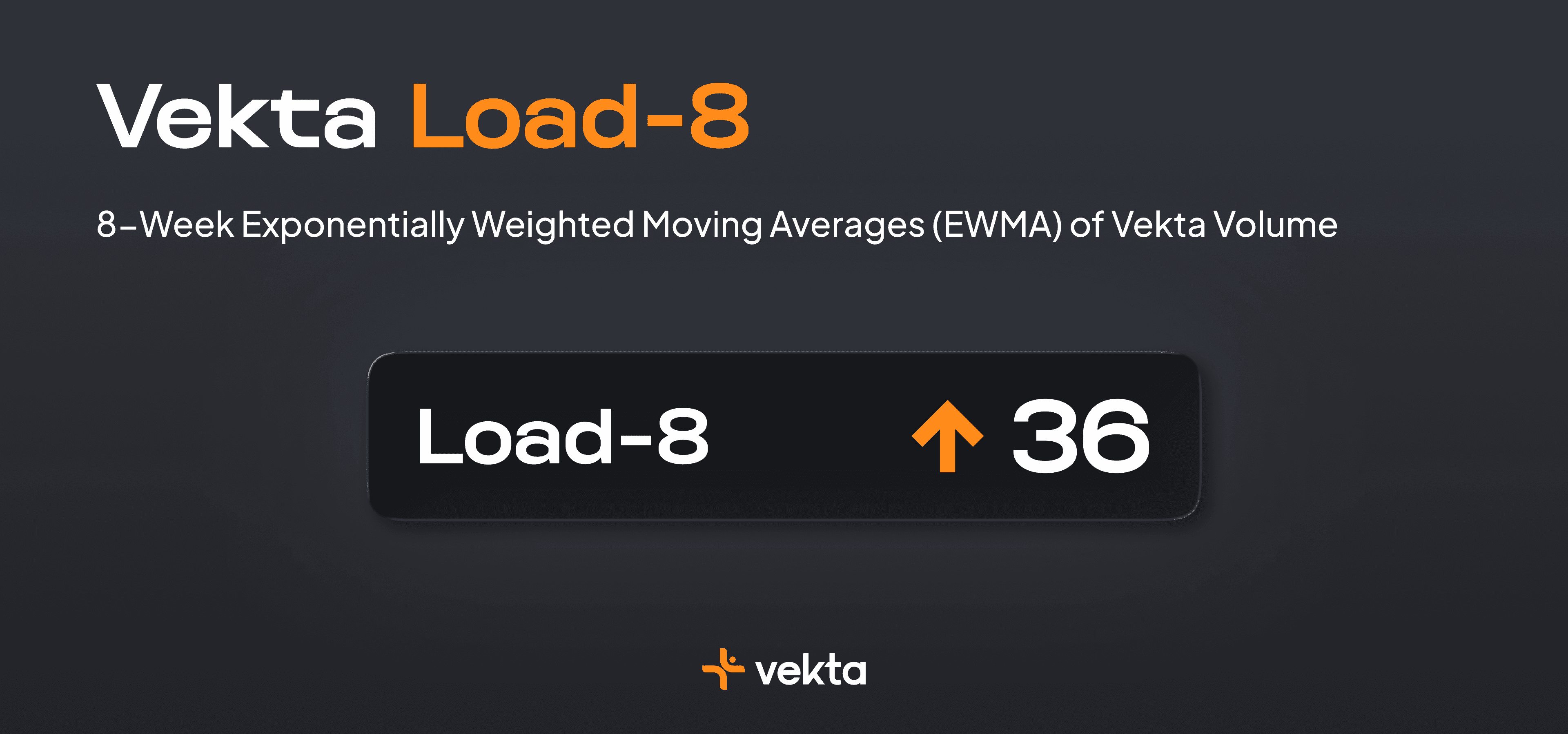
Vekta Load-8
A long horizon view grounded in the eight week EWMA of Vekta Volume. Load-8 reflects chronic aerobic demand, the accumulated work that supports endurance, resilience, and the foundation of race fitness. It moves slowly and deliberately, revealing the shape of your season.
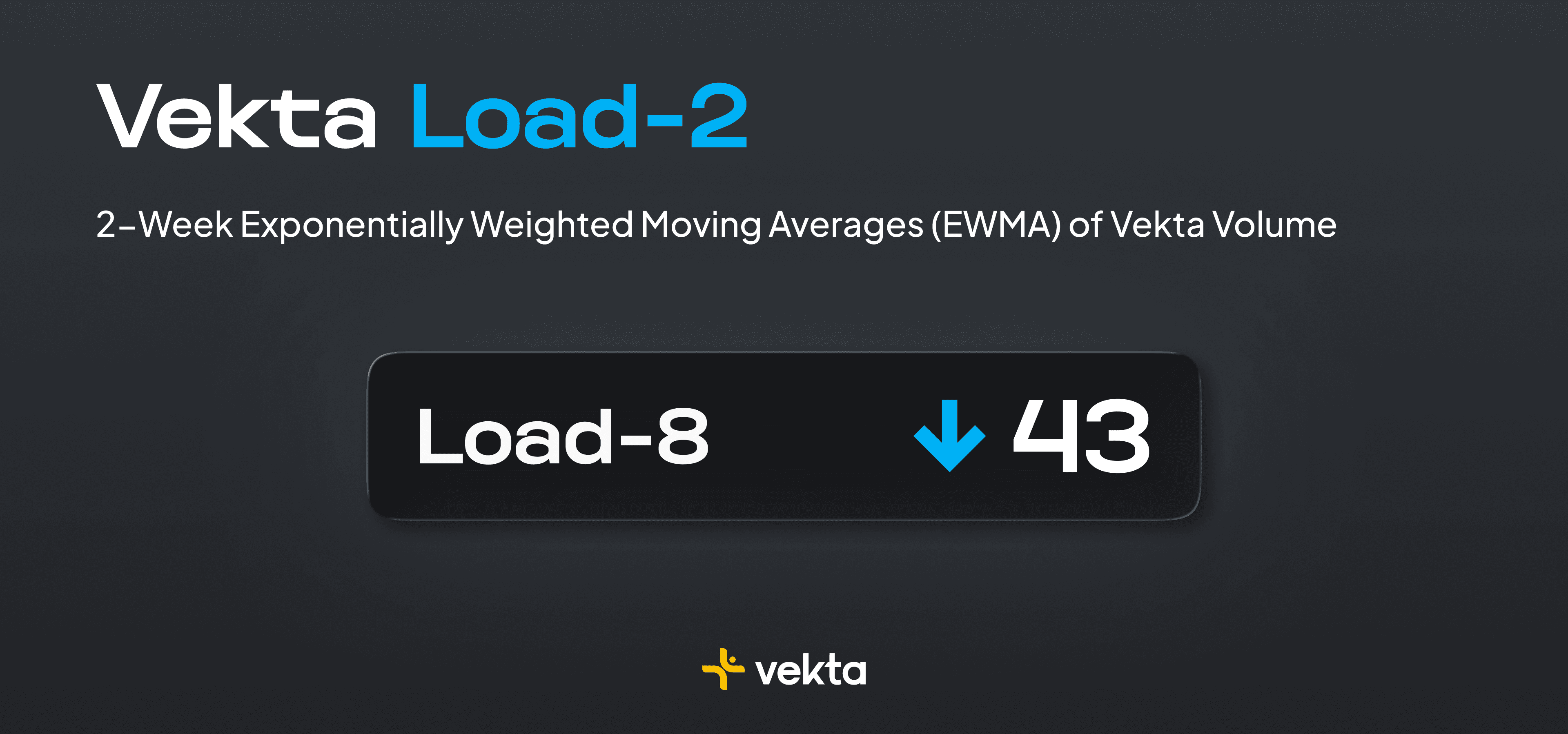
Vekta Load-2
A shorter term signal built from the two week EWMA of Vekta Volume. Load-2 captures recent volume driven stress, highlighting when training load is rising sharply, when you’re absorbing work well, or when you’re drifting toward excessive strain. It acts as an early indicator of whether training is landing as intended.
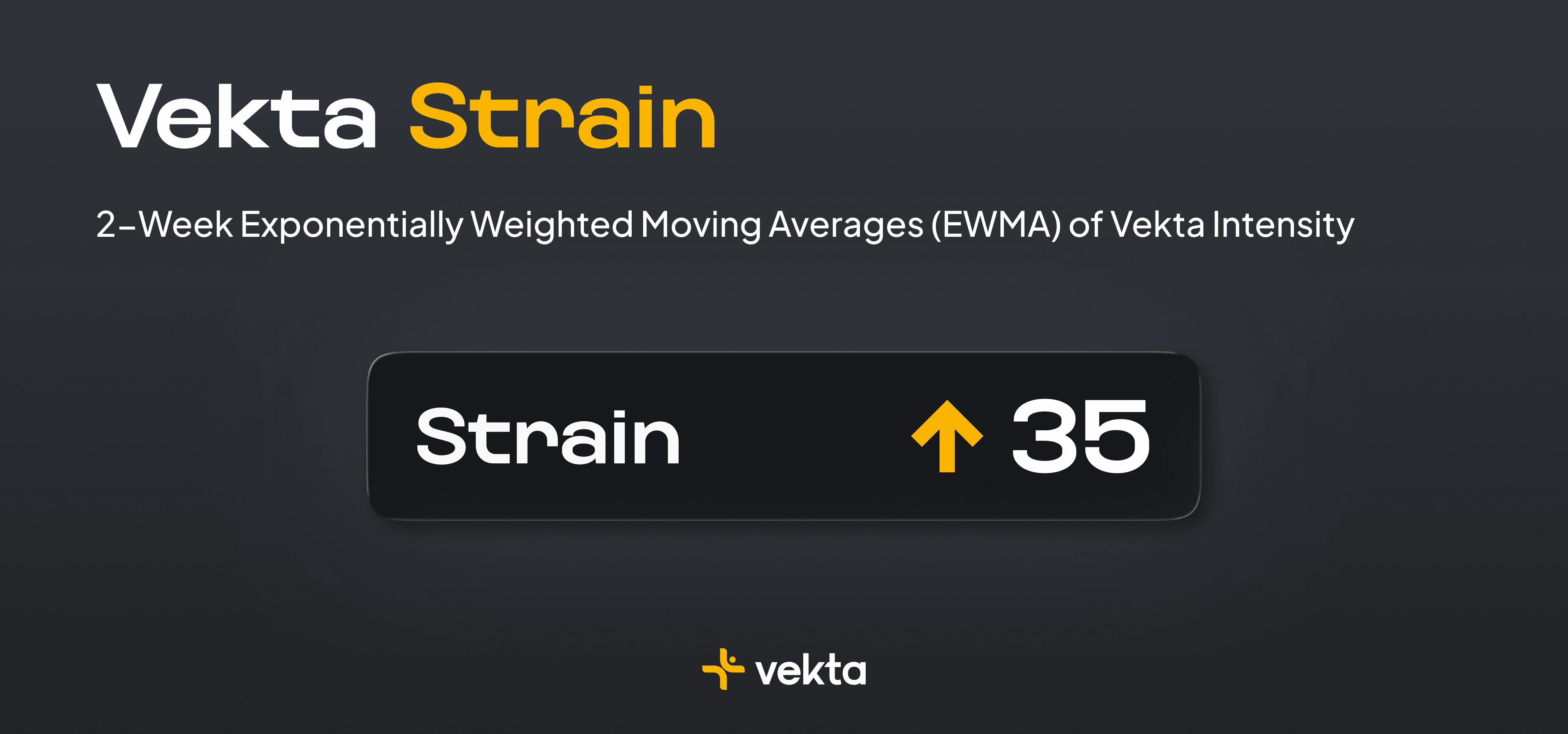
Vekta Strain
Calculated from the two week EWMA of Vekta Intensity, Strain isolates the high intensity component of your recent training, the work that taxes the neuromuscular and anaerobic systems far beyond what duration alone would predict. Strain represents the “sharpness” of recent training, surfacing the efforts that create disproportionate fatigue and need careful management.
By separating these drivers and tracking them with appropriate time constants, Vekta Load and Strain reveal patterns that TSS® based models cannot: whether recent stress is coming from accumulated work, aggressive volume spikes, or concentrated high intensity efforts. Each has a different physiological cost. Each influences adaptation in a different way.
Together, they turn the wash of training into something structured, interpretable, and actionable.
How They Work Together
Load-8, Load-2, and Strain each capture a different dimension of training stress. On their own, they tell you something useful. Together, they give you a complete picture of how your training is building, what you’re carrying, and where the sharpest stress is coming from.
Load-8 shows the long-term demand you’ve accumulated.
Load-2 shows the short-term workload you’re under right now.
Strain shows the recent intensity that often drives disproportionate fatigue.
Together, they give you a layered view of your training load:
Metric | What It Tracks | Time Frame | Analogy |
|---|---|---|---|
Vekta Load-8 | Total training demand | Long-term (8 weeks) | Your training bank account |
Vekta Load-2 | Recent volume-based stress | Short-term (7 days) | Your current spending |
Vekta Strain | Recent high-intensity stress | Mid-term (14 days) | Your risk exposure |
A New Way To Quantify Real Progression
With Load and Strain, Vekta becomes more than a platform that reads your data. It becomes a platform that understands your training. Not by flattening it. Not by simplifying it. But by revealing the stress that shapes performance.
This is a new standard for long term load modelling. A new way to see what your training is truly building. And a new foundation for athletes and coaches who refuse to settle for legacy metrics.
Training Stress Score® (TSS®), Acute Training Load® (ATL®) and Chronic Training Load® (CTL®) are registered trademarks owned by TrainingPeaks, LLC.
A New Framework for Training Load
If you strip endurance sport down to its bones, everything we chase, robustness, resilience, speed, durability, is the product of accumulated stress. Not the single breakthrough session. Not the heroic Tuesday night. The weight of work across weeks and months. The strain that shapes us.
Coaches have known this for decades. Athletes have felt it in their bodies long before the science caught up. Yet the tools we’ve relied on to measure long term training load have barely moved in twenty years. CTL® and ATL® became the default simply because they were the only option. Born from TSS® and its assumption that volume and intensity can be collapsed into one number, these models painted training in broad strokes. Useful. Familiar. But shallow.
Training today is not shallow. Our understanding of physiology isn’t either.
Critical Power, W Prime, torque characteristics, durability decline, neuromuscular strain the sport has evolved. Our tools need to evolve with it.
That’s why we built Vekta Load and Strain.
Why Long Term Metrics Needed a Rethink
If training is the application of stress over time, then any long term metric must be honest about what that stress really is. And stress is not one thing.
Volume matters. Intensity matters. But they do not behave the same way. They do not affect the body the same way. They should never be blended into a single score. When you collapse volume and intensity into one number, you lose the texture of training. You lose the story.
Two athletes with the same CTL® can be living entirely different realities: one dragged there by big volume, the other by violent intensity spikes. The score might match. The physiology won’t.
This is the gap we set out to close.
Vekta Approach: Separate The Signals
Performance isn’t shaped by guesswork. It’s shaped by the interaction between the work you do and the systems that respond to it. That’s why Vekta Load and Strain are built on the same foundation as our session level metrics: treat Vekta Volume and Intensity as independent physiological drivers, because they are.
Rather than blending them into a single score, each is tracked separately using exponentially weighted moving averages (EWMA), allowing the metrics to respond quickly to meaningful changes while smoothing the day to day noise that obscures long term trends. This mirrors how the body itself reacts: rapid to spikes in stress, slower to deep, structural shifts in workload.
Vekta Load-8
A long horizon view grounded in the eight week EWMA of Vekta Volume. Load-8 reflects chronic aerobic demand, the accumulated work that supports endurance, resilience, and the foundation of race fitness. It moves slowly and deliberately, revealing the shape of your season.
Vekta Load-2
A shorter term signal built from the two week EWMA of Vekta Volume. Load-2 captures recent volume driven stress, highlighting when training load is rising sharply, when you’re absorbing work well, or when you’re drifting toward excessive strain. It acts as an early indicator of whether training is landing as intended.
Vekta Strain
Calculated from the two week EWMA of Vekta Intensity, Strain isolates the high intensity component of your recent training, the work that taxes the neuromuscular and anaerobic systems far beyond what duration alone would predict. Strain represents the “sharpness” of recent training, surfacing the efforts that create disproportionate fatigue and need careful management.
By separating these drivers and tracking them with appropriate time constants, Vekta Load and Strain reveal patterns that TSS® based models cannot: whether recent stress is coming from accumulated work, aggressive volume spikes, or concentrated high intensity efforts. Each has a different physiological cost. Each influences adaptation in a different way.
Together, they turn the wash of training into something structured, interpretable, and actionable.
How They Work Together
Load-8, Load-2, and Strain each capture a different dimension of training stress. On their own, they tell you something useful. Together, they give you a complete picture of how your training is building, what you’re carrying, and where the sharpest stress is coming from.
Load-8 shows the long-term demand you’ve accumulated.
Load-2 shows the short-term workload you’re under right now.
Strain shows the recent intensity that often drives disproportionate fatigue.
Together, they give you a layered view of your training load:
Metric | What It Tracks | Time Frame | Analogy |
|---|---|---|---|
Vekta Load-8 | Total training demand | Long-term (8 weeks) | Your training bank account |
Vekta Load-2 | Recent volume-based stress | Short-term (7 days) | Your current spending |
Vekta Strain | Recent high-intensity stress | Mid-term (14 days) | Your risk exposure |
A New Way To Quantify Real Progression
With Load and Strain, Vekta becomes more than a platform that reads your data. It becomes a platform that understands your training. Not by flattening it. Not by simplifying it. But by revealing the stress that shapes performance.
This is a new standard for long term load modelling. A new way to see what your training is truly building. And a new foundation for athletes and coaches who refuse to settle for legacy metrics.
Training Stress Score® (TSS®), Acute Training Load® (ATL®) and Chronic Training Load® (CTL®) are registered trademarks owned by TrainingPeaks, LLC.

Try Vekta free
Put the theory to work
Vekta is where coaches and athletes plan the work, see the numbers, and track what actually changes.
Try Vekta free
Put the theory to work
Vekta is where coaches and athletes plan the work, see the numbers, and track what actually changes.
Frequently asked questions
Frequently asked questions

Brand Director