Coach
Coach
Coach
8
8
8
min
min
min
Dominic Valerio
Dominic Valerio
Will AI Replace Cycling Coaches? A Coach and a CEO Answer
Will AI Replace Cycling Coaches? A Coach and a CEO Answer
Can an AI Cycling Coach Replace a Human Coach?
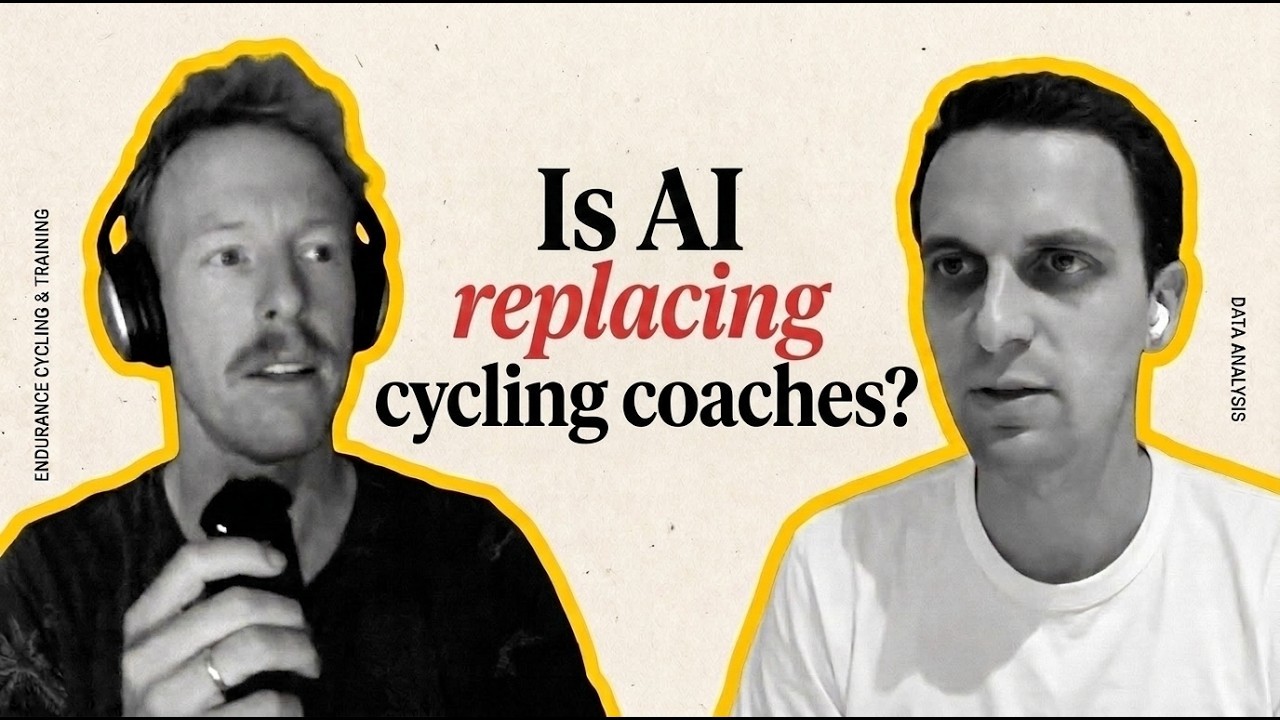
Vekta CEO Paul-Antoine Girard joined professional cyclist and coach Cyrus Monk on Train Like a Monk to answer the question every coach is quietly asking. The full episode is below.
The adverts find you eventually. A new app, a new promise. Tell it your goal race, let it write the plan, stop paying a coach. The pitch never changes, and it is always aimed at the same thing: the one relationship in endurance sport that has never been automated.
So when Cyrus Monk sat down with our co-founder and CEO Paul-Antoine Girard for an episode of Train Like a Monk, he did not ease into it. Cyrus is a professional cyclist, a coach and a scientist, and he has been open about what comes after racing, which is coaching full time. He was not asking the question in the abstract. He was asking a man who builds AI for a living whether that career still exists in ten years.
The man building the AI answered first
Cyrus opened with a rapid-fire round. No preparation, no warning, yes or no only.
Cyrus Monk | Paul-Antoine Girard |
Will AI replace cycling coaches? | No |
Are athletes using AI to improve performance? | Yes |
Is more data always a better thing for athletes? | No |
Do WorldTour teams need to start hiring data scientists? | Yes |
Can using AI make a coach better? | Yes |
Can using AI make a coach worse? | No |
That first answer is not a hedge, and it is not modesty. The coaches already using it describe a change in their week, not a change in their job.
“Vekta has halved the time I need for each athlete. And the feedback they get is better and more precise than before.”
Michał Pustuła · MCPP 50% less time per athlete
Before the AI, the model has to be right
The interesting part came next. Cyrus asked where AI can do the most for athletes and coaches, and Paul-Antoine declined to answer the question as put. He wanted to go backwards first, to the metrics underneath, because an intelligent system pointed at the wrong number is still pointed at the wrong number.
For most of two decades, the biggest platforms have run on a single value. FTP. One number doing the work of an entire physiological profile.
The problem shows up the moment you look. Two riders can hold the same FTP and be completely different athletes. One sits at threshold all day and has almost nothing above it. The other goes over threshold again and again and comes apart if you ask for forty minutes of steady work. Same number. Different riders. Different training.
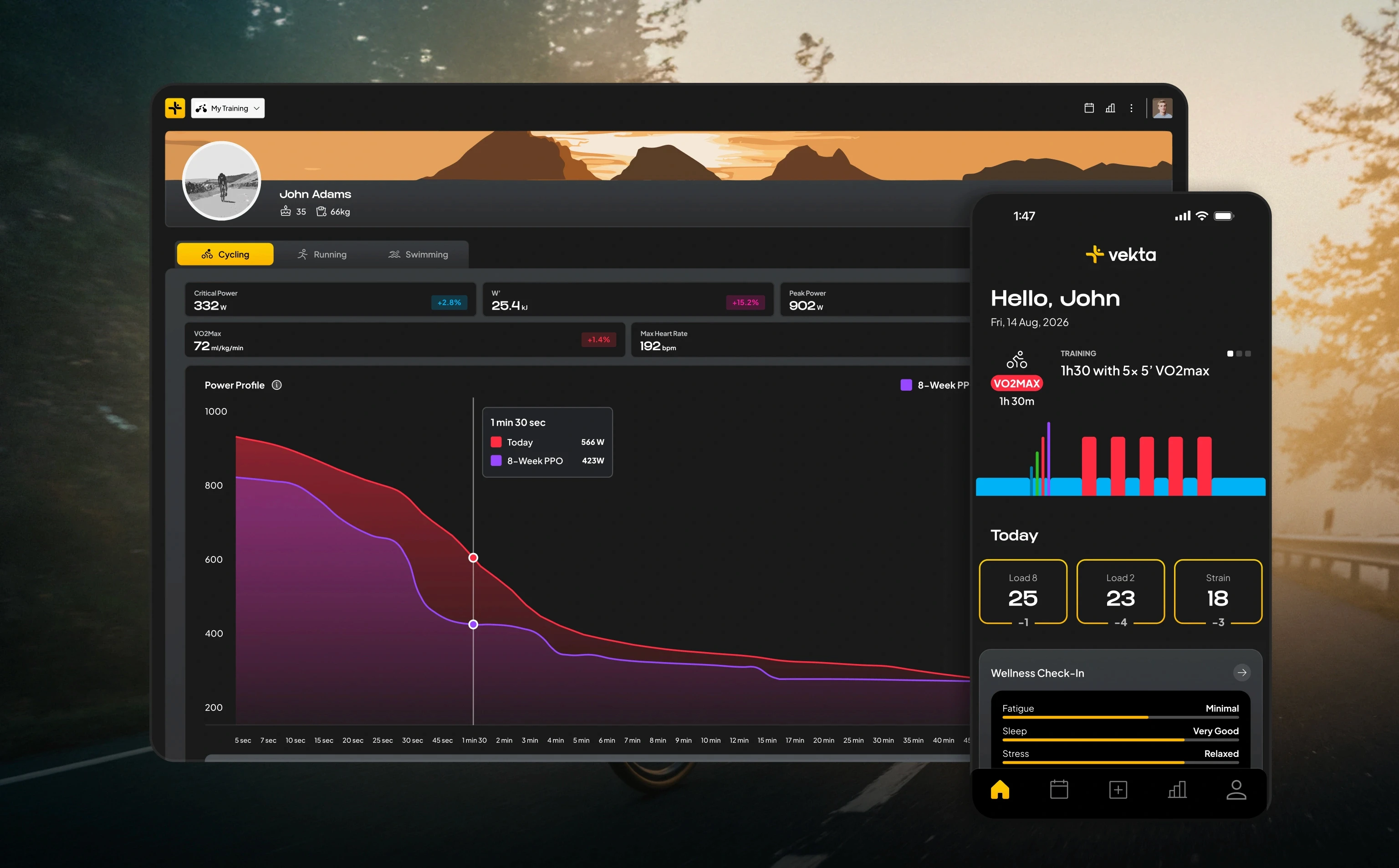
Vekta is built on Critical Power (CP) and W′ instead. CP marks the boundary between sustainable and unsustainable. W′ measures the finite work available above it. Measure the line, then measure what the rider has to spend on the other side of it.
The same correction runs through everything else. Durability means knowing what an athlete produces after 3,000 or 4,000 kilojoules rather than what they produced fresh, because races are not decided in the first hour. Load is split into volume and intensity, because a long steady ride and a short sharp session can return an identical one-dimensional score while doing entirely different things to a rider.
None of that is AI. It is physiology, and it has to be right before anything clever is built on top of it.
The test the athlete never has to do
Machine learning earns its place by getting to those numbers without stopping training to find them.
The old protocol was a twenty minute test and a fixed percentage of it. Better protocols followed, three minutes and twelve minutes, which model far more of the power duration curve. But the real work at Vekta has been estimating CP and W′ from training and racing data as it arrives. An athlete’s profile updates continuously, so a six week threshold block shows up in the numbers rather than in a test six weeks later.
Cyrus described this as his favourite feature, and his reasoning was practical rather than technical. He does not like prescribing tests. Conditions have to be replicated each time, which is difficult for athletes who travel. Fatigue has to be controlled. And there is a mental load on an athlete who wakes up knowing today is the day they have to go and hurt themselves for a number.
On the day of the recording he had moved his first athletes across to the platform. What he wanted to see was whether the model agreed with him, because he had already worked out his own estimates the way experienced coaches do, by reading past efforts, power and heart rate, and how often a rider can repeat something. The machine landed close to his own assessment.
That is the useful version of this technology. Not a system that replaces the coach’s judgement, but one that arrives at the same conclusion independently and gives the coach a second opinion in seconds.
Vekta is free for coaches. Create your free account.
An AI cycling coach is not a chatbot with a training plan
This is where the conversation sharpened, because the AI most athletes have met is a chatbot.
Paul-Antoine’s objection is structural. Large language models are trained on text. They can produce a training plan, because training plans are text, and they have read a great many of them. What they cannot do is predict what that plan will do to your load, your fatigue or your performance, because they have no access to your physiology and no model of it.
Then there is the second problem, which is worse. They agree with you. Ask whether the plan is good and it will tell you the plan is good. Push back and it will rewrite the whole thing and tell you the new one is good too. It will rarely say it does not know.
Cyrus has tested this repeatedly, partly because he knows his athletes are doing the same thing behind his back. He asked one for a week of work before a race and this came back:
The session a chatbot prescribed
8 minutes at 110% of critical power
10 minutes at 102% of critical power
Why it does not stand up: the two efforts together describe a rider whose critical power is not the number the plan was built on. The chatbot had no way to check that, because it has no model of the rider at all.
His conclusion is one every good coach will recognise: certainty is a warning sign. A coach who is always sure they are doing the right thing is probably not the best coach in the room. The same eight week plan that worked perfectly once is not automatically the right plan six months later, because everything around it has changed.
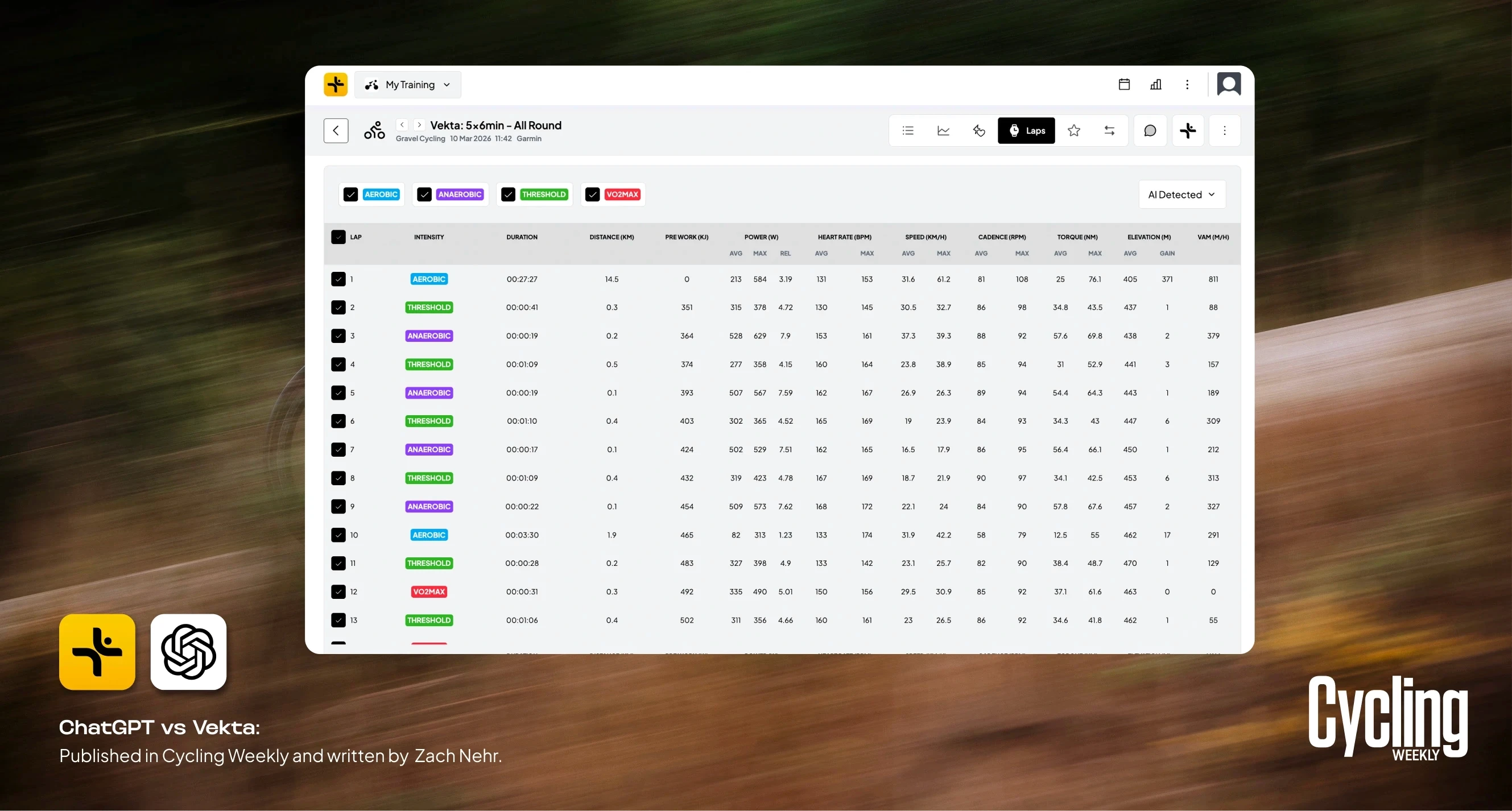
Cycling Weekly ran the same test in public. Zach Nehr had one rider follow a ChatGPT plan and another follow a plan built by coach Ulisses Abbud on Vekta, then marked both blind. ChatGPT scored six out of ten. The coach scored nine.
The raw power gains pointed the other way, and that is the interesting part. The ChatGPT rider improved 13.5%, the coached rider 2.1%. But the first was a beginner at 200 watts, where almost any structure works. The second was already producing 389, where two per cent is a good season, and his critical power rose 13%.
We went through this in full in our comparison of Vekta and ChatGPT, including the few things a language model does well.
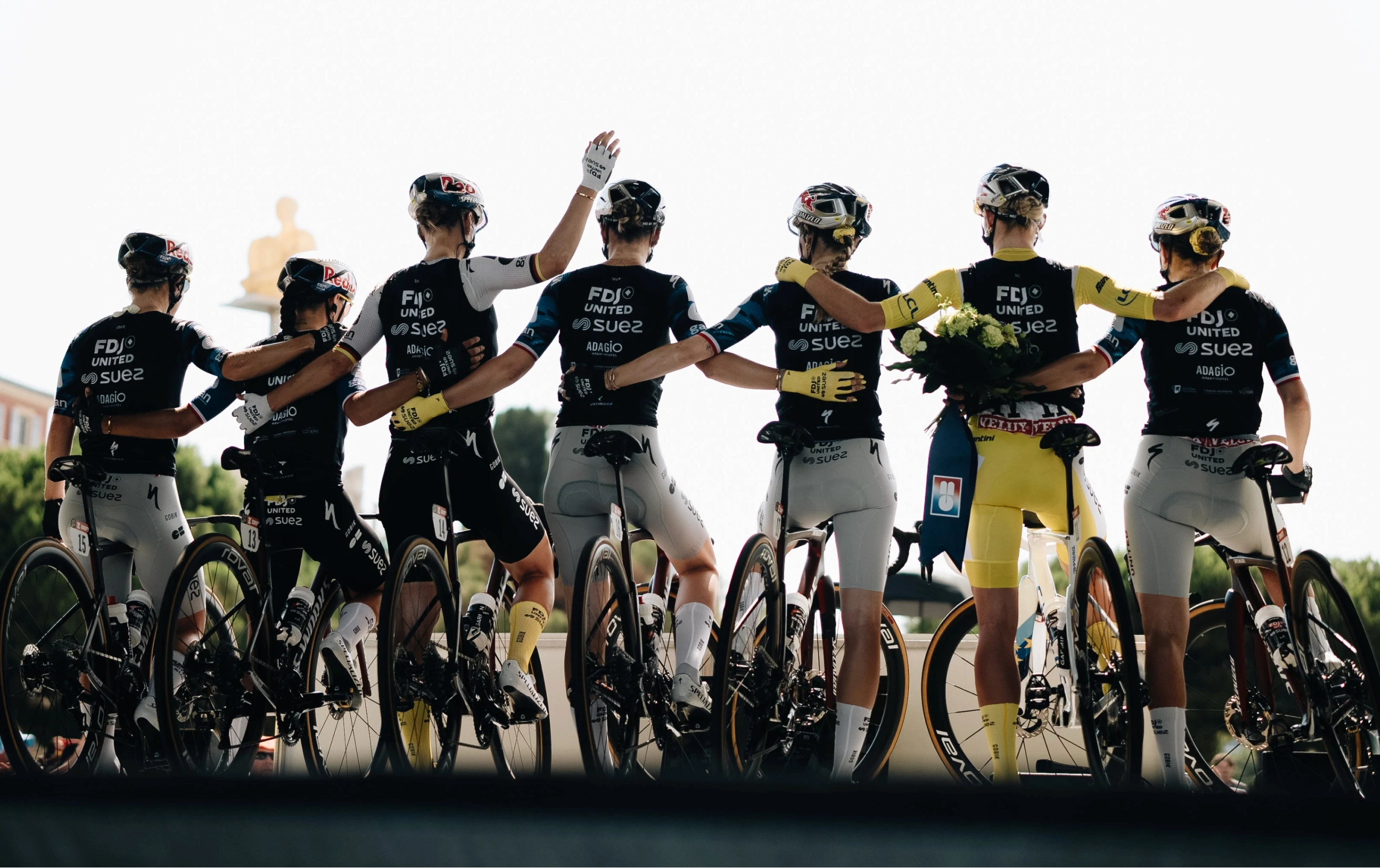
How a WorldTour squad prepared for the Tour de France Femmes
The clearest example came when Cyrus asked about FDJ United-SUEZ, who won this year’s Tour de France Femmes with Demi Vollering.
Speaking on the podcast, Paul-Antoine described work that begins weeks before the race starts. Modelling the demands of each individual stage. How many watts, for how long, at which moments. The kilojoules per kilogram of every climb that matters. Where a stage is genuinely decided rather than where it looks dramatic on the profile.
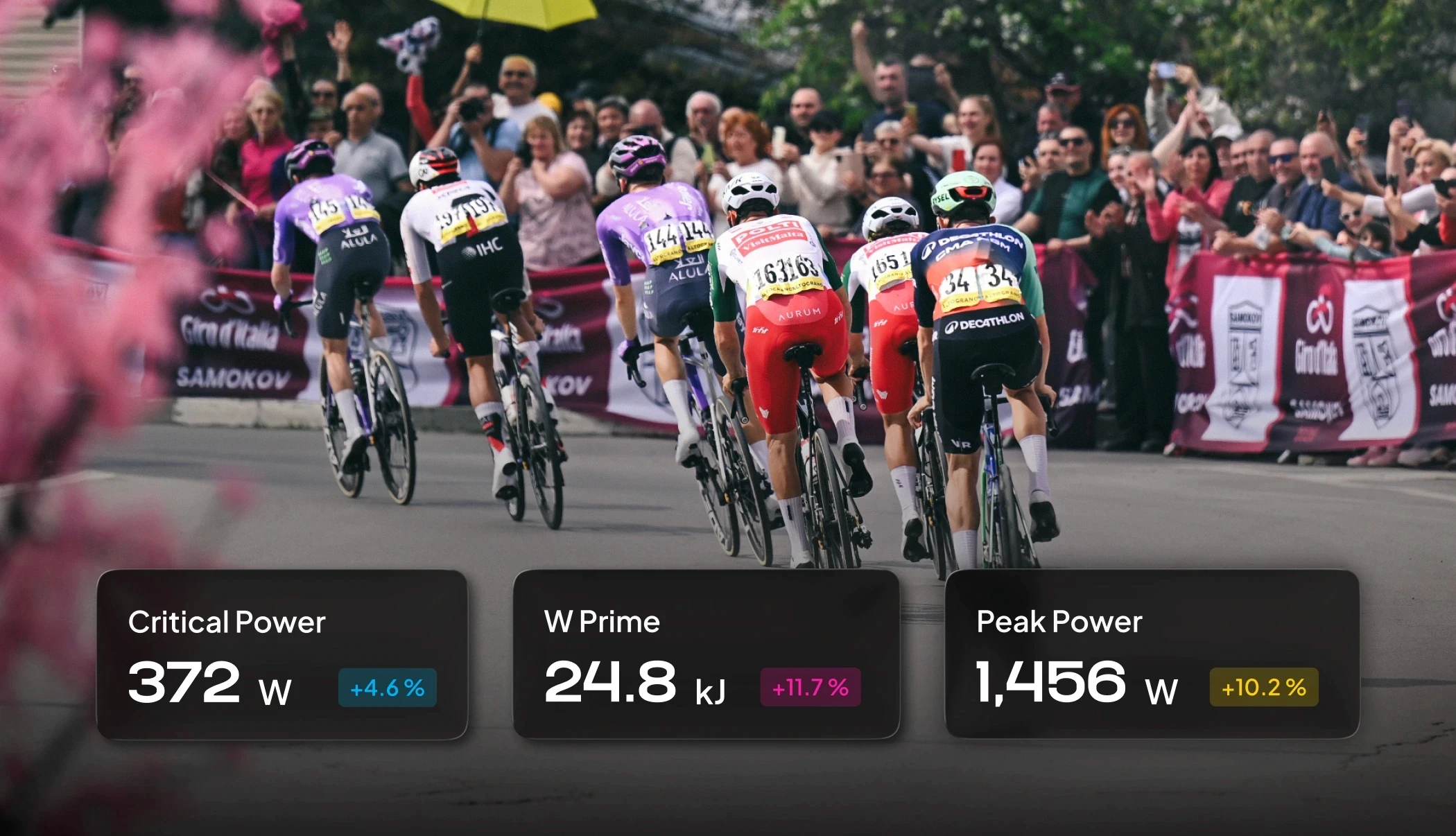
With those demands modelled, the question becomes which riders match them. Who has the W′ to survive repeated short climbs. Who has the Durability to go again at threshold late in a stage after everything else has been spent. Dashboards compare riders against the shape of the race rather than against a generic ranking.
When you have a leader with a yellow jersey to win, the decision is not who leads. The decision is who goes with her, and how each of them is used across nine days. That is the work happening quietly behind a Grand Tour result, and it is the work our partnership with FDJ United-SUEZ was built to support.
The same model, on your riders. Book a demo.
What the machine cannot do
Then Cyrus asked the question underneath every other question. If AI is not going to replace him, what does he do that a machine cannot?
Paul-Antoine’s answer was not about data at all.
It was accountability. There is a version of every athlete who does not go out on a wet Tuesday. If the only thing waiting is an app, the session gets skipped and the app agrees that skipping it was sensible. If a person is waiting, the session usually happens. Paul-Antoine still keeps a human coach for exactly this reason, and admitted that on some days he trains for his coach rather than for himself.
And it was communication. A coach who knows an athlete can hear the thing they are not saying. An athlete reports that everything is fine, and the coach who knows them hears immediately that it is not. No model reads that, because it never appears in the file.
The agreeable machine fails in both directions. Tell it you are tired and want to skip the session and it will support you. Tell it you are tired and want to push through anyway and it will support that too. Knowing which of those is correct today is the entire job.
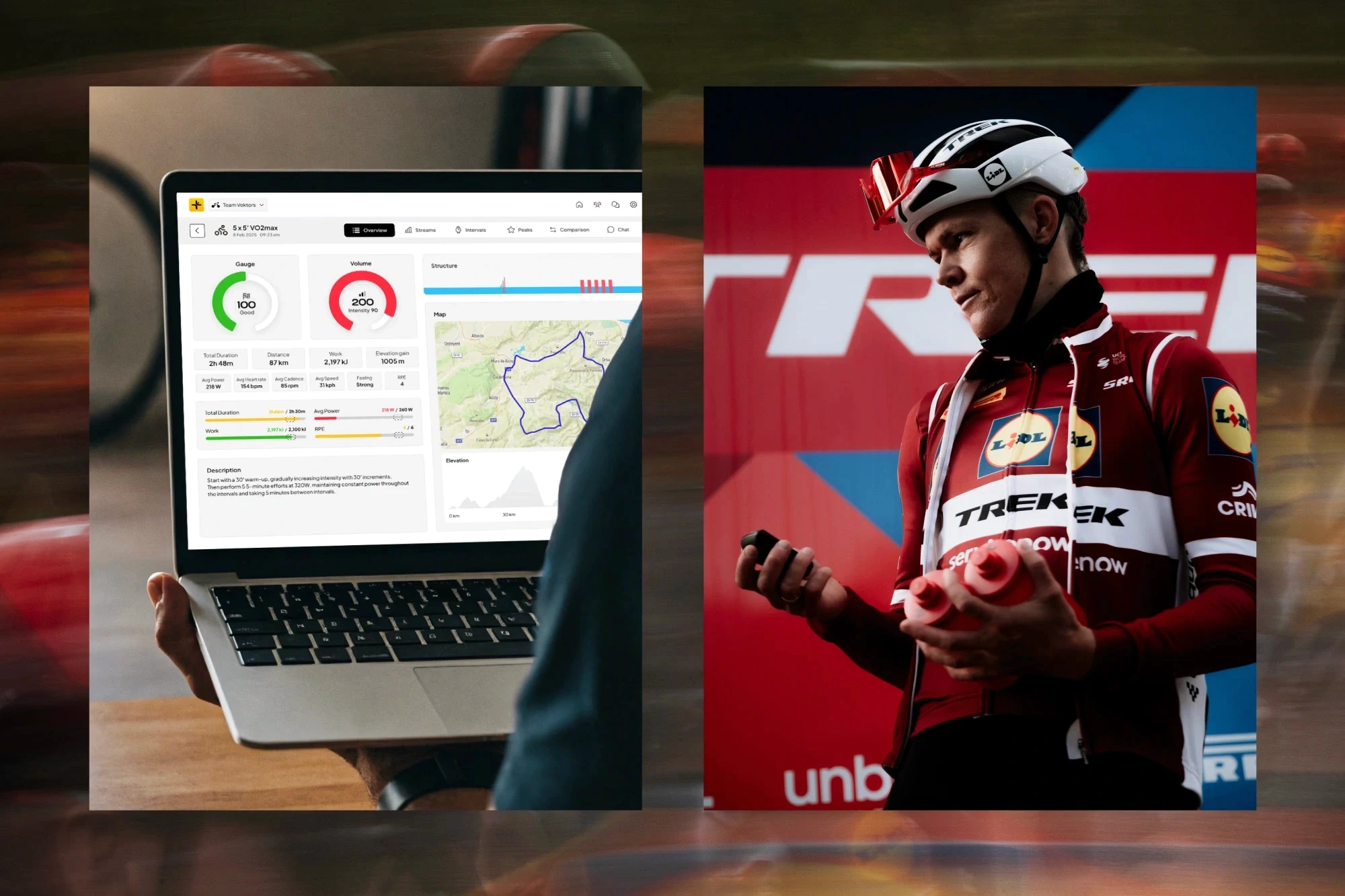
The hours, and what you do with them
The line Vekta draws is straightforward. The machine takes the repetitive work: detecting the intervals, classifying the sessions, comparing them, surfacing the patterns that would otherwise cost a coach hours of scrolling to find. The coach takes everything that requires knowing a human being.
Cyrus finished the episode with the practical consequence. He is taking on three more athletes, because the time he was spending crunching data has come back to him and he believes he can coach more people and do it better.
That is the honest answer to the question he opened with. AI is not coming for the coach. It is coming for the spreadsheet.
Listen to the full episode: YouTube · Spotify · Apple Podcasts
Vekta CEO Paul-Antoine Girard joined professional cyclist and coach Cyrus Monk on Train Like a Monk to answer the question every coach is quietly asking. The full episode is below.
The adverts find you eventually. A new app, a new promise. Tell it your goal race, let it write the plan, stop paying a coach. The pitch never changes, and it is always aimed at the same thing: the one relationship in endurance sport that has never been automated.
So when Cyrus Monk sat down with our co-founder and CEO Paul-Antoine Girard for an episode of Train Like a Monk, he did not ease into it. Cyrus is a professional cyclist, a coach and a scientist, and he has been open about what comes after racing, which is coaching full time. He was not asking the question in the abstract. He was asking a man who builds AI for a living whether that career still exists in ten years.
The man building the AI answered first
Cyrus opened with a rapid-fire round. No preparation, no warning, yes or no only.
Cyrus Monk | Paul-Antoine Girard |
Will AI replace cycling coaches? | No |
Are athletes using AI to improve performance? | Yes |
Is more data always a better thing for athletes? | No |
Do WorldTour teams need to start hiring data scientists? | Yes |
Can using AI make a coach better? | Yes |
Can using AI make a coach worse? | No |
That first answer is not a hedge, and it is not modesty. The coaches already using it describe a change in their week, not a change in their job.
“Vekta has halved the time I need for each athlete. And the feedback they get is better and more precise than before.”
Michał Pustuła · MCPP 50% less time per athlete
Before the AI, the model has to be right
The interesting part came next. Cyrus asked where AI can do the most for athletes and coaches, and Paul-Antoine declined to answer the question as put. He wanted to go backwards first, to the metrics underneath, because an intelligent system pointed at the wrong number is still pointed at the wrong number.
For most of two decades, the biggest platforms have run on a single value. FTP. One number doing the work of an entire physiological profile.
The problem shows up the moment you look. Two riders can hold the same FTP and be completely different athletes. One sits at threshold all day and has almost nothing above it. The other goes over threshold again and again and comes apart if you ask for forty minutes of steady work. Same number. Different riders. Different training.
Vekta is built on Critical Power (CP) and W′ instead. CP marks the boundary between sustainable and unsustainable. W′ measures the finite work available above it. Measure the line, then measure what the rider has to spend on the other side of it.
The same correction runs through everything else. Durability means knowing what an athlete produces after 3,000 or 4,000 kilojoules rather than what they produced fresh, because races are not decided in the first hour. Load is split into volume and intensity, because a long steady ride and a short sharp session can return an identical one-dimensional score while doing entirely different things to a rider.
None of that is AI. It is physiology, and it has to be right before anything clever is built on top of it.
The test the athlete never has to do
Machine learning earns its place by getting to those numbers without stopping training to find them.
The old protocol was a twenty minute test and a fixed percentage of it. Better protocols followed, three minutes and twelve minutes, which model far more of the power duration curve. But the real work at Vekta has been estimating CP and W′ from training and racing data as it arrives. An athlete’s profile updates continuously, so a six week threshold block shows up in the numbers rather than in a test six weeks later.
Cyrus described this as his favourite feature, and his reasoning was practical rather than technical. He does not like prescribing tests. Conditions have to be replicated each time, which is difficult for athletes who travel. Fatigue has to be controlled. And there is a mental load on an athlete who wakes up knowing today is the day they have to go and hurt themselves for a number.
On the day of the recording he had moved his first athletes across to the platform. What he wanted to see was whether the model agreed with him, because he had already worked out his own estimates the way experienced coaches do, by reading past efforts, power and heart rate, and how often a rider can repeat something. The machine landed close to his own assessment.
That is the useful version of this technology. Not a system that replaces the coach’s judgement, but one that arrives at the same conclusion independently and gives the coach a second opinion in seconds.
Vekta is free for coaches. Create your free account.
An AI cycling coach is not a chatbot with a training plan
This is where the conversation sharpened, because the AI most athletes have met is a chatbot.
Paul-Antoine’s objection is structural. Large language models are trained on text. They can produce a training plan, because training plans are text, and they have read a great many of them. What they cannot do is predict what that plan will do to your load, your fatigue or your performance, because they have no access to your physiology and no model of it.
Then there is the second problem, which is worse. They agree with you. Ask whether the plan is good and it will tell you the plan is good. Push back and it will rewrite the whole thing and tell you the new one is good too. It will rarely say it does not know.
Cyrus has tested this repeatedly, partly because he knows his athletes are doing the same thing behind his back. He asked one for a week of work before a race and this came back:
The session a chatbot prescribed
8 minutes at 110% of critical power
10 minutes at 102% of critical power
Why it does not stand up: the two efforts together describe a rider whose critical power is not the number the plan was built on. The chatbot had no way to check that, because it has no model of the rider at all.
His conclusion is one every good coach will recognise: certainty is a warning sign. A coach who is always sure they are doing the right thing is probably not the best coach in the room. The same eight week plan that worked perfectly once is not automatically the right plan six months later, because everything around it has changed.
Cycling Weekly ran the same test in public. Zach Nehr had one rider follow a ChatGPT plan and another follow a plan built by coach Ulisses Abbud on Vekta, then marked both blind. ChatGPT scored six out of ten. The coach scored nine.
The raw power gains pointed the other way, and that is the interesting part. The ChatGPT rider improved 13.5%, the coached rider 2.1%. But the first was a beginner at 200 watts, where almost any structure works. The second was already producing 389, where two per cent is a good season, and his critical power rose 13%.
We went through this in full in our comparison of Vekta and ChatGPT, including the few things a language model does well.
How a WorldTour squad prepared for the Tour de France Femmes
The clearest example came when Cyrus asked about FDJ United-SUEZ, who won this year’s Tour de France Femmes with Demi Vollering.
Speaking on the podcast, Paul-Antoine described work that begins weeks before the race starts. Modelling the demands of each individual stage. How many watts, for how long, at which moments. The kilojoules per kilogram of every climb that matters. Where a stage is genuinely decided rather than where it looks dramatic on the profile.
With those demands modelled, the question becomes which riders match them. Who has the W′ to survive repeated short climbs. Who has the Durability to go again at threshold late in a stage after everything else has been spent. Dashboards compare riders against the shape of the race rather than against a generic ranking.
When you have a leader with a yellow jersey to win, the decision is not who leads. The decision is who goes with her, and how each of them is used across nine days. That is the work happening quietly behind a Grand Tour result, and it is the work our partnership with FDJ United-SUEZ was built to support.
The same model, on your riders. Book a demo.
What the machine cannot do
Then Cyrus asked the question underneath every other question. If AI is not going to replace him, what does he do that a machine cannot?
Paul-Antoine’s answer was not about data at all.
It was accountability. There is a version of every athlete who does not go out on a wet Tuesday. If the only thing waiting is an app, the session gets skipped and the app agrees that skipping it was sensible. If a person is waiting, the session usually happens. Paul-Antoine still keeps a human coach for exactly this reason, and admitted that on some days he trains for his coach rather than for himself.
And it was communication. A coach who knows an athlete can hear the thing they are not saying. An athlete reports that everything is fine, and the coach who knows them hears immediately that it is not. No model reads that, because it never appears in the file.
The agreeable machine fails in both directions. Tell it you are tired and want to skip the session and it will support you. Tell it you are tired and want to push through anyway and it will support that too. Knowing which of those is correct today is the entire job.
The hours, and what you do with them
The line Vekta draws is straightforward. The machine takes the repetitive work: detecting the intervals, classifying the sessions, comparing them, surfacing the patterns that would otherwise cost a coach hours of scrolling to find. The coach takes everything that requires knowing a human being.
Cyrus finished the episode with the practical consequence. He is taking on three more athletes, because the time he was spending crunching data has come back to him and he believes he can coach more people and do it better.
That is the honest answer to the question he opened with. AI is not coming for the coach. It is coming for the spreadsheet.
Listen to the full episode: YouTube · Spotify · Apple Podcasts
Try Vekta free
Put the theory to work
Vekta is where coaches and athletes plan the work, see the numbers, and track what actually changes.
Try Vekta free
Put the theory to work
Vekta is where coaches and athletes plan the work, see the numbers, and track what actually changes.
Frequently asked questions
Frequently asked questions
Brand Director
Introducing the Vekta API: A Performance Department in a Key
80 Features in 9 Months: How We Build at Vekta
