Beyond FTP
For decades, endurance training has relied on simplified anchors such as FTP and composite stress scores. These tools represented meaningful progress. But they reduce performance to a single threshold and a blended score.
FTP is a fixed estimate of sustainable power. It does not distinguish between what you can sustain and the finite capacity you have above that level. It also does not describe how those capacities change as fatigue accumulates.
Modern endurance science shows that performance is not one number. It is the interaction between:
Sustainable capacity
High-intensity work capacity
Training stimulus
Recovery
Fatigue resistance
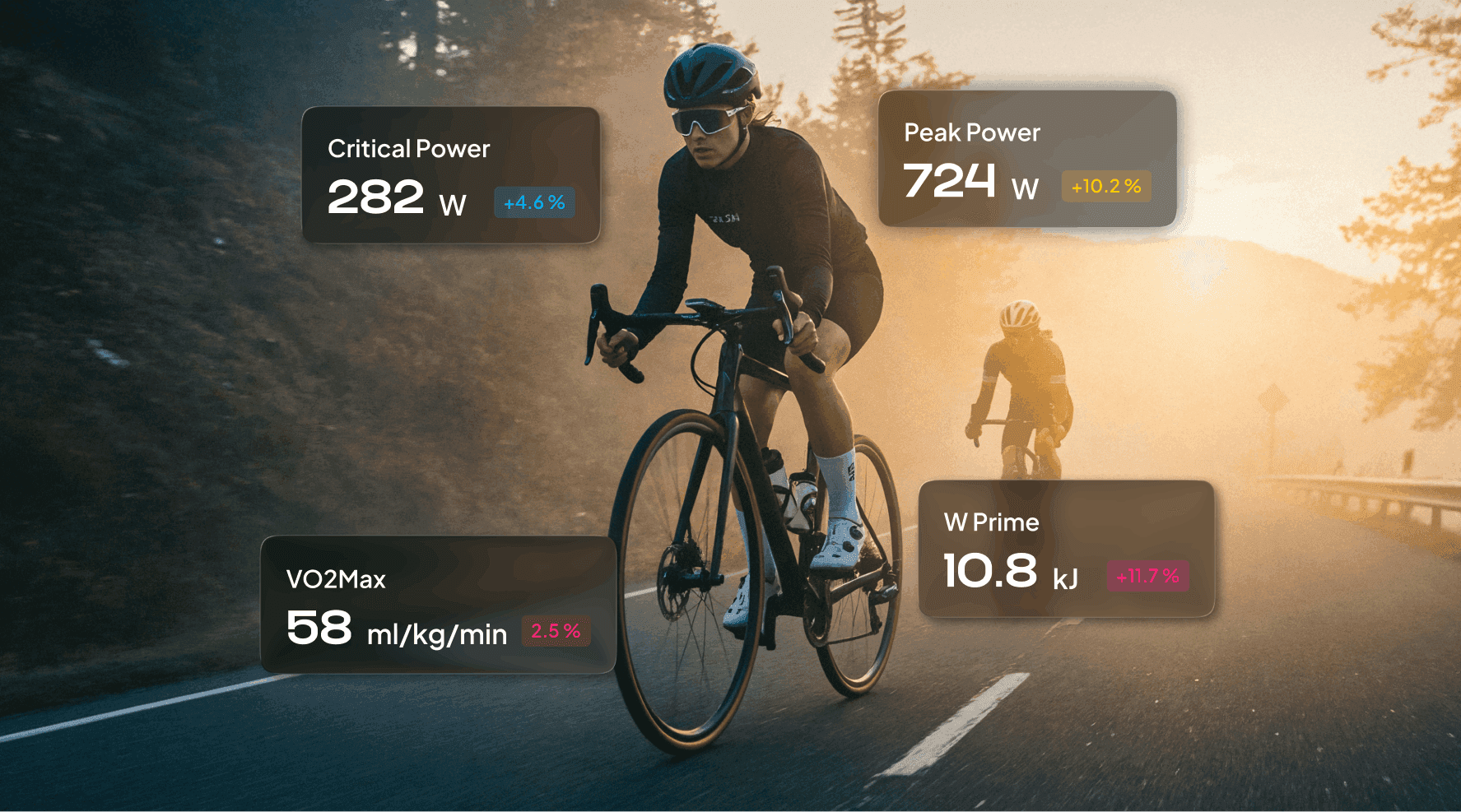
The Critical Power framework models this more precisely. It defines the boundary between sustainable and non-sustainable work, and W′ represents the limited work you can perform above that boundary [1–3].
This matters in practice.
It changes how intervals are prescribed. It changes how repeatability is interpreted. It changes how fatigue is understood in long events.
Impulse-response models show that performance evolves from the balance between stress and recovery over time [4]. Research into durability shows that output late in a session or race can diverge significantly from fresh capacity [5–6].
Performance is dynamic, not static.
Vekta builds these principles directly into its modelling and load interpretation. Capacity is not reduced to one number. Stress is not reduced to one blended score. Training decisions stay aligned with physiology.
When interpretation drifts from physiology, training decisions drift with it.
A Connected Performance Modelling System, Not Disconnected Tools
Most endurance software evolved from either calendar-based planning tools or standalone analytics environments.
In many cases, planning, modelling, analysis, and readiness exist as loosely connected layers. Data moves between tools. Interpretation depends on manual synthesis.
Vekta was designed as one connected performance modelling system.
It links:
A physiological performance model (Critical Power and W′)
Load components that separate workload and physiological cost
Session analysis that updates the model
Durability insight reflecting performance under accumulated demand
Training zones that adjust as capacity changes
Daily decision support grounded in current ability
Planning influences modelling. Modelling updates analysis. Analysis informs readiness. Readiness guides training decisions.
In practice, every session feeds back into the model. The model updates capacity. Capacity reshapes analysis. Analysis clarifies readiness. Readiness guides the next prescription.
The difference is not cosmetic. It is architectural.
What You See and Receive in Vekta
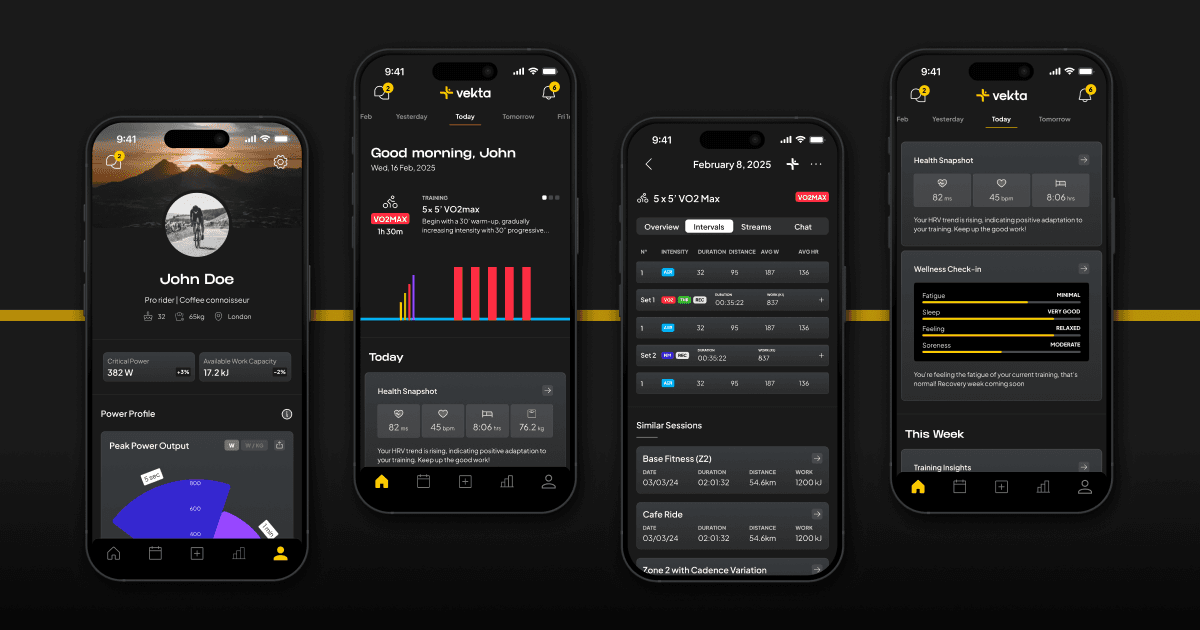
The system is visible inside the product. It is not theoretical.
When you connect your training data and upload sessions, you receive:
Artificial Intelligence as
Structural Support
Artificial intelligence in Vekta does not replace coaching. It performs the structural tasks that keep the performance model accurate and current.
AI operates on top of the physiological performance model rather than independently of it.
Detecting meaningful performance change as sustained shifts emerge in session data
Updating capacity estimates when warranted
Identifying patterns across sessions and weeks
Highlighting signals that matter while filtering noise
Producing structured session summaries to reduce review friction
AI surfaces patterns. Coaches and athletes apply judgement. Technology amplifies decision making. It does not replace it.
Clearer prescription and interpretation
By separating sustainable capacity (CP) from high-intensity capacity (W′), training decisions reflect actual physiological structure rather than a single FTP anchor. This improves pacing strategy, interval design, and identification of limiting factors.
Better weekly decisions
Separating Volume and Intensity allows you to understand whether training stress is driven by total workload, intensity density, or both. As these accumulate into Load and Strain over time, you can see whether adaptation is driven by volume progression, intensity distribution, or accumulated physiological cost.
Training that connects to long-event outcomes
Durability analysis makes late-session performance observable rather than assumed. This strengthens preparation for long races and demanding blocks where repeatability matters.
Alignment with current capacity
How Vekta Differs from Traditional Platforms
Most traditional training platforms centre intensity around FTP and express load through a single aggregated stress metric. Others focus primarily on analytics exploration.
Both contribute value.
Vekta connects modelling, planning, and interpretation into a single coherent performance modelling workflow, so insight does not require stitching together separate tools.
Vekta vs TrainingPeaks: A Structural Comparison of Performance Modelling
How performance is modelled determines how training is interpreted, analysed, and improved.
TrainingPeaks is widely used for structured training planning and performance tracking, built around FTP and composite load metrics.
Vekta approaches performance differently. It is built on Critical Power modelling, separates Volume and Intensity, and continuously adapts to how an athlete actually performs.
These differences change how training is interpreted, how load is understood, and how decisions are made.
In a controlled 50-session benchmark, Vekta achieved 97.54% interval detection accuracy versus 48.24% for TrainingPeaks.
The differences below reflect how each system interprets performance, not just how it displays it.
Performance model
TrainingPeaks uses FTP as a primary intensity anchor.
Vekta uses Critical Power and W′ to model sustainable output and finite work capacity above it.
Load interpretation
TrainingPeaks aggregates training load into a composite score.
Vekta separates Volume and Strain, distinguishing mechanical work from physiological cost.
Model evolution
In TrainingPeaks, threshold updates are manual.
In Vekta, capacity and zones update automatically as meaningful performance data is detected, with AI highlighting meaningful changes automatically.
| Dimension | Vekta | TrainingPeaks |
|---|---|---|
| Core Performance Model | Critical Power & W′ framework | FTP-based threshold |
| Load Interpretation | Volume and Intensity separated into Load and Strain | Composite stress score |
| Adaptation Handling | Model-driven capacity recalibration | Manual threshold updates |
| Durability Modelling | Built-in performance under accumulated load | Limited native durability analysis |
| Performance Structure | Modelling integrated into planning and analysis | Planning-first system with analytics layer |
| Fatigue Representation | Capacity, workload, and fatigue modelled as interacting components | Fatigue inferred from aggregated load metrics |
| Interval Detection Accuracy | 97.54% mean accuracy (machine learning detection) | 48.24% mean accuracy (rule-based detection) |
| Coach–Athlete Workflow | Unified modelling environment | Calendar-based coaching interface |
Vekta vs WKO
WKO is a powerful performance analytics environment built for deep data exploration and advanced modelling.
Vekta differs in how modelling is embedded into daily training workflow.
Integrated workflow
WKO is primarily analysis-focused.
Vekta integrates modelling directly into daily planning, readiness, and decision support.
Applied modelling
Structural Comparison
| Dimension | Vekta | WKO |
|---|---|---|
| Primary Function | Integrated training and coaching platform | Advanced performance analytics software |
| Planning Environment | Built-in structured training calendar | No native planning calendar |
| Modelling Integration | Performance model embedded into daily workflow | Modelling accessed within analysis environment |
| Application of Modelling | Model informs prescription and training structure | Model outputs require external application |
| Decision Context | Modelling, Load, and Strain interpreted within daily workflow | Primarily analytical exploration |
| Coach–Athlete Workflow | Unified shared system | Typically used alongside separate planning platforms |
| Accessibility of Modelling | Designed for applied daily coaching | Designed for advanced analytical users |
Proven Under Pressure
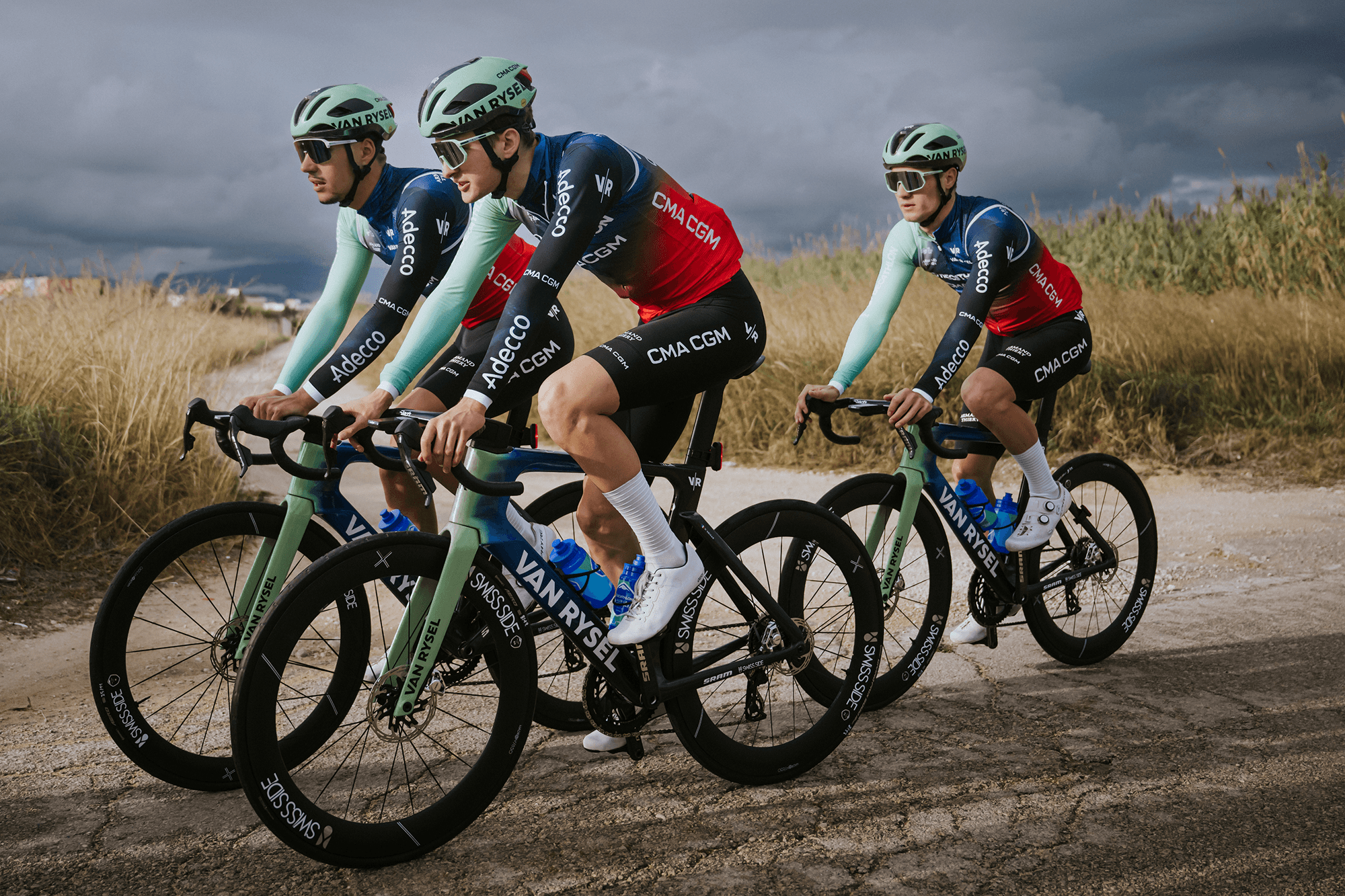
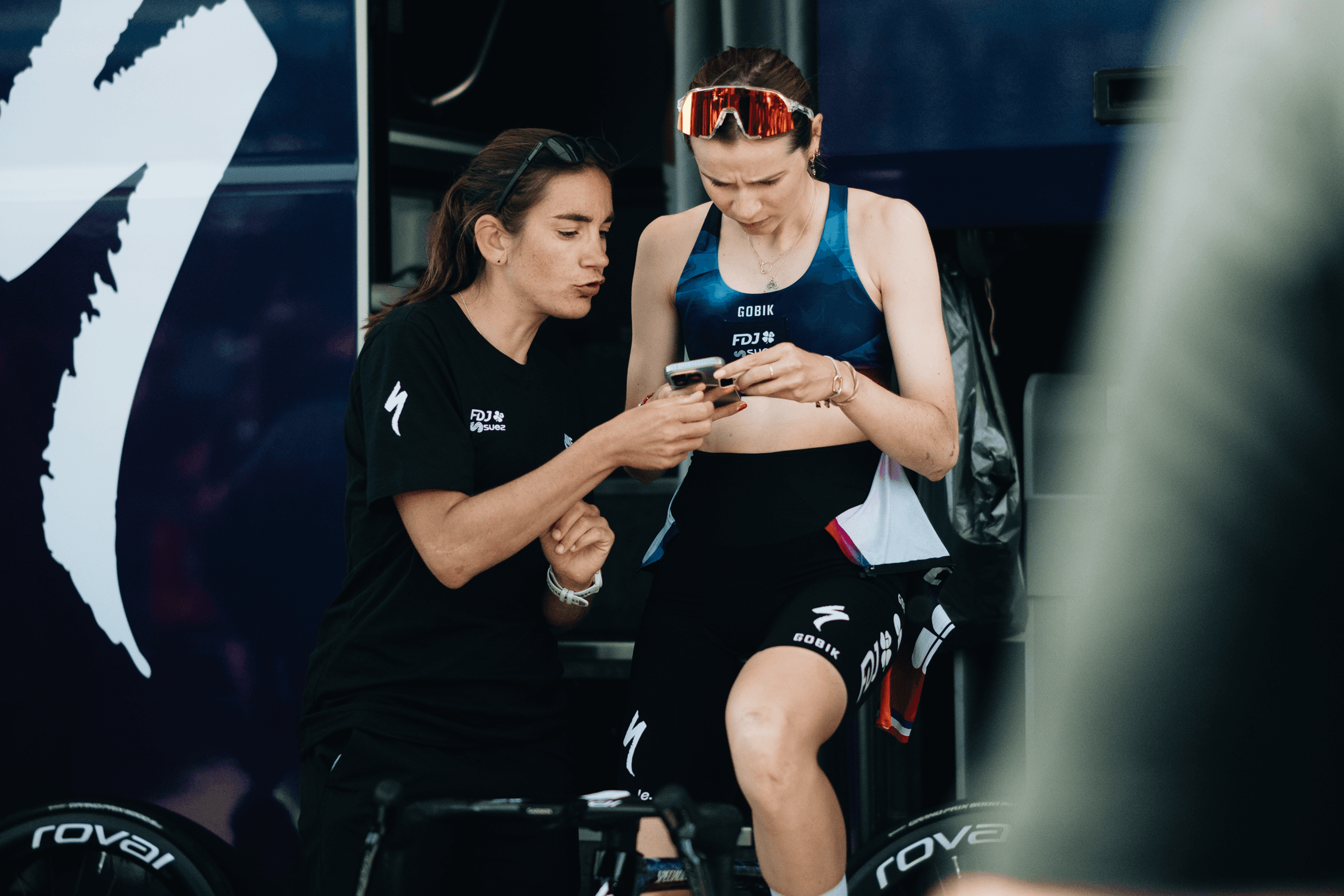
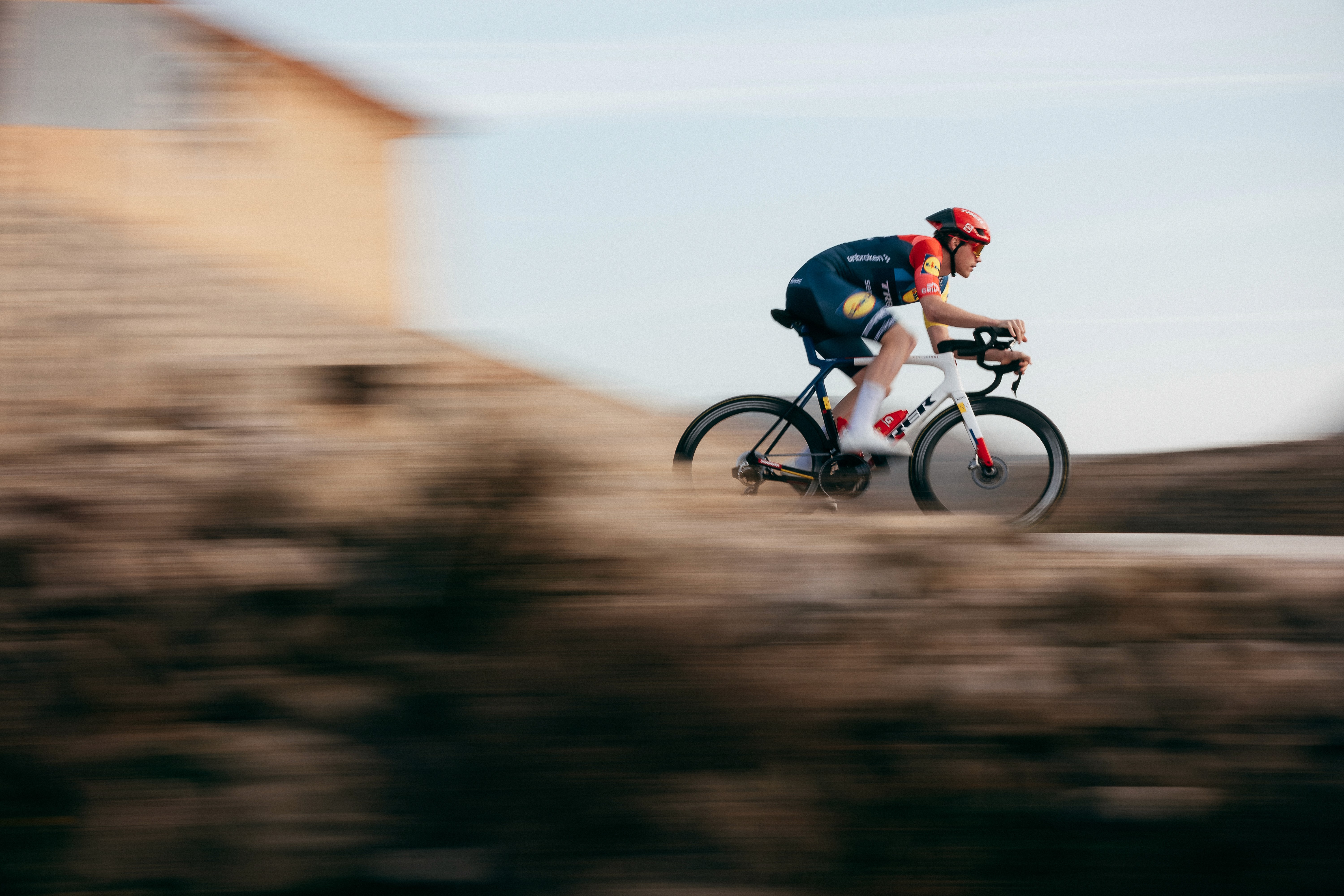
This system is used in WorldTour environments such as Lidl-Trek, Decathlon CMA CGM Team, FDJ United - SUEZ and more, and applied by leading performance coaches, where model stability, clarity of interpretation, and decision quality matter under competitive pressure.
The same architecture benefits coaches and committed athletes who want clarity, structure, and training decisions grounded in physiology rather than generic scoring.
Who Vekta Is Built For
Vekta is built for coaches and athletes who train with intent.
If you use a power meter, track your training, and want your data interpreted in alignment with physiology, the platform is designed for you.
It supports:
Coaches managing one athlete or a full roster
Athletes preparing for local races, national events, or long-distance challenges
Riders who want clarity on how their capacity is developing
Endurance athletes who prefer structure over generic scoring
The same modelling architecture used in WorldTour environments is available to anyone who values structured, evidence-aligned training decisions.
You do not need to be elite. You need to care about how you train.
Conclusion
The same modelling architecture used in WorldTour environments is available to anyone who values structured, evidence-aligned training decisions.
You do not need to be elite. You need to care about how you train.
