
COMPARISON
01 · At a glance
Category | Vekta | TrainingPeaks |
|---|---|---|
Performance model | Critical Power (CP), W' and Pmax — derived automatically from training data, with Critical Speed and D' for running. No test required. A lab or field-test value can be entered by hand, with Vekta's own estimate kept beside it | FTP-anchored — requires manual threshold calibration; without a set FTP the model does not function |
Power Duration modelling | Included as standard — CP, W', Pmax updated daily, embedded throughout platform | Requires WKO5 — separate desktop purchase at $169 |
Load metric | Vekta Volume + Vekta Intensity — separate signals, athlete-specific, includes altitude adjustment | TSS®/CTL®/ATL®/TSB® — single blended score, FTP-dependent, no environmental adjustment |
Interval detection | AI & ML model — 97.54% mean accuracy, 43/50 sessions perfect | Rule-based thresholds — 48.24% mean accuracy, 9/50 sessions perfect. Premium tier only |
Training zones | Cycling and running zones update daily from CP, Critical Speed, W' and D' automatically | Manually applied by coach; static until recalibrated |
VO2max | Estimated daily from CP/W' using Sitko et al. 2022; updates continuously | Available via WKO5 — separate desktop purchase at $169 |
Native AI in analytics | Yes — ML interval detection, AI session summary, AI workout builder, AI session comparison, adaptive zones | No |
AI workout builder | Plain-language description generates personalised structured session for cycling, running or swimming; voice input on mobile | No AI generation — manual nested interval builder, desktop only |
Create/edit workouts on mobile | Yes — full creation, editing, and voice-to-workout on mobile app | No — requires desktop web app |
Adaptive training plans | Yes — update automatically as athlete data changes | Marketplace plans are static; no native adaptive mechanism |
W' Balance | Real-time depletion tracked second-by-second; pre-session preview on prescribed workouts | Not available |
Durability analysis | Peak power at 0/10/20/30/40/50 kJ/kg fatigue levels in every session | Not available |
Race detection | Automatic — classifies race type: ITT, Flat, Hilly, Mountain Stage | Not available |
Session comparison | AI finds similar past sessions using proprietary similarity score; side-by-side display | Not available |
AI session summary | Generated after every session; delivered automatically to coach and athlete | Not available |
Climb analysis | Dedicated calculator using CP, W', and physics modelling — rolling resistance, air density, frontal area | Basic climb detection in Analyze 360 |
Session analysis | Overview, Streams, Zones, Laps, Peaks, Durability, Comparison, W' Balance, Torque, Chat, Trophies | Analyze 360 — overlay charts, channel stacking, interval and climb detection |
Streams depth | Left/Right Power Balance, Heat Strain Index (CORE), Tymewear respiratory data, Skin Temperature, Flowbio fluid and sodium loss, plus all standard channels | Standard channels via connected wearables |
Coach dashboard | All athletes — load, recovery, sleep, HRV, RHR, wellness score, upcoming days visibility | Compliance colour calendar; no recovery metrics at roster level |
Coach-athlete communication | Native chat in session analysis — desktop and mobile; AI summary to both parties after every session | TrainingPeaks Messaging — direct and group chat, web and mobile, Premium athletes only. Sits apart from the analysis; no AI summary |
Multi-sport prescribing | Sub-sport prescribing — track cycling, MTB, indoor, triathlon disciplines | Sub-sport selection available |
Triathlon processing | Activities split into per-discipline sub-activities automatically | Supported |
Device integrations | Garmin, Wahoo, Hammerhead, COROS, Zwift, Stryd, WHOOP, Oura, Tymewear, CORE Body Temperature, Flowbio | Garmin, Wahoo, Zwift, WHOOP, Suunto, Oura, COROS, Apple Watch, Polar, iGPSport, Hammerhead, FORM Goggles, TrainerRoad, Strava |
Multi-sport | Cycling, running and swimming all fully modelled — automatic Critical Power and Critical Speed, D' and W' for running, swim zones from critical pace and max HR | Cycling, running, triathlon, swimming, strength |
Strength training | Mark-as-completed for off-device sessions | Full strength module — 1,000+ video-guided movements; strength TSS feeds PMC |
Indoor cycling | Structured sessions push to Zwift | TrainingPeaks Virtual — separate indoor cycling simulation platform, included with Premium |
Fuelling and nutrition | Personalised carbohydrate recommendation generated with every prescribed session in g/h, adjustable in 10 g/h steps | Fuelling Insights — fat and carb burn calculated from power data, Dr. Iñigo San-Millán model |
Women's health | Not currently available | Garmin Women's Health sync — menstrual cycle data aligned with training calendar |
Body composition | Body weight, body fat and SpO2 tracking via mobile app and desktop | Body fat and weight via manual entry, with Garmin/Fitbit sync |
Migration from TrainingPeaks | Fully supported — FIT files, workout summaries, RPE, comments, workout library; team-assisted bulk import, guided onboarding | n/a |
Elite team partnerships | 7 WorldTour-level: Lidl-Trek, Jayco AlUla, Liv AlUla Jayco, FDJ-Suez, Decathlon CMA CGM, Team TotalEnergies, Team AMANI | 15 WorldTour teams, 40+ national governing bodies |
Coach plan marketplace | Not available | Thousands of plans — coach revenue channel and in-platform invoicing |
Coach pricing | Free for coaches — €19.99/month per athlete (€179.99/year, save 25%) | Base subscription + $9/athlete/month for Premium athletes |
Athlete pricing | €19.99/month or €179.99/year — 14-day free trial, no setup fees | Free tier (limited), $19.99/month or $119.99/year Premium — 14-day trial |
Public roadmap | Yes — active, updated continuously | No |
Release cadence | Major updates every one to two weeks, documented publicly | Periodic |
Public API | Live. Coaches query the data of the athletes they coach, self-coached athletes their own — activities, streams, detected intervals, prescriptions and metrics history. It writes structured workouts back and sends them to connected devices, manages the library, and adds notes, events and comments. Wellness check-ins readable. Keys issued on request | No public API. A partner programme exists for companies integrating with TrainingPeaks, and it is closed to new applicants as of September 2026 |
02 · The honest read
You already run TrainingPeaks and WKO5 together and it works. That analytical depth is genuinely powerful.
You sell training plans outside your direct roster. The TrainingPeaks marketplace has a built-in revenue channel with in-platform invoicing. Vekta has no equivalent.
You need strength training inside your load metrics. TrainingPeaks has a full strength module; Vekta does not.
Your athletes use hardware we do not yet integrate with directly, such as Apple Watch, Polar, Suunto or FORM goggles.
You need the business around the coaching. TrainingPeaks sells a plan marketplace with in-platform invoicing, and TrainingPeaks University carries continuing education credits toward certification. Vekta has neither.
You want AI embedded in the workflow rather than absent from it. TrainingPeaks has no native AI in its analytical tools.
You want a platform built on modern performance science from the ground up. CP and W prime are the foundation here, not a feature layer.
You need interval detection that holds at scale. 97.54 percent against 48.24 percent in a controlled benchmark of fifty identical sessions.
You need full mobile capability. TrainingPeaks requires a desktop to create or edit a structured workout.
You want zones that reflect where an athlete is today, not when you last ran a test.
You want fuelling prescribed, not just measured. Every session arrives with a personalised carbohydrate target in grams per hour.
Josu Larrazabal
Head of Performance, Lidl-Trek
03 · The detail
Section by section, where the two platforms actually differ.
The AI Divide
This is the sharpest distinction between the two platforms and it runs deeper than any individual feature.
Start with how TrainingPeaks describes itself, because it is unusually clear. It calls itself “your complete training platform” and sums up what it does as “Plan. Train. Lift. Find your coach.” Those are its own four verbs, and analysis is not among them. That is not an oversight — it is an accurate description of a planner and a coach marketplace, and it is the best-established one in the sport.
TrainingPeaks has no native AI in its analytical or coaching tools. The performance model, load calculations, zone assignments, and session analysis are all rule-based and manually driven.
Vekta embeds AI as structural support throughout the platform. Artificial intelligence in Vekta does not replace coaching. It performs the structural tasks that keep the performance model accurate and current, detecting meaningful performance change, updating capacity estimates when warranted, identifying patterns across sessions and weeks, highlighting signals that matter while filtering noise, and producing structured session summaries to reduce review friction. AI surfaces patterns. Coaches and athletes apply judgement. Technology amplifies decision making. It does not replace it.
In practice: AI and machine learning detects intervals across every session automatically. A structured summary is generated after every workout and delivered to coach and athlete. The AI Workout Builder creates personalised structured sessions from plain language, or from voice on mobile. Session comparison surfaces the most similar past sessions from an athlete's history without manual input. Training zones update daily from continuously recalculated CP and W' values. Adaptive plans adjust as athlete data changes.
TrainingPeaks positions the coach as the analytical engine. Vekta gives the coach an analytical engine so they can focus on what only they can do.
Where The Work Lands
Before any feature-by-feature comparison, the structural point that explains most of what follows. TrainingPeaks describes what it does as “Plan. Train. Lift. Find your coach.” Interpretation is not on that list, and that is not an oversight — it is the architecture. The analysis was never meant to live inside the platform.
Their own product line shows it. Power-duration modelling is not in TrainingPeaks. It is in WKO5, a separate $169 desktop application that TrainingPeaks sells and which needs a TrainingPeaks subscription underneath it to pull athletes in. The deepest analysis in their ecosystem runs on one machine, outside the platform, where the athlete never sees it.
Everything downstream follows. Zones anchor to FTP and stay static until somebody recalibrates them. Intervals are found with rule-based thresholds rather than a model. A TSS score says a session was hard, not why the last twenty minutes came apart. None of that is broken — it means the interpretation lands back on the coach, every week, for every athlete.
That was a sensible division of labour when a coach had a handful of files to read. It stopped being sensible when the volume grew, which is precisely what Josu Larrazabal describes above: more data than can realistically be analysed, and a need for powerful analysis quickly.
This is the honest centre of the comparison, and it is not about price. At $21.99 a month plus $9 per premium athlete, TrainingPeaks is fair value for what it does. The question is not whether it costs too much. It is how many hours a week you spend doing work the platform could be doing for you.
Performance Model
Every number a training platform produces flows from its underlying model. This is where the two platforms diverge most fundamentally.
TrainingPeaks is built around FTP which estimates the power a rider can sustain for approximately one hour. TSS®, CTL®, ATL®, and TSB® are derived from FTP. The system requires FTP to be calibrated accurately. Without it, every downstream metric is unreliable. Zones are static until the coach or athlete manually recalibrates.
Vekta uses Critical Power (CP) and W'. CP defines the boundary between sustainable and unsustainable effort. W' is the finite anaerobic energy reserve above CP, depleting when you exceed CP, recovering when you drop below it. Both values are derived automatically from training data and update daily. No test is required. Cycling zones update every day to reflect where the athlete actually is.
→ Critical Power and W' Explained
Training Load: Two Signals vs One Score
TSS collapses every session into a single number regardless of how volume and intensity were distributed. A four-hour endurance ride and a one-hour VO2max session can produce identical TSS®. The physiological demands on the athlete are entirely different.
Vekta Volume and Vekta Intensity are kept separate. Volume tracks total work done. Intensity tracks the physiological cost of that work relative to the athlete's current capacity, including an altitude adjustment, where the same power output demands more at elevation. Vekta Load-8 (eight-week EWMA of Volume) and Vekta Load-2 (two-week EWMA) provide the long and short-term horizon view, equivalent in function to CTL and ATL, built from separated signals rather than a blended score.
→ Vekta Volume and Intensity: A New Standard for Training Load
→ Introducing Vekta Load and Strain
Interval Detection: The Benchmark
In March 2026, Vekta published a controlled benchmark comparing automatic interval detection across 50 identical training sessions on both platforms.
Vekta: 97.54% mean accuracy. Perfect detection in 43 of 50 sessions. Mean misidentified intervals per session: 0.26.
TrainingPeaks: 48.24% mean accuracy. Perfect detection in 9 of 50 sessions. Mean misidentified intervals per session: 6.06.
TrainingPeaks uses a rule-based system applying fixed thresholds across a predefined 7-zone model. Efforts below Zone 3 are excluded. Vekta uses AI and machine learning reading power, cadence, and torque simultaneously, adapting to each session's actual structure. At scale across a full coaching roster, the difference between 0.26 and 6.06 misidentified intervals per session is not a minor inconvenience, it is the difference between analysis that is immediately trustworthy and analysis that requires manual correction every day. TrainingPeaks interval detection is a Premium-only feature.
→ Automatic Interval Detection: Vekta vs TrainingPeaks — Full Benchmark
WKO5: The Analytical Gap TrainingPeaks Leaves Open
WKO5 is a separate desktop analytics product sold by TrainingPeaks at a one-time cost of $169. TrainingPeaks' own documentation describes WKO5 as the tool coaches need when they want to move beyond FTP as their single metric and analyse training based on individual physiology. It provides a Power Duration Model generating individual performance profiles, physiological phenotyping (sprinter, climber, all-rounder), modelled FTP that updates from training data, and individualised training levels.
WKO5 is what coaches buy when the analytical depth inside TrainingPeaks itself is not sufficient.
Vekta includes this level of analytical depth as part of its standard subscription. CP, W', and Pmax are derived automatically from training data, updated daily, and embedded throughout the platform, in zone calculations, session analysis, durability views, W' Balance, and workout prescription. The power-duration framework is not an add-on. It is the foundation.
For coaches currently running TrainingPeaks and WKO5 together, the combined cost is a TrainingPeaks subscription plus $169. We look at that add-on on its own in Vekta versus WKO5. With Vekta, there is no additional purchase. The power-duration modelling, physiological profiling, and daily-updating capacity estimates are included for every coach and athlete from day one.
Capability | Vekta | TrainingPeaks | WKO5 |
|---|---|---|---|
Power Duration modelling | Included | Not available | $169 one-time |
Daily-updating capacity estimates | Yes | No | Yes |
Physiological phenotyping | Yes | No | Yes |
Individualised training zones | Yes — updates daily | Manual only | Yes |
Web and mobile access | Yes | Yes (limited) | Desktop only |
Additional purchase required | No | n/a | Yes |
Session Analysis
Both platforms give you access to session data after every ride, run, or swim. The depth and structure differ considerably.
TrainingPeaks' Analyze 360 allows overlay of any FIT file channel on the same chart with user-defined stacking. Climb detection and rule-based interval detection are included. It is a capable, mature analysis environment used by millions of athletes.
Vekta's session analysis is built around several named views. Overview visualises adherence by comparing the planned versus completed session, alongside Vekta Volume and Intensity and key workout statistics. Streams brings all metrics together in one place: power, heart rate, torque, W' balance, and more, all overlaid in a single chart, with toggles for multiple streams, detected intervals, and power zones. Zones shows time in zone across both power and heart rate, breaking down how long an athlete spent in each training zone relative to prescription.
Peaks compares an athlete's best power values from the session against their season and all-time records, down to one second, with the date each record was set, and goes further into Durability: peak power values at different fatigue levels, viewable from 0 to 50 kJ/kg in 10 kJ/kg increments, showing performance under load as the session wears on. No equivalent exists in TrainingPeaks. Comparison instantly lines up similar past workouts using a proprietary similarity score, retrieving and displaying the most relevant past sessions side by side so progress over time is visible without manually searching old files.
Interval detection runs automatically in the background on every session, using AI to identify and classify each effort by duration, power relative to CP, and cadence and torque characteristics, and assigns a training stimulus to the session as a whole. Vekta also analyses session structure to determine automatically whether it was a race, and if so classifies it by type.
Post-session communication is built into the platform: athletes can share comments and reflections directly after a workout, with the coach receiving them instantly alongside an AI-generated summary highlighting key takeaways.
Workout Planning and Mobile
TrainingPeaks offers a mature manual workout builder on desktop, supporting nested interval structures, zone-specific targets, and library management. The plan marketplace has thousands of options across disciplines and a coach revenue channel with in-platform invoicing. All structured workout creation and editing requires the desktop web app; it is not available on mobile.
Vekta's AI Workout Builder generates a fully structured, personalised session from a plain-language description in seconds. On supported mobile devices, describe a workout by voice and Vekta builds it. Creating, editing, and managing workouts is fully supported on the Vekta mobile app, no desktop required. Structured sessions are supported for cycling, running, and swimming, and the AI Workout Builder generates all three, so a swim set is described in a sentence rather than entered by hand.
Fuelling
Vekta generates a personalised carbohydrate recommendation with every prescribed session, expressed in grams per hour and adjustable in 10 g/h steps. It is derived from the demands of that specific session rather than a generic table, so the fuelling plan arrives with the workout instead of being worked out separately afterwards. A workspace that sets its own fuelling can turn the estimate off.
TrainingPeaks comes at fuelling from the other direction. Fuelling Insights calculates fat and carbohydrate burn from completed power data using the Dr. Iñigo San-Millán model. It tells you what a session cost. It does not prescribe what to carry into the next one.
Data and Integrations
TrainingPeaks has the broadest integration count: Garmin, Wahoo, Zwift, WHOOP, Suunto, Oura, COROS, Apple Watch, Polar, iGPSport, Hammerhead, FORM Goggles, TrainerRoad, and Strava. TrainingPeaks Virtual, a separate indoor cycling simulation platform, is included with Premium.
Vekta integrates directly with device platforms: Garmin, Wahoo, Hammerhead, COROS, Stryd, and Zwift for training data; WHOOP, Oura, Tymewear, and CORE Body Temperature for recovery and health metrics. Vekta does not integrate with aggregator platforms like Strava by design. Aggregators process and smooth FIT file data before passing it downstream. Vekta pulls raw data from the device source, preserving the full precision of power, cadence, and torque data that the analytical model depends on. Raw from source is a design decision, not a gap.
Coach Tools
TrainingPeaks gives coaches a calendar delivery system with compliance colour-coding, structured workout push to devices, a plan marketplace with revenue sharing, and in-platform invoicing. Zones and performance metrics are static until manually updated. TrainingPeaks Messaging gives coaches and Premium athletes direct and group chat on web and mobile, though athletes on the Basic tier are outside it. What it does not have is AI-generated session summaries, or analytics that refresh automatically as athlete fitness changes. Structured workout creation requires the desktop web app.
Vekta is designed around a different premise: the platform's primary job is to give coaches time back. Every design decision, from AI-generated session summaries to automatically correct interval detection, from daily zone updates to voice-to-workout on mobile targets the administrative overhead that grows with roster size. Coaches using Vekta can scale their athlete roster without sacrificing the quality of individual attention. The time freed by AI-handled analysis goes back into athlete communication, session feedback, and the human connection that drives results.
The coach dashboard surfaces all athletes' load, recovery, sleep, HRV, resting heart rate, and wellness in one view: including upcoming days, so prescription coverage across the full roster is visible at a glance. After every session an AI summary is delivered to coach and athlete. Chat is embedded in the analysis flow. Wellness check-ins, copy/paste sessions between athletes, multi-sport sub-type prescribing, and triathlon split processing are all supported. Every athlete's zones update daily without coach intervention.
This translates into measurable outcomes. Coaching partners migrating from TrainingPeaks to Vekta consistently report meaningful reductions in administrative time per athlete and the ability to grow rosters without proportional increases in workload. Ulisses Abbud increased his athlete roster by 25% after moving from TrainingPeaks to Vekta, without increasing hours. This mirrors what Lidl-Trek's Head of Performance described at the WorldTour level: less time processing data, more time on the human connection with riders.
→ How Vekta Uses AI to Make You a More Effective Coach
Switching from TrainingPeaks to Vekta
Vekta provides a fully supported migration pathway. FIT files, workout summaries, RPE scores, session comments, body weight history, and the full workout library can all be transferred from TrainingPeaks. The Vekta team handles bulk imports directly. After device connection, CP, W', and training zones are calculated automatically from synced history. A guided onboarding session is available for coaches migrating full rosters.
→ Switching from TrainingPeaks to Vekta — Full Guide
A New Owner
One thing has changed about TrainingPeaks that is worth knowing before choosing it, and it is recent enough that a lot of comparisons have not caught up.
In July 2026, Garmin acquired TrainingPeaks and TrainHeroic from Peaksware Holdings, bringing roughly 120 employees across the two products into the group. TrainingPeaks is no longer independent.
That is not automatically bad, and it would be cheap to pretend otherwise. Garmin has resources, and TrainingPeaks already integrates deeply with Garmin devices, so there is an obvious case that the two fit together well.
What nobody can tell you yet is what it means for a coach.
Acquisitions change roadmaps, pricing and priorities, and a hardware company owning the software layer raises a fair question about how neutral that layer stays toward competing devices over time. WKO5, the desktop analysis product, sits inside the same portfolio and has had no successor announced since 2019. We are not going to speculate about any of it, because we do not know, and neither does anyone else outside Garmin.
Vekta is independent, and reads raw data from Garmin, Wahoo, Hammerhead, COROS, Zwift and Stryd on equal terms. That is worth stating plainly rather than implying.
The Business Around The Coaching
There is a category of thing TrainingPeaks offers that Vekta does not, and it has nothing to do with physiology.
TrainingPeaks sells a plan marketplace with in-platform invoicing, so a coach can take payment and distribute plans beyond their direct roster. It also runs TrainingPeaks University, whose courses carry continuing education credits toward TrainingPeaks Certification. Twenty-five years in, that education programme is part of why a generation of coaches sit inside its ecosystem.
Vekta has none of that. There is no marketplace, no athlete billing or invoicing automation, and no accredited coach education. Vekta is a performance platform, and if what you need is the commercial infrastructure of running a coaching business, TrainingPeaks does things we do not.
What Vekta does have is documentation that goes further than most: start guides for coaches and athletes, and support articles explaining Critical Power, W′, Volume and Intensity, durability and the load model in real depth rather than describing which button to press. That teaches the platform well. It does not carry credits toward a certification, and we would rather be precise about the difference.
Elite Team Use
TrainingPeaks works with 15 WorldTour cycling teams, the broadest adoption by count in the category.
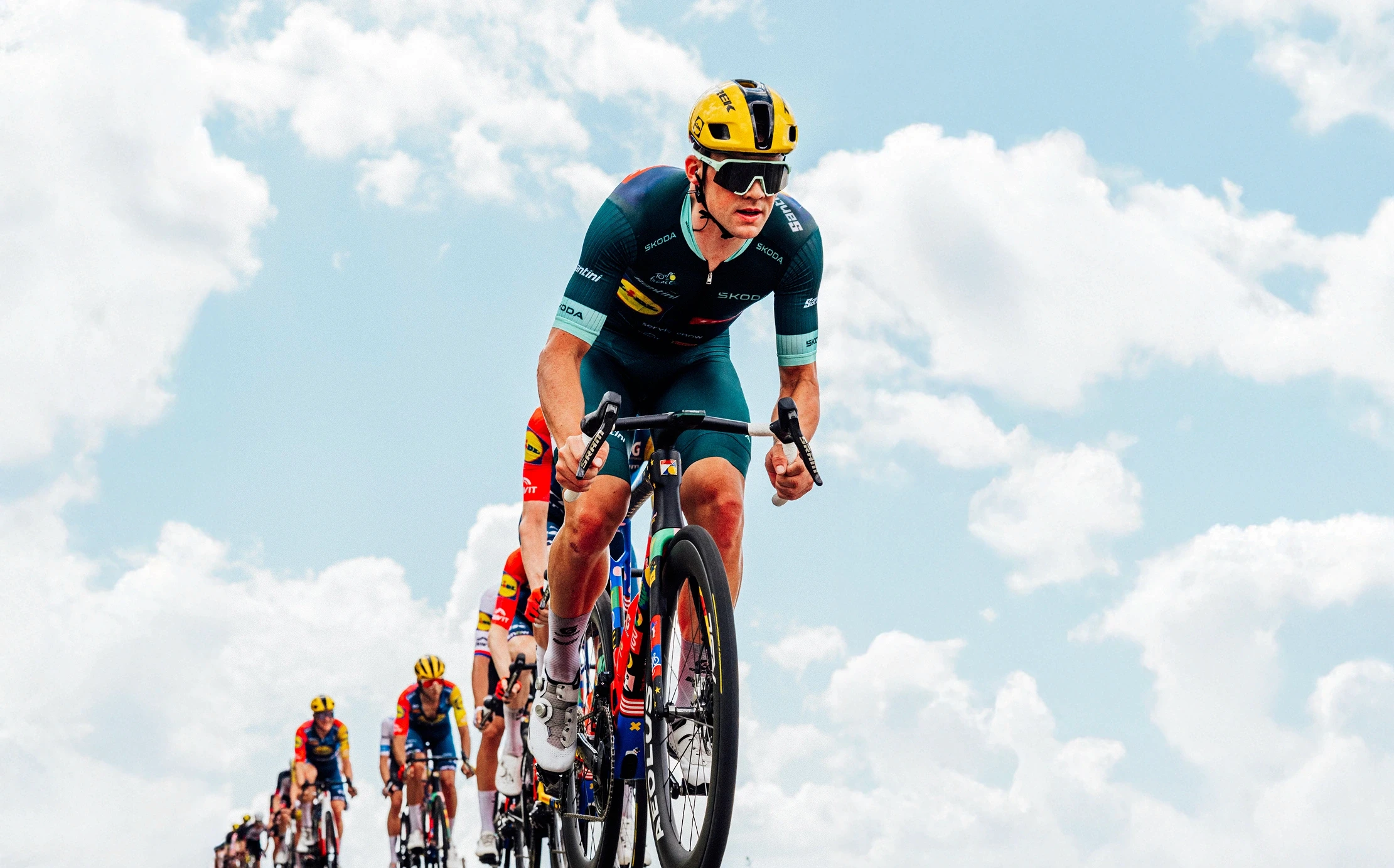
In 2025 and 2026, seven WorldTour teams left TrainingPeaks and chose Vekta. All had previously used TrainingPeaks as their primary training platform. Lidl-Trek and Team TotalEnergies named Vekta as Official Training and Coaching Platform across their men's WorldTour, women's WorldTour, and development programmes. Decathlon CMA CGM Team partnered across WorldTour, development, and junior levels. These join existing partners Team Jayco AlUla and Liv AlUla Jayco (Official AI and Big Data Partner), Team AMANI, and FDJ-Suez.
FDJ-Suez use TrainingPeaks for training delivery and communication, and Vekta as their AI and big data partner for advanced analysis, data modelling, and performance intelligence. That dual-platform model reflects where the category is heading.
For Athletes
If you train with a coach, your coach's platform choice determines yours. But if you are self-coached, or evaluating platforms yourself, the differences are worth understanding directly.
TrainingPeaks gives you a training calendar, device sync, and a load model built on FTP. It is functional and familiar. The free tier is limited, interval detection, the PMC, and performance insights all require Premium at $19.99/month.
Vekta gives you the same analytical system your WorldTour team uses. Critical Power and W' are calculated automatically from your training data from day one: no lab test, no manual calibration. Your zones update every day. After every session, an AI-generated summary tells you what happened and why. The Durability tab shows how your power holds under fatigue. The W' Balance tab shows exactly how much anaerobic capacity you had and used. Session comparison surfaces similar past efforts automatically so you can track genuine progress over time. The mobile app supports full session analysis and workout creation anywhere. All of this is included at €19.99/month with a 14-day free trial. Vekta is also free to join if your coach is already on the platform.
Pricing
Vekta
Coaches: free, always
Athletes: €19.99/month or €179.99/year per athlete (save 25%)
14-day free trial, no setup fees, cancel anytime
TrainingPeaks
Coaches: $60/month
Athletes: free tier (limited) or $19.99/month / $119.99/year Premium
14-day trial available
Vekta is free for coaches, with no base subscription. TrainingPeaks requires a base subscription on top of the $9/athlete/month Premium fee.
TSS®, CTL®, ATL®, TSB®, and FTP® are registered trademarks of TrainingPeaks LLC, referenced here for the purpose of direct comparison only.
Still Weighing It Up?
This page compares two platforms. If you are earlier than that and still drawing up a shortlist, we have reviewed every credible TrainingPeaks alternative — including the ones that beat us — with 2026 pricing for each: TrainingPeaks alternatives.
Is Vekta a good alternative to TrainingPeaks?
How do I export my data from TrainingPeaks?
Does my workout library move across?
What does Vekta cost compared to TrainingPeaks?
Who should stay on TrainingPeaks?
How long does switching take?
Test with your whole roster during the trial.