Key Takeaways
Heat training for cyclists works best in the winter base phase, not just the weeks before a hot race. Its most valuable adaptation, a rise in haemoglobin mass, took elite cyclists five weeks of sessions to build: +42 g, against +6 g in a control group (Rønnestad et al., 2021).
Winter indoor riding can become heat training without changing the plan. Modest power, a closed door, the fan off and an extra layer turn it into heat work, and three heat sessions a week kept haemoglobin mass rising into the following weeks (Rønnestad et al., 2022).
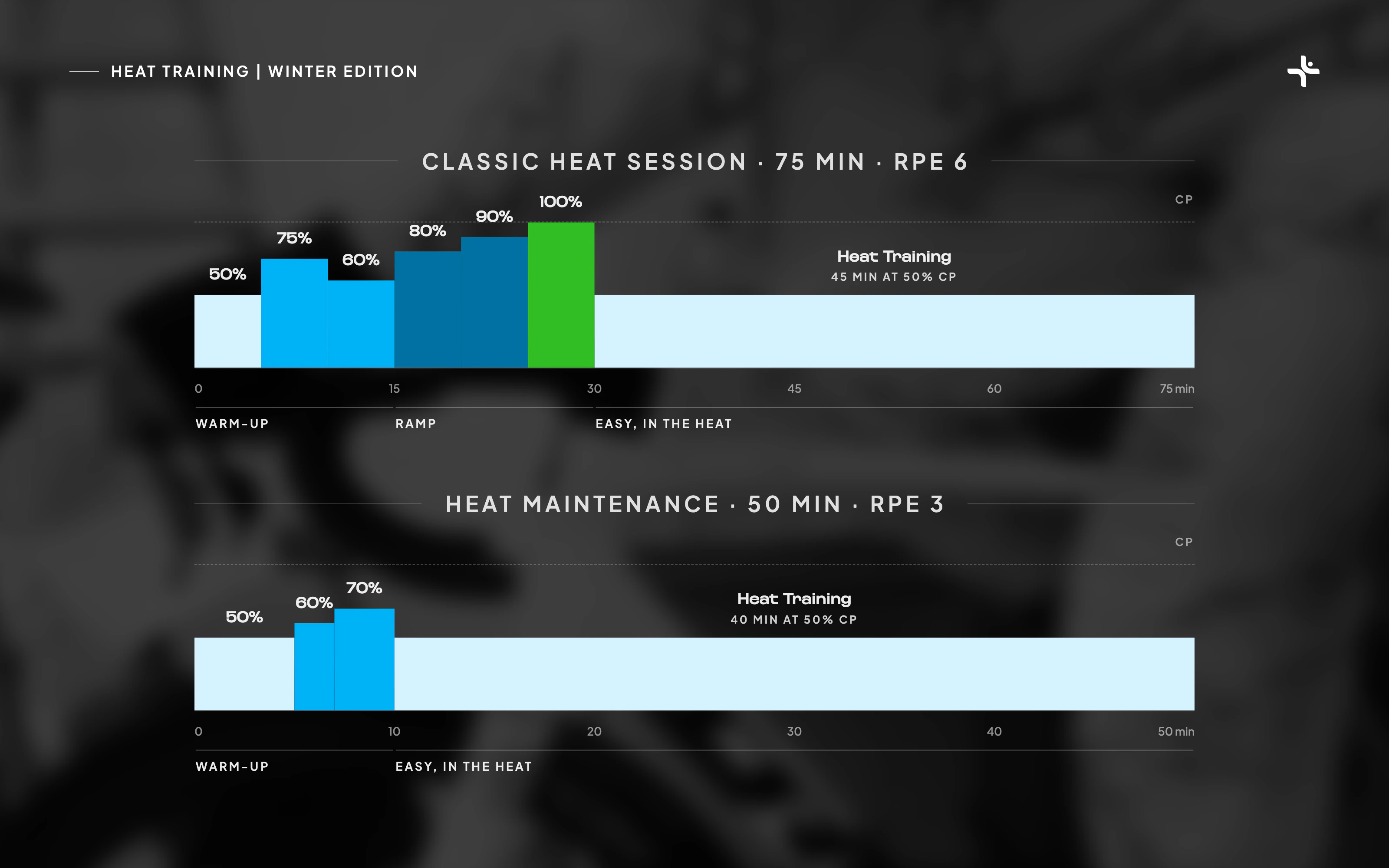
Two workouts in the Vekta workout library carry a winter heat block. The Classic Heat Session builds it: 75 minutes, ramping in five-minute steps to 100% of CP, then 45 minutes at 50% of CP. Heat Maintenance holds it: 50 easy minutes on a double day or straight after a normal session.
The dose of heat training is core temperature, not room temperature. The target is around 38.5 °C held for 45 to 60 minutes, three to five times a week (Vekta and CORE's heat training guide). Vekta shows CORE Body Temperature and Heat Strain Index beside power and heart rate.
WorldTour teams already use heat beyond hot races. Lidl-Trek coach Mattias Reck: “Heat training isn’t just for hot stages. It’s how we maintain altitude gains, improve fatigue resistance, and sharpen race-day readiness, all without the need for a second altitude camp.” (CORE, 2025)
Most coaches stopped treating heat as a race-week fix some time ago. The plasma volume expansion, the lower heart rate at a given power, the haemoglobin mass that builds over weeks in a hot room: the physiology is well understood.
What hasn't moved is the calendar. Heat blocks still tend to arrive in late spring and summer, slotted between races and stacked on top of the hardest training of the year, because that is when heat feels relevant. The thermometer outside sets the schedule.
It is the wrong slot. The adaptation most worth chasing takes five weeks to build, adds strain without demanding more power, and works best when nothing else in the plan is competing for recovery. That describes winter far better than spring.
The adaptation that matters takes five weeks
Ten days of heat is enough to change the blood. In Lorenzo and colleagues' 2010 study, trained cyclists who added ten days of riding at around 50% of VO2max in a 40 °C chamber expanded plasma volume by 6.5%. That is the fast adaptation, and it is only the start.
The deeper change is haemoglobin mass, and it is slow. Rønnestad and colleagues took elite cyclists with an average VO2max of 76 ml/kg/min and added an hour of light riding at 37.8 °C, five times a week, for five weeks. Haemoglobin mass rose by 42 g. The control group, training at 15.5 °C, gained 6 g.
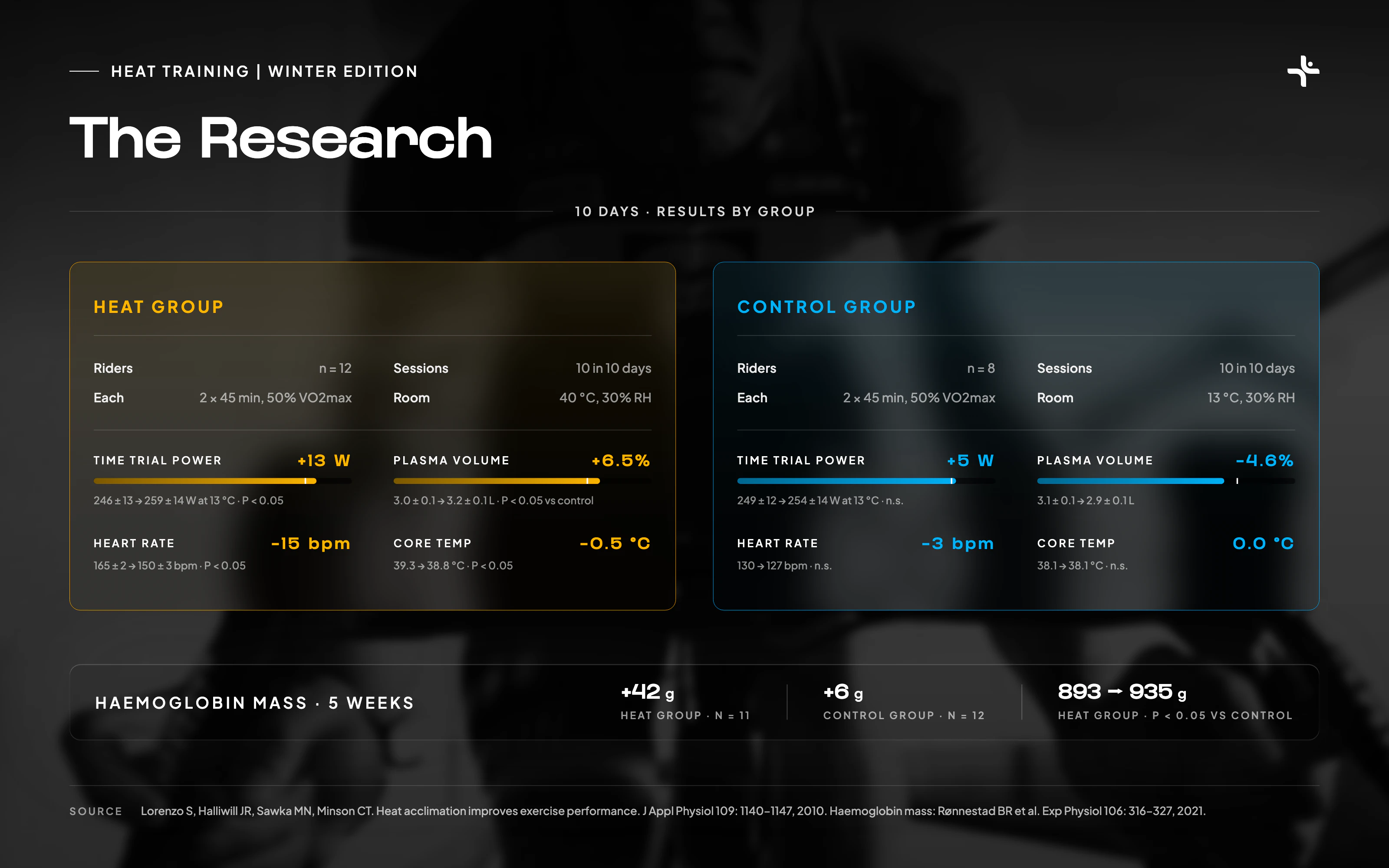
Sources: Lorenzo et al., J Appl Physiol, 2010; Rønnestad et al., Exp Physiol, 2021.
That is the same currency an altitude camp deals in, earned on an indoor trainer. But it is earned over twenty-five sessions, not five, and in season there is no room for twenty-five uninterrupted sessions. So the summer heat block shrinks to what fits: a fortnight before a hot target. That is acclimation, and it works for the race it is aimed at. It is not the haematological block, and it was never going to be.
Winter already looks like a heat protocol
Read the methods sections of these studies and they describe a winter base phase. Modest power. Indoors. In a controlled room. Several times a week, for weeks on end.
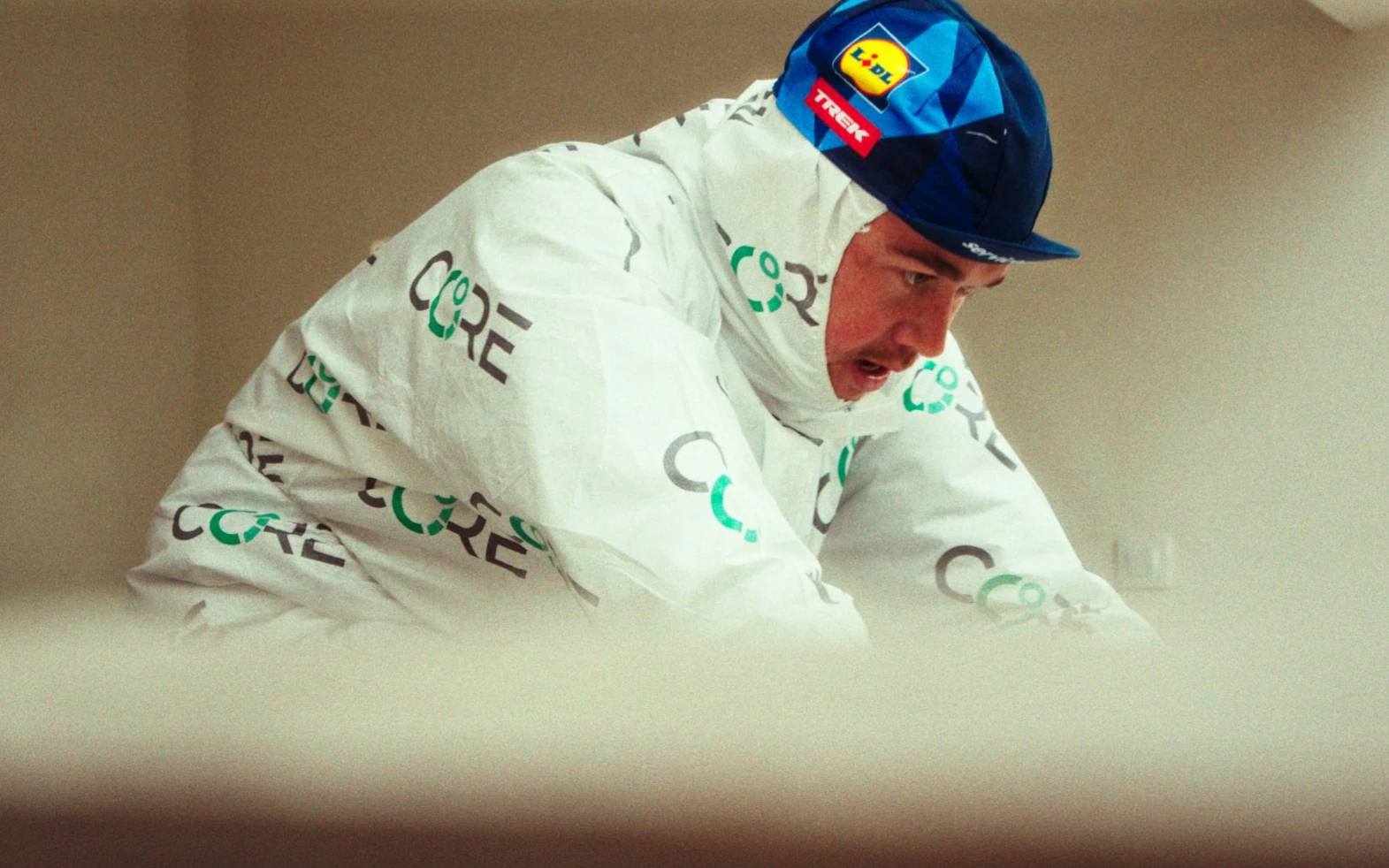
Most riders are already doing that riding through the winter. Turning it into heat work takes a closed door, the fan off and an extra layer, not a climate chamber. Because the power stays modest, the block sits inside a base phase without rewriting the week. The intervals stay where they were. The strain is another matter: holding a raised core temperature for 45 minutes costs heart rate, fluid and recovery, and the plan has to count it.
The gains don't have to be gone by spring either. In a follow-up study, Rønnestad's group found that after a five-week heat block, three sessions a week were enough to hold haemoglobin mass up for the following three weeks, while riders who stopped lost the advantage. Build the block in winter, maintain it lightly into the season, and add a short acclimation top-up only when a hot race actually needs one.
Two heat training sessions carry the block
Not every heat session is the same. Some carry intensity, some carry almost none, and which one fits depends on what else the week is doing. Two sessions from the CORE team, both in the Vekta workout library, cover the block.
The Classic Heat Session builds it. It runs 75 minutes indoors: a stepped ramp in five-minute blocks up to 100% of CP lifts core temperature quickly, then 45 minutes at 50% of CP in the heat zone. Fully overdressed, no fan, windows shut. Five to ten over two weeks builds acclimation, which is where the workout page starts. For the haemoglobin block, keep building toward the five weeks Rønnestad's riders completed.
Heat Maintenance holds it. Fifty minutes at low power, fully overdressed, placed on a double day, the day after a long ride or straight after a normal session. The legs recover. The heat stimulus keeps going.
For both, weigh before and after, nude, and add back what was drunk. That gives the sweat rate, and the sweat rate sets the fluid plan, which CORE puts at roughly 1 to 2 L an hour. Stop if dizzy, nauseous or unwell. CORE's own rule is that more is not better.
You can't dose what you can't measure
The blood changes are consistent across studies. Whether they turn into a faster time trial varies by athlete, and some studies found no gain in cool conditions. That's why the dose should be measured, not assumed.
Room temperature tells you almost nothing. Core temperature is the stimulus.
At Lidl-Trek, one of Vekta's WorldTour partners, heat training is treated as a performance tool, with benefits the team compares to altitude, and riders use Heat Strain Index to stay in the right training zone.
“Heat training isn’t just for hot stages. It’s how we maintain altitude gains, improve fatigue resistance, and sharpen race-day readiness, all without the need for a second altitude camp.”
Mattias Reck, Lidl-Trek (source: CORE, 4 July 2025)
The dose we work to, set out in our guide Heat Training for Cyclists: The Protocol and the Adaptations, is a core temperature of around 38.5 °C held for 45 to 60 minutes, three to five times a week. CORE Body Temperature gives that number in real time. In Vekta, the CORE Body Temperature stream and Heat Strain Index sit in the session file beside power and heart rate, so a coach can see when the athlete reached the target, how long they held it and what it cost in heart rate.
Across the block, the trend matters as much as any single session: heart rate falling at the same power and the same core temperature is the sign the adaptation is taking hold. That is the difference between a heat block and a series of sweaty rides.
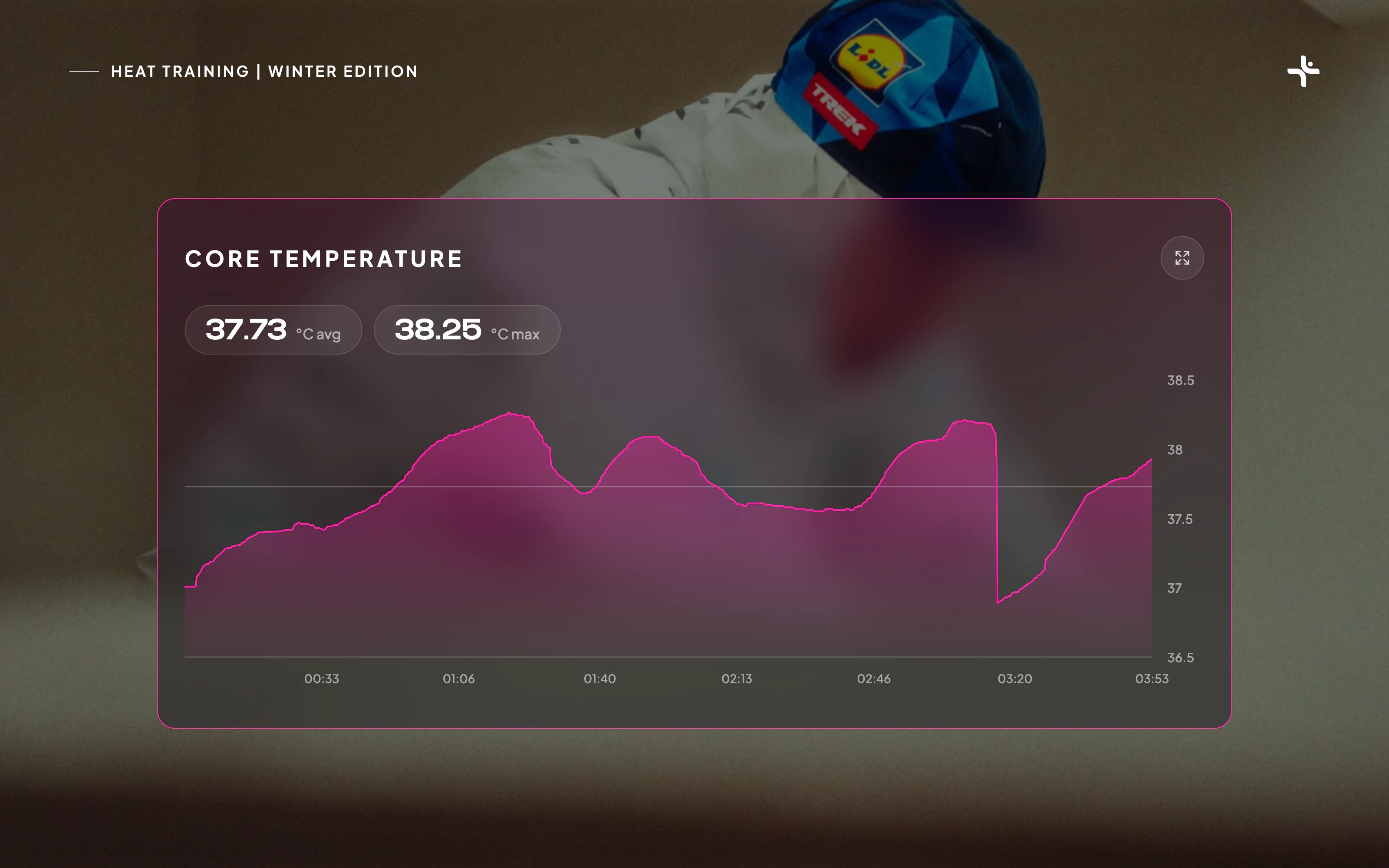
Core temperature recorded by CORE and shown in Vekta.
Twenty-five sessions, low power, indoors, with nothing else competing for recovery. There is one part of the year that looks like that.
References
Lorenzo S, Halliwill JR, Sawka MN, Minson CT. Heat acclimation improves exercise performance. Journal of Applied Physiology 109(4): 1140 to 1147 (2010). doi:10.1152/japplphysiol.00495.2010
Rønnestad BR, Hamarsland H, Hansen J, Holen E, Montero D, Whist JE, Lundby C. Five weeks of heat training increases haemoglobin mass in elite cyclists. Experimental Physiology 106(1): 316 to 327 (2021). doi:10.1113/EP088544
Rønnestad BR et al. Heat training efficiently increases and maintains hemoglobin mass and temperate endurance performance in elite cyclists. Medicine & Science in Sports & Exercise 54(9): 1515 to 1526 (2022). doi:10.1249/MSS.0000000000002928
CORE. Using Heat to Extend Altitude Benefits for the Tour de France with Lidl-Trek (4 July 2025): corebodytemp.com/blogs/news/how-lidl-trek-are-using-heat-to-extend-altitude-benefits-for-the-tour-de-france
Keiser S, Flück D, Hüppin F, Stravs A, Hilty MP, Lundby C. Heat training increases exercise capacity in hot but not in temperate conditions: a mechanistic counter-balanced cross-over study. American Journal of Physiology: Heart and Circulatory Physiology 309(5): H750 to H761 (2015).
Karlsen A, Racinais S, Jensen MV, Nørgaard SJ, Bonne T, Nybo L. Heat acclimatization does not improve VO2max or cycling performance in a cool climate in trained cyclists. Scandinavian Journal of Medicine & Science in Sports 25: 269 to 276 (2015).
Photos: ©LidlTrek, @levis_gio
Try Vekta free
Put the theory to work
Vekta is where coaches and athletes plan the work, see the numbers, and track what actually changes.
Brand Director