Performance Science
Performance Science
Performance Science
7
7
7
min
min
min
Matteo Cigala
Matteo Cigala
W′ Explained: A Coach's Framework for Race Performance
W′ Explained: A Coach's Framework for Race Performance
By Matteo Cigala
W′ Explained: A Coach's Framework for Understanding Race Performance
There is a number that explains more about racing than FTP ever has. It does not appear on most training dashboards. It is rarely discussed in the group chat. But ask any coach who has spent serious time in the data, and they will tell you it is often the difference between a rider who stays in the race and one who watches it ride away.
That number is W′.
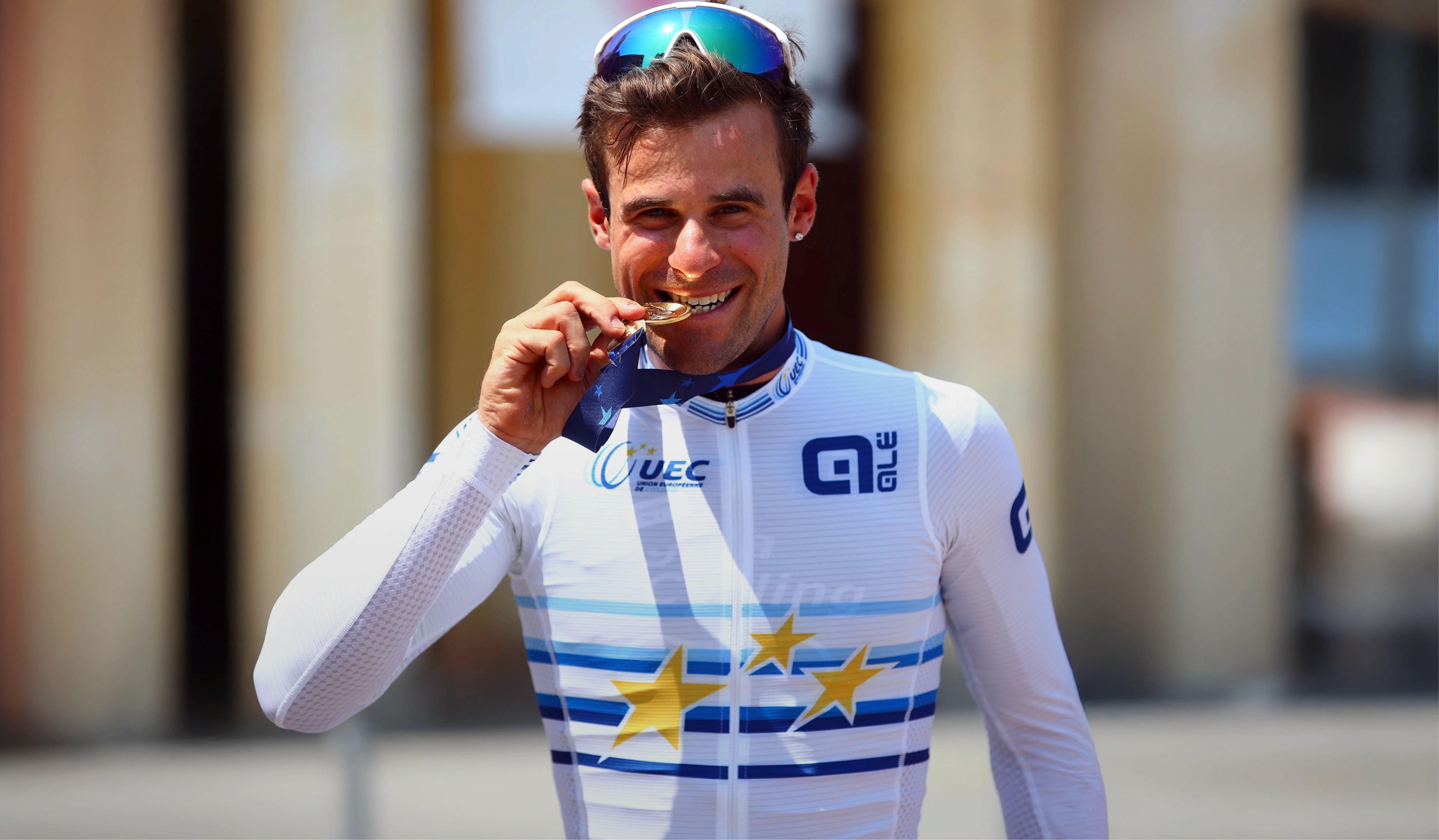
Matteo Cigala has won over 200 races. He has been the Gran Fondo European Champion and Vice World Champion. He has spent decades sitting in breakaways, surviving decisive climbs, and watching the moment a race turns on something most riders never see coming. That experience, and the analytical rigour he has built around it, is what makes his explanation of W′ worth reading carefully.
This is not a textbook definition. It is a coaching perspective, built from the inside of real racing.
W′ Is Your Battery Above Critical Power
If you train with a power meter, sooner or later you will see the term W′. Many riders encounter this number after testing or inside performance analysis. Very few understand what it means when the race gets hard.
The simple explanation I give my athletes: W′ is the amount of work you can do above Critical Power before you cannot hold the power anymore. Not before it hurts. Not before it feels hard. Before you actually cannot continue.
That is exactly what happens in races.
Critical Power Is Your Engine. W′ Is Your Battery.
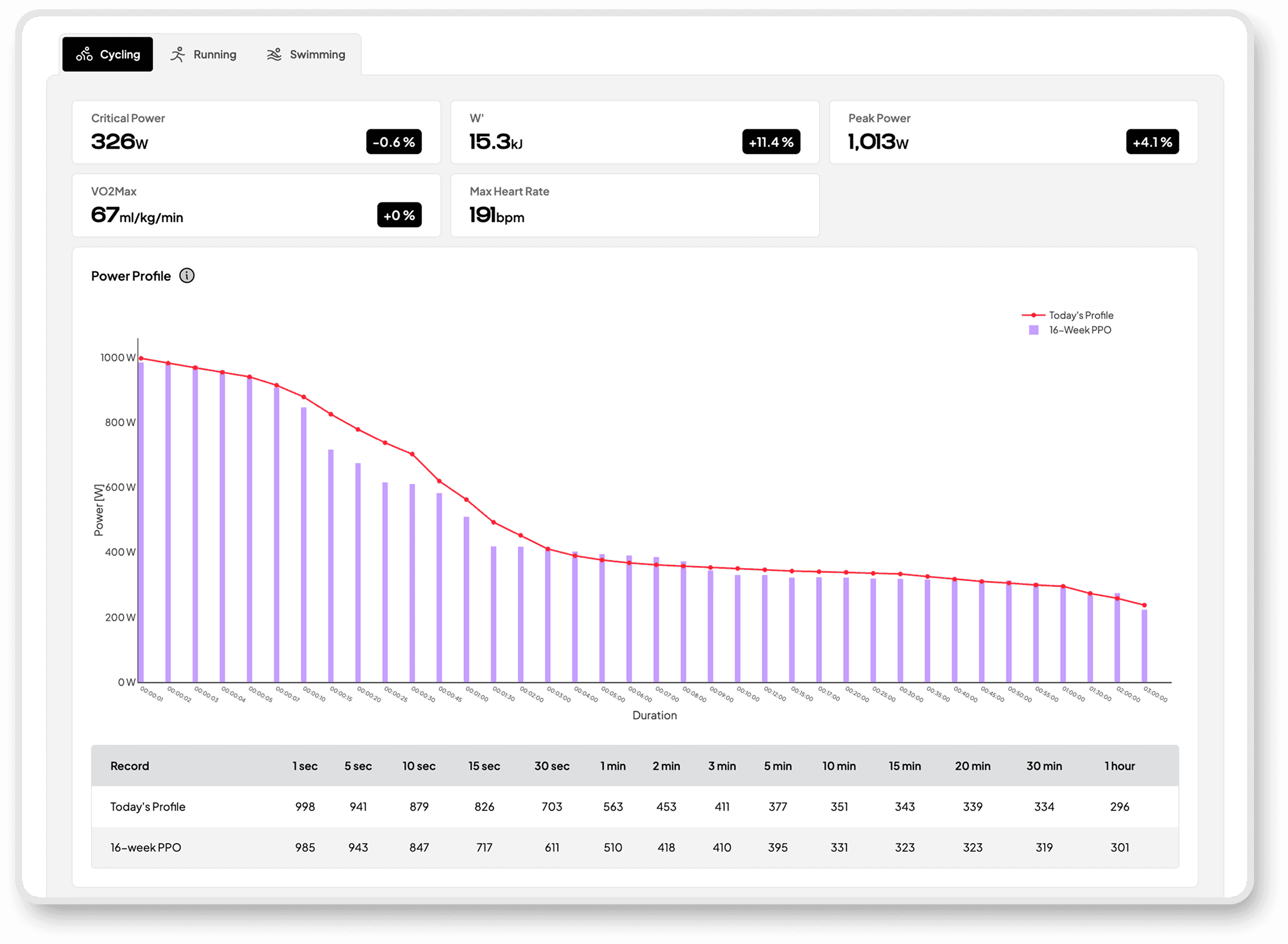
Critical Power (CP) is your sustainable level. W′ is the extra energy you can use when intensity goes above that level.
I explain it to athletes like this.
CP is your engine. W′ is your battery.
Every time you go above CP, you draw from the battery. Every time you drop below CP, the battery slowly recharges. When the battery is empty, the legs do not care how motivated you are. You slow down.
Why Two Riders with the Same FTP Can Race Completely Differently
This is something I see constantly in coaching. Two riders with the same threshold. Completely different race performance.
Consider this:
Rider A: CP = 300 W, W′ = 12 kJ Rider B: CP = 300 W, W′ = 24 kJ
Same threshold. Very different rider.
Rider B can follow attacks, handle steep punchy climbs, repeat hard efforts, and survive aggressive racing. Rider A is typically better suited to time trials, long steady climbs, and constant pace efforts.
FTP alone never tells the full story.
Why You Feel Fine, Until Suddenly You Don't
You know this feeling.
You are following moves. You feel strong. Power is high but still manageable. Then one more surge, and you are gone.
That is W′.
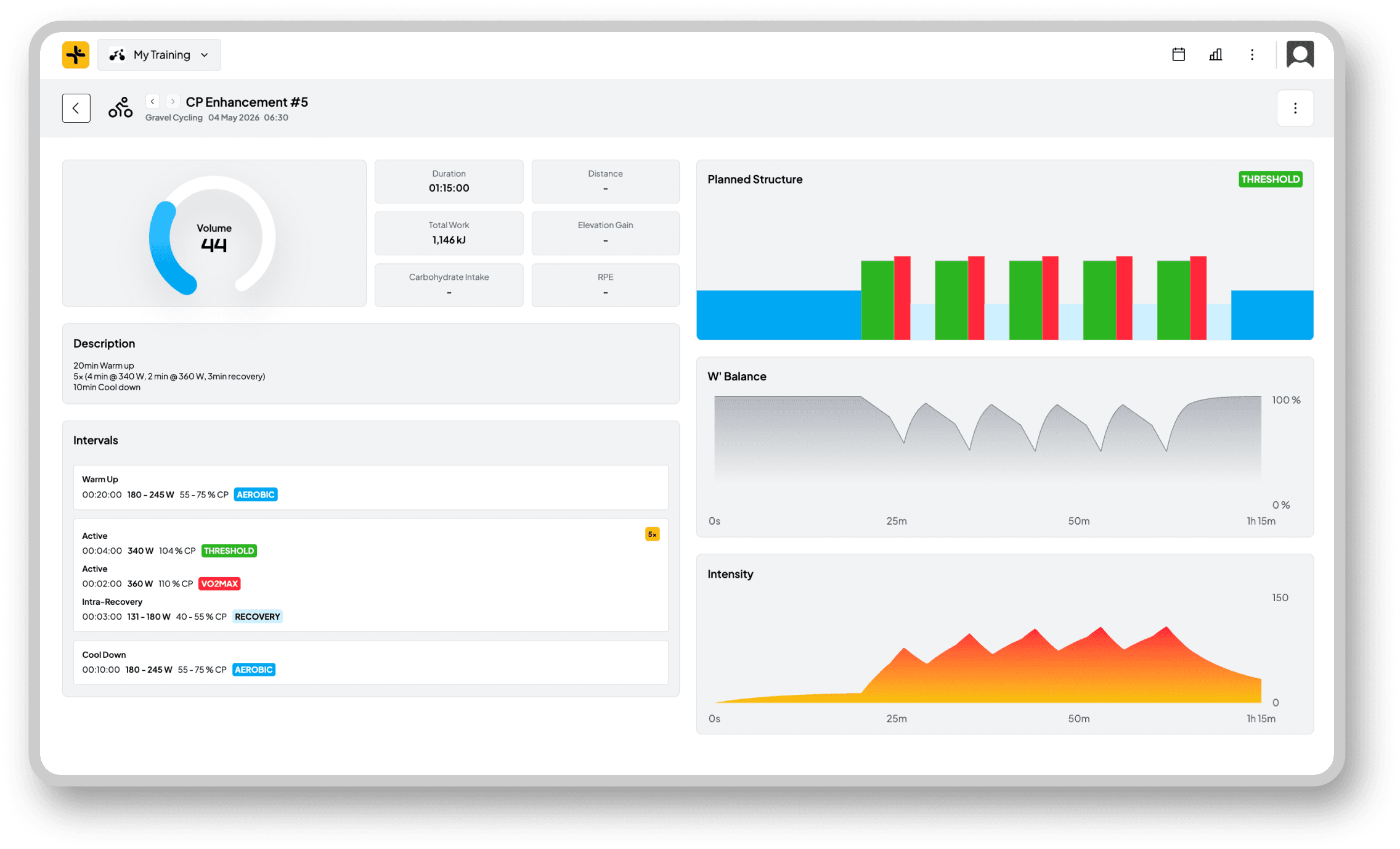
Every time you go above CP, you are spending from a finite reserve. If the race keeps changing pace and you never get real recovery, the reserve slowly empties. When it reaches zero, the legs stop. It is not mental. It is physiology.
W′ Recovery Is What Makes Good Racers
One of the biggest differences between levels is not just CP. It is how fast W′ comes back.
Strong racers can go above CP, recover below it, then go again, and again, and again. That ability to repeat is why racing feels harder than training. Training is controlled. Racing is not.
If you want to perform in road races, gravel, MTB, or cyclocross, you need to train not just power, but the ability to repeat hard efforts.
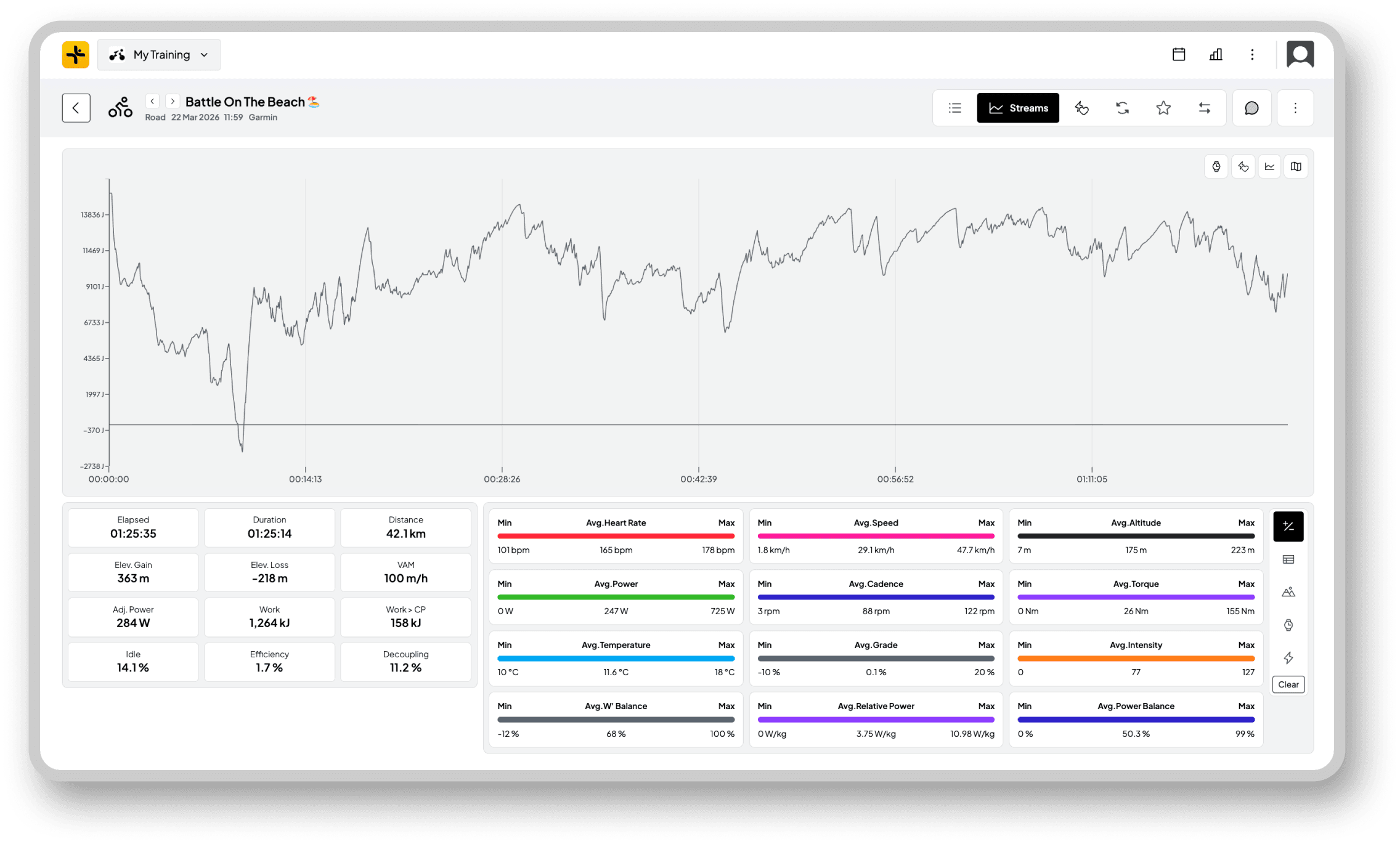
How I Train W′ with My Athletes
There are three goals depending on the rider.
1. Increase W′ itself
For riders who lack punch or explosive capacity. Sessions I use most: 30/30 and 40/20 intervals, short VO2max efforts, repeated climbs, sprints into hard efforts. These increase the total amount of work you can do above CP.
2. Improve W′ recovery
One of the most important qualities for racing. Sessions that work well here: over/unders, race simulations, microbursts, variable power intervals. The aim is training the body to recharge faster between efforts.
3. Raise Critical Power
Sometimes the best way to improve race performance is not more anaerobic work. It is raising CP. If CP goes up, every surge costs less.
Before: CP = 280 W. A surge to 360 W costs 80 W above threshold. After: CP = 300 W. The same surge to 360 W now costs only 60 W.
Same race. Less damage. This is why aerobic training never stops mattering, even for punchy riders.
Why I Use W′ in My Coaching
I do not look at W′ because it is an interesting number. I use it because it explains things threshold alone cannot.
With CP and W′, I can understand why a rider gets dropped, why they explode late in races, whether they are suited to attacking or not, and which intervals are actually working. Inside my coaching practice and on Vekta, this shapes training that is specific to the individual. Every athlete is different. Training should be too.

Matteo's athletes do not just train harder. They train with a clearer picture of what is actually limiting them, and what can be changed. That is what CP and W′ unlock when used properly: not just a number to track, but a framework for understanding how racing really works.
Vekta models both metrics continuously, updating your CP and W′ with every ride, so the picture stays accurate as your fitness evolves. No manual testing. No guesswork.
Matteo has spent decades turning these principles into race wins. If you want to work with a coach who understands W′ not just as a number but as a racing reality, discover more at Cigala Cycling.
W′ Explained: A Coach's Framework for Understanding Race Performance
There is a number that explains more about racing than FTP ever has. It does not appear on most training dashboards. It is rarely discussed in the group chat. But ask any coach who has spent serious time in the data, and they will tell you it is often the difference between a rider who stays in the race and one who watches it ride away.
That number is W′.
Matteo Cigala has won over 200 races. He has been the Gran Fondo European Champion and Vice World Champion. He has spent decades sitting in breakaways, surviving decisive climbs, and watching the moment a race turns on something most riders never see coming. That experience, and the analytical rigour he has built around it, is what makes his explanation of W′ worth reading carefully.
This is not a textbook definition. It is a coaching perspective, built from the inside of real racing.
W′ Is Your Battery Above Critical Power
If you train with a power meter, sooner or later you will see the term W′. Many riders encounter this number after testing or inside performance analysis. Very few understand what it means when the race gets hard.
The simple explanation I give my athletes: W′ is the amount of work you can do above Critical Power before you cannot hold the power anymore. Not before it hurts. Not before it feels hard. Before you actually cannot continue.
That is exactly what happens in races.
Critical Power Is Your Engine. W′ Is Your Battery.
Critical Power (CP) is your sustainable level. W′ is the extra energy you can use when intensity goes above that level.
I explain it to athletes like this.
CP is your engine. W′ is your battery.
Every time you go above CP, you draw from the battery. Every time you drop below CP, the battery slowly recharges. When the battery is empty, the legs do not care how motivated you are. You slow down.
Why Two Riders with the Same FTP Can Race Completely Differently
This is something I see constantly in coaching. Two riders with the same threshold. Completely different race performance.
Consider this:
Rider A: CP = 300 W, W′ = 12 kJ Rider B: CP = 300 W, W′ = 24 kJ
Same threshold. Very different rider.
Rider B can follow attacks, handle steep punchy climbs, repeat hard efforts, and survive aggressive racing. Rider A is typically better suited to time trials, long steady climbs, and constant pace efforts.
FTP alone never tells the full story.
Why You Feel Fine, Until Suddenly You Don't
You know this feeling.
You are following moves. You feel strong. Power is high but still manageable. Then one more surge, and you are gone.
That is W′.
Every time you go above CP, you are spending from a finite reserve. If the race keeps changing pace and you never get real recovery, the reserve slowly empties. When it reaches zero, the legs stop. It is not mental. It is physiology.
W′ Recovery Is What Makes Good Racers
One of the biggest differences between levels is not just CP. It is how fast W′ comes back.
Strong racers can go above CP, recover below it, then go again, and again, and again. That ability to repeat is why racing feels harder than training. Training is controlled. Racing is not.
If you want to perform in road races, gravel, MTB, or cyclocross, you need to train not just power, but the ability to repeat hard efforts.
How I Train W′ with My Athletes
There are three goals depending on the rider.
1. Increase W′ itself
For riders who lack punch or explosive capacity. Sessions I use most: 30/30 and 40/20 intervals, short VO2max efforts, repeated climbs, sprints into hard efforts. These increase the total amount of work you can do above CP.
2. Improve W′ recovery
One of the most important qualities for racing. Sessions that work well here: over/unders, race simulations, microbursts, variable power intervals. The aim is training the body to recharge faster between efforts.
3. Raise Critical Power
Sometimes the best way to improve race performance is not more anaerobic work. It is raising CP. If CP goes up, every surge costs less.
Before: CP = 280 W. A surge to 360 W costs 80 W above threshold. After: CP = 300 W. The same surge to 360 W now costs only 60 W.
Same race. Less damage. This is why aerobic training never stops mattering, even for punchy riders.
Why I Use W′ in My Coaching
I do not look at W′ because it is an interesting number. I use it because it explains things threshold alone cannot.
With CP and W′, I can understand why a rider gets dropped, why they explode late in races, whether they are suited to attacking or not, and which intervals are actually working. Inside my coaching practice and on Vekta, this shapes training that is specific to the individual. Every athlete is different. Training should be too.
Matteo's athletes do not just train harder. They train with a clearer picture of what is actually limiting them, and what can be changed. That is what CP and W′ unlock when used properly: not just a number to track, but a framework for understanding how racing really works.
Vekta models both metrics continuously, updating your CP and W′ with every ride, so the picture stays accurate as your fitness evolves. No manual testing. No guesswork.
Matteo has spent decades turning these principles into race wins. If you want to work with a coach who understands W′ not just as a number but as a racing reality, discover more at Cigala Cycling.

Try Vekta free
Put the theory to work
Vekta is where coaches and athletes plan the work, see the numbers, and track what actually changes.
Try Vekta free
Put the theory to work
Vekta is where coaches and athletes plan the work, see the numbers, and track what actually changes.
Frequently asked questions
Frequently asked questions
Cigala Cycling