Performance Science
Performance Science
Performance Science
6
6
6
min
min
min
Dominic Valerio
Dominic Valerio
Critical Power and W′ Explained: Insights from Alex Welburn
Critical Power and W′ Explained: Insights from Alex Welburn
For years, endurance training was defined by a few familiar acronyms: FTP, TSS, CTL…
They helped shape how cyclists trained, raced, and talked about fitness. But what if the assumptions behind those numbers are starting to show their limits?
In this new episode of The Roadman Podcast, host Anthony Walsh sits down with Alex Welburn, a leading researcher in W′ Balance and Critical Power, and a trusted Vekta Coach, to unpack how modern science is changing the way we understand performance. Together, they explore the shift from traditional FTP-based training to the more advanced world of Critical Power (CP) and W′, a framework that captures how athletes actually fatigue and recover in real time.
Why FTP and TSS Don’t Tell the Full Story
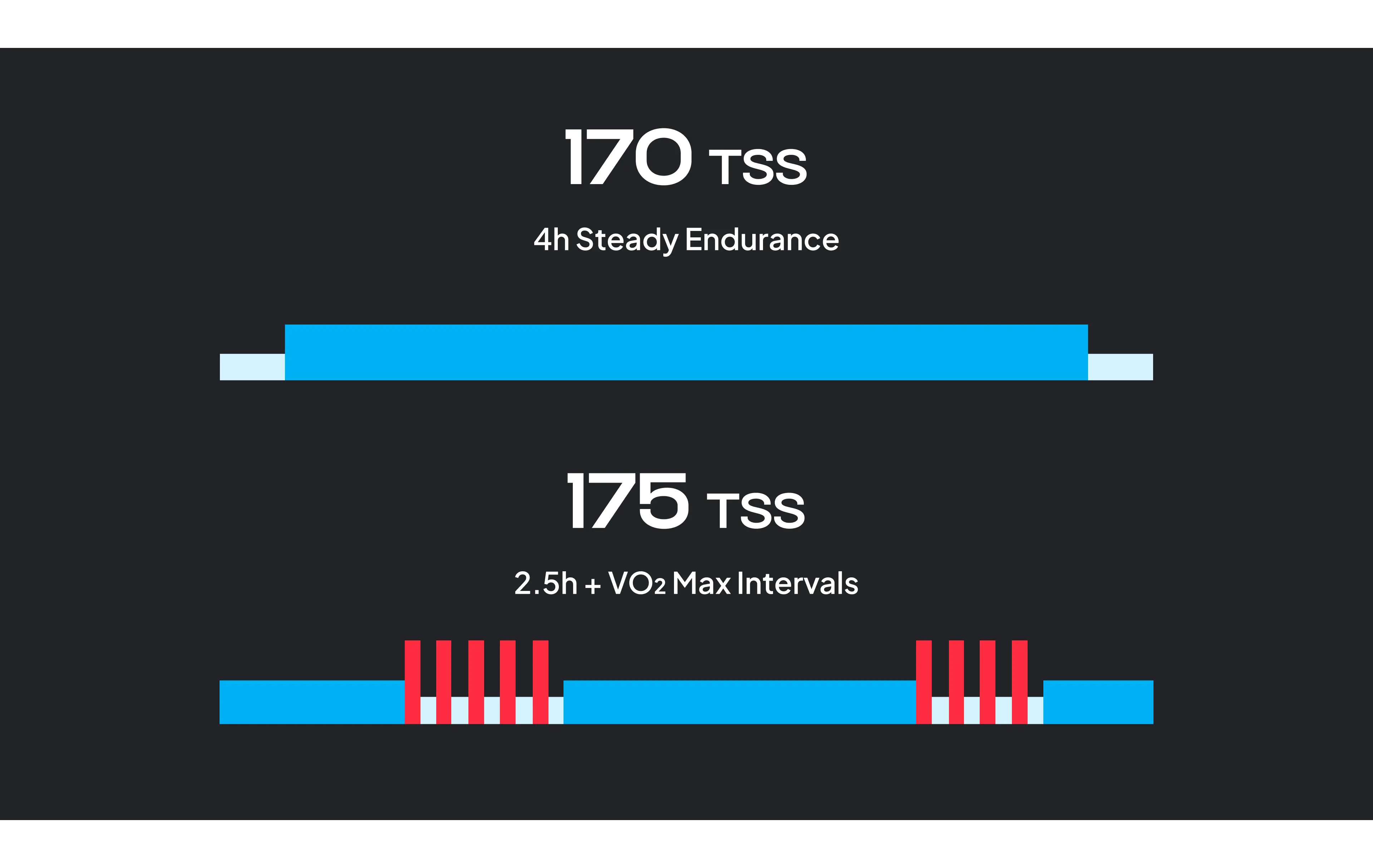
Alex begins by revisiting the familiar performance-management charts that coaches have relied on for years: chronic training load (CTL), acute training load (ATL), and the Training Stress Score (TSS). He explains how two sessions with identical TSS values can produce completely different physiological outcomes:
“You could have two riders both scoring 700 TSS a week, one through long steady volume, one through repeated high-intensity work, and the training adaptations will be totally different.”
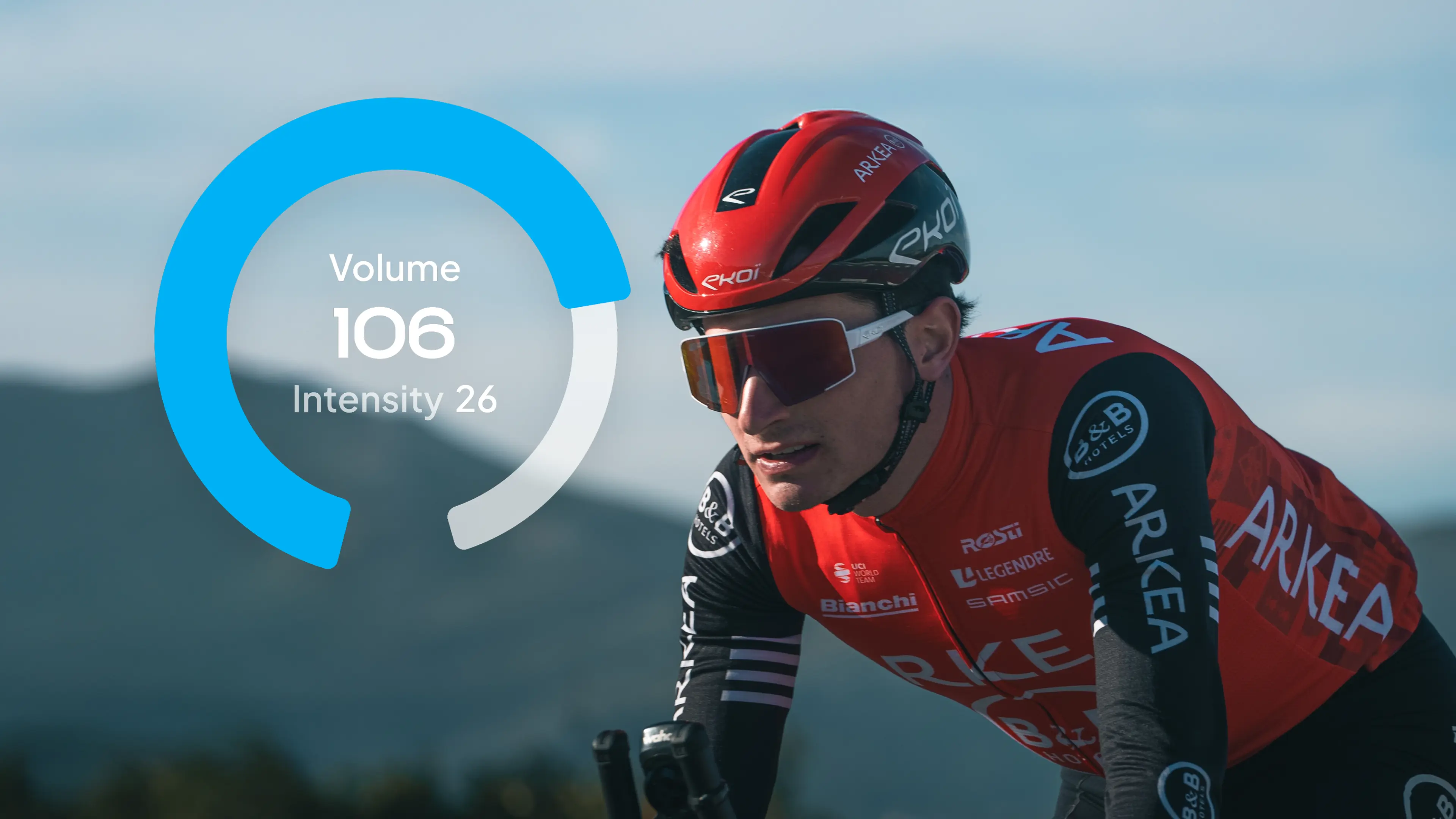
The issue, Alex says, is not separating volume from intensity. Without that distinction, you can’t see what’s really driving adaptation or fatigue. That’s exactly what Vekta’s Volume and Intensity model was built to address, isolating the total work done from the relative demand of that work. It’s how coaches move beyond generic load scores to understand what truly shapes an athlete’s response to training.
Critical Power: The New Baseline for Performance
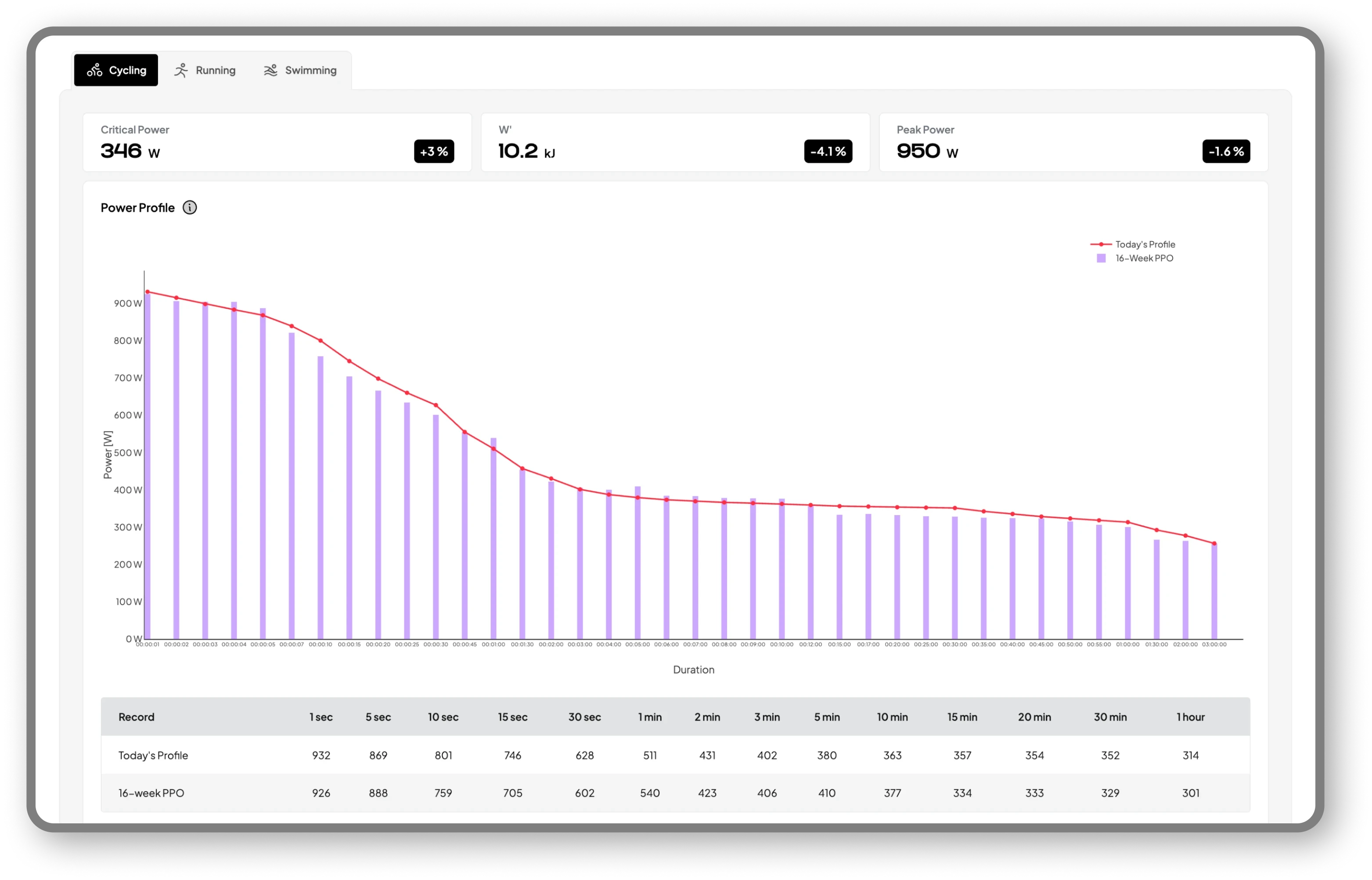
Instead of relying on a single number like FTP, Alex advocates for the Critical Power (CP) model, a threshold that distinguishes between sustainable and unsustainable efforts. Where FTP estimates an hour’s power output, CP defines the line between the heavy and severe intensity domains. It captures not just how hard you can go, but for how long, and introduces a second parameter, W′, to describe the finite amount of energy you can expend above that line.
“When you go above Critical Power, you start depleting W′. Go below it, and you can recover. That’s what makes it a more dynamic model, it reflects how fatigue and recovery actually work.”
From Static Metrics to Dynamic Models
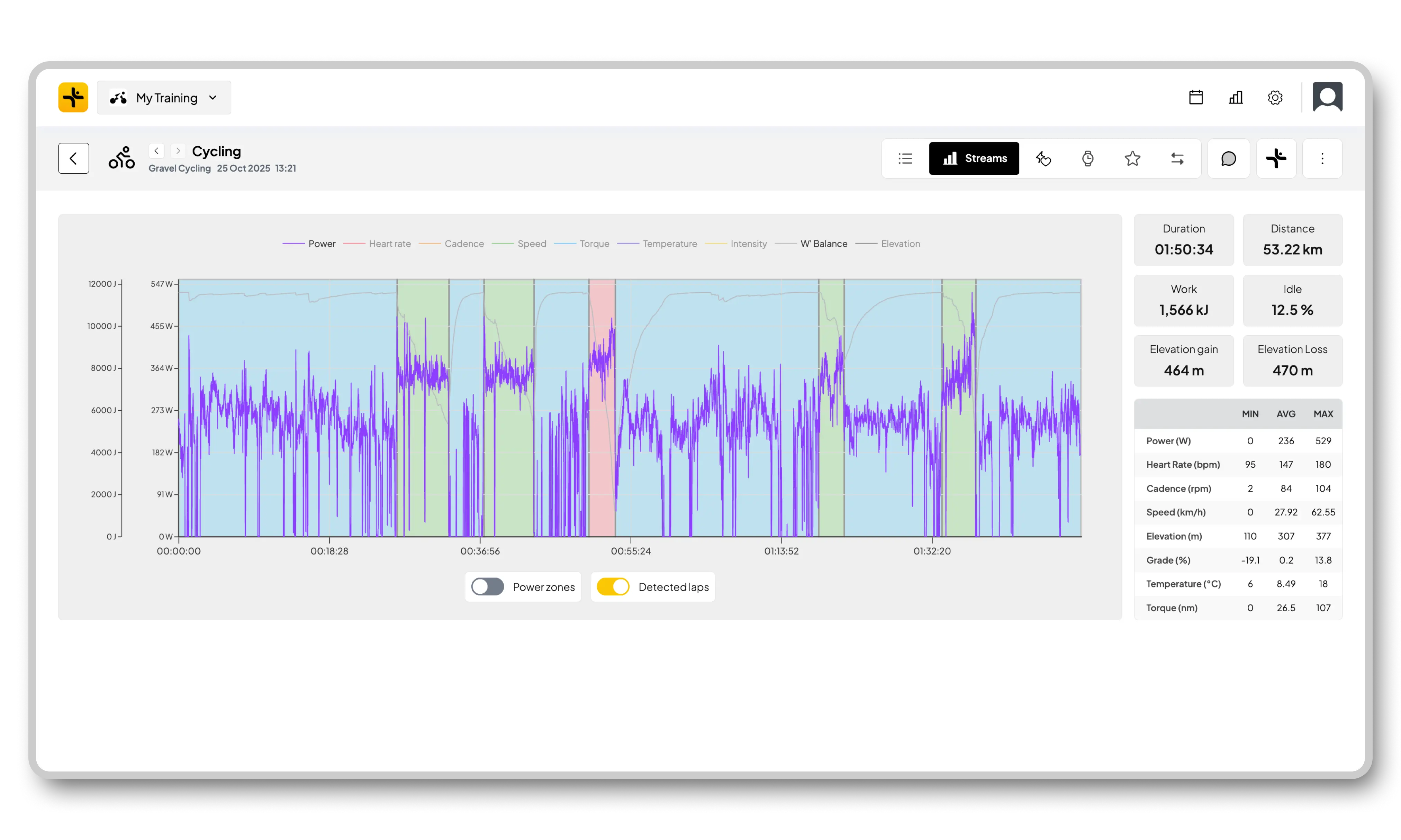
The conversation moves from abstract physiology to real-world coaching application. Alex and Anthony dig into what makes this shift from static metrics to dynamic models so transformative.
In the traditional world of TSS, CTL, and ATL, performance was measured by accumulation: more hours, more load, higher scores. But training doesn’t happen in a vacuum. Two rides can show identical numbers and leave the body in completely different states.
The CP + W′ framework changes that by introducing context: effort and recovery as living variables, not fixed values. Coaches can now quantify how work is being done, not just how much.
“You can have two riders with the same total load, but one is constantly dipping above CP while the other stays just below. On paper, they look identical. In reality, they’re adapting in completely different ways.”
It’s a model built for the way athletes actually ride, where fatigue accumulates unevenly, recovery happens in moments, and performance depends on timing as much as power.
For Coaches, This Means Better Questions:
• Why did a rider get dropped when the numbers looked fine on paper?
• How much work did they do above Critical Power in the lead-up to that climb?
• Are they recovering fast enough between efforts, or running the tank dry too early?
Vekta’s performance model is built on this same principle, every effort understood in context, every data point carrying intent. It’s where static charts end and real-time decision-making begins.
🎧 Listen or Watch the Full Episode
Watch or listen to the full conversation with Alex Welburn and Anthony Walsh on your platform of choice:
Discover the same platform trusted by Alex Welburn and other leading coaches shaping the next era of performance.
Start your free 14-day trial or Book a Demo
For years, endurance training was defined by a few familiar acronyms: FTP, TSS, CTL…
They helped shape how cyclists trained, raced, and talked about fitness. But what if the assumptions behind those numbers are starting to show their limits?
In this new episode of The Roadman Podcast, host Anthony Walsh sits down with Alex Welburn, a leading researcher in W′ Balance and Critical Power, and a trusted Vekta Coach, to unpack how modern science is changing the way we understand performance. Together, they explore the shift from traditional FTP-based training to the more advanced world of Critical Power (CP) and W′, a framework that captures how athletes actually fatigue and recover in real time.
Why FTP and TSS Don’t Tell the Full Story
Alex begins by revisiting the familiar performance-management charts that coaches have relied on for years: chronic training load (CTL), acute training load (ATL), and the Training Stress Score (TSS). He explains how two sessions with identical TSS values can produce completely different physiological outcomes:
“You could have two riders both scoring 700 TSS a week, one through long steady volume, one through repeated high-intensity work, and the training adaptations will be totally different.”
The issue, Alex says, is not separating volume from intensity. Without that distinction, you can’t see what’s really driving adaptation or fatigue. That’s exactly what Vekta’s Volume and Intensity model was built to address, isolating the total work done from the relative demand of that work. It’s how coaches move beyond generic load scores to understand what truly shapes an athlete’s response to training.
Critical Power: The New Baseline for Performance
Instead of relying on a single number like FTP, Alex advocates for the Critical Power (CP) model, a threshold that distinguishes between sustainable and unsustainable efforts. Where FTP estimates an hour’s power output, CP defines the line between the heavy and severe intensity domains. It captures not just how hard you can go, but for how long, and introduces a second parameter, W′, to describe the finite amount of energy you can expend above that line.
“When you go above Critical Power, you start depleting W′. Go below it, and you can recover. That’s what makes it a more dynamic model, it reflects how fatigue and recovery actually work.”
From Static Metrics to Dynamic Models
The conversation moves from abstract physiology to real-world coaching application. Alex and Anthony dig into what makes this shift from static metrics to dynamic models so transformative.
In the traditional world of TSS, CTL, and ATL, performance was measured by accumulation: more hours, more load, higher scores. But training doesn’t happen in a vacuum. Two rides can show identical numbers and leave the body in completely different states.
The CP + W′ framework changes that by introducing context: effort and recovery as living variables, not fixed values. Coaches can now quantify how work is being done, not just how much.
“You can have two riders with the same total load, but one is constantly dipping above CP while the other stays just below. On paper, they look identical. In reality, they’re adapting in completely different ways.”
It’s a model built for the way athletes actually ride, where fatigue accumulates unevenly, recovery happens in moments, and performance depends on timing as much as power.
For Coaches, This Means Better Questions:
• Why did a rider get dropped when the numbers looked fine on paper?
• How much work did they do above Critical Power in the lead-up to that climb?
• Are they recovering fast enough between efforts, or running the tank dry too early?
Vekta’s performance model is built on this same principle, every effort understood in context, every data point carrying intent. It’s where static charts end and real-time decision-making begins.
🎧 Listen or Watch the Full Episode
Watch or listen to the full conversation with Alex Welburn and Anthony Walsh on your platform of choice:
Discover the same platform trusted by Alex Welburn and other leading coaches shaping the next era of performance.
Start your free 14-day trial or Book a Demo

Try Vekta free
Put the theory to work
Vekta is where coaches and athletes plan the work, see the numbers, and track what actually changes.
Try Vekta free
Put the theory to work
Vekta is where coaches and athletes plan the work, see the numbers, and track what actually changes.
Frequently asked questions
Frequently asked questions

Brand Director