

VO2 Max
110 min
High intensity
Deliver decisive efforts after sustained pressure: twelve repeats of 90 seconds at VO2 max capped with a 30-second all-out sprint, in two sets. A key session in a Tour de France Femmes build.

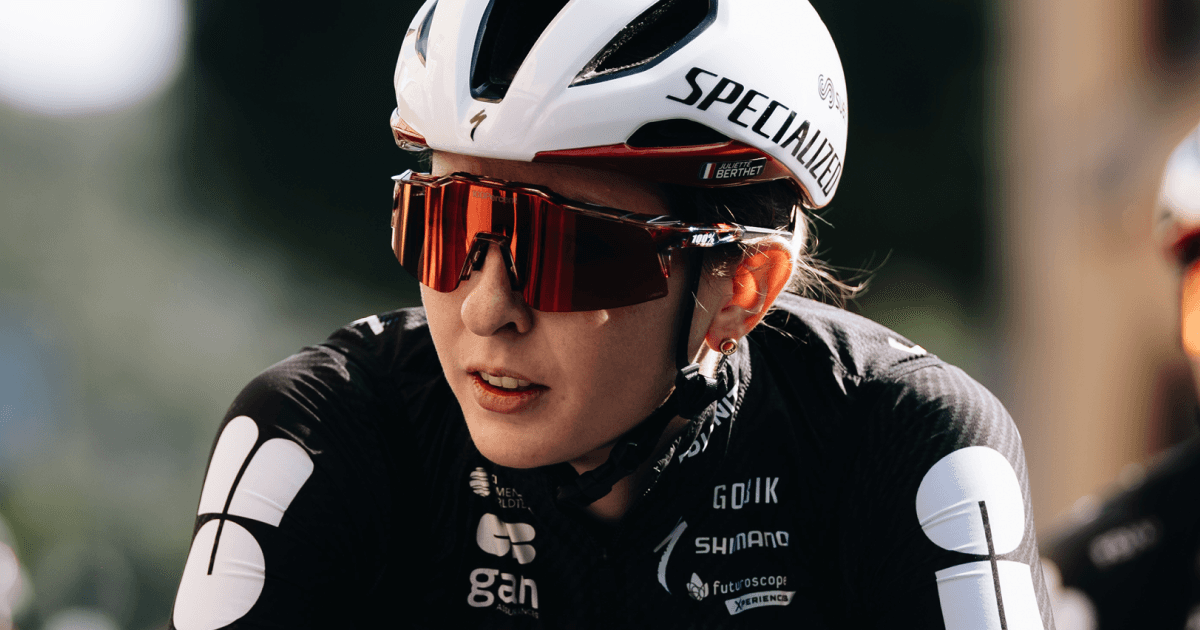
Juliette Berthet
Rider, FDJ United–SUEZ

VO2 Max
110 min
High
9 / 10
Advanced
Outdoors
INTERVAL BY INTERVAL
The workout
Written as a share of critical power, so it fits every rider. In Vekta it becomes your watts, with the W′ cost shown before you ride.
Juliette Berthet

Why this workout
The breakdown
Inside the workout
This is a race-readiness session, not a fitness test. Twelve times over, Juliette holds ninety seconds at VO2 max and then sprints flat out for thirty seconds, so the decisive effort always arrives on top of sustained pressure. That order is the whole point: in a race the sprint is never taken fresh.
The session is built in two sets of six so the second set is ridden on real fatigue, with fifteen minutes between them to let W′ recover enough that the sprints stay honest. The five-minute recoveries inside each set are long on purpose. Short recoveries would turn this into a lactate session; these keep every ninety-second effort near maximal oxygen uptake and every sprint near peak power.
In Vekta the ninety-second efforts are written at 105–130% of CP and the sprints at 180–500%, so the session scales to any rider's numbers rather than to Juliette's watts. The W′ preview shows the drain across the twelve repeats before you ride it, and the analysis afterwards names each effort and tells you whether the sprints held up in the second set.
Use it in the last block before a target race, once a week at most, on a day when you are fresh enough to sprint properly. If the sprints fade badly in set two, the VO2 efforts were too hard, not the sprints.
VO2 Max
Stimulus
Advanced
Workout level
Outdoors
Best ridden
Road,
DISCIPLINE
The stimulus
VO2 Max, explained
Short, hard repeats that push oxygen uptake to its ceiling and raise it.
Efforts of roughly one to five minutes above critical power, usually between 105 and 130% of CP, with recoveries short enough that the next effort starts before the body has settled. Formats vary from classic 4×4 and 4×3 to 30/15s and 40/20s, where the "rest" is a tempo effort that keeps oxygen uptake high.
VO2 max is the size of the aerobic engine. Everything below it, threshold, tempo, endurance, is a fraction of it, so a higher ceiling lifts every other zone. It is also the quality that decays fastest without stimulus, which is why the sessions are short, frequent in blocks, and brutally specific.
These are the sessions that change what you can hold for three minutes on a climb or after an attack. Expect to see them in blocks of two a week for three to four weeks, then a rest. They cost more W′ than anything else in the library and should be ridden fresh.
The variable that matters is time above 90% of VO2 max, not the number of reps. Short-interval formats accumulate it with less perceived strain; long formats train the ability to hold it. Watch W′ balance in the preview: a session that drains it in the first set has the wrong recovery.
Add the session to your Vekta calendar and the targets convert from % of CP into your watts. The preview shows where W′ will run low before you ride; the analysis afterwards classifies every interval and tells you how much of the session was actually spent above 90%.
Common questions
How often should I do VO2 max intervals?
Should I use heart rate or power for VO2 max intervals?
Are 30/15s better than 4×4s?
Go deeper

The Next workout
Workouts to pair with this one




Free for coaches. Test with your whole roster during the trial.