Vekta
Vekta
Vekta
10
10
10
min
min
min
Dominic Valerio
Dominic Valerio
8 Insights From Juliette Berthet
8 Insights From Juliette Berthet
Inside the preparation for the Tour de France Femmes
Inside the Preparation: 8 Insights from Juliette Berthet's Tour de France Femmes Webinar
A live conversation with one of the best stage racers in the world. Here is what she shared.
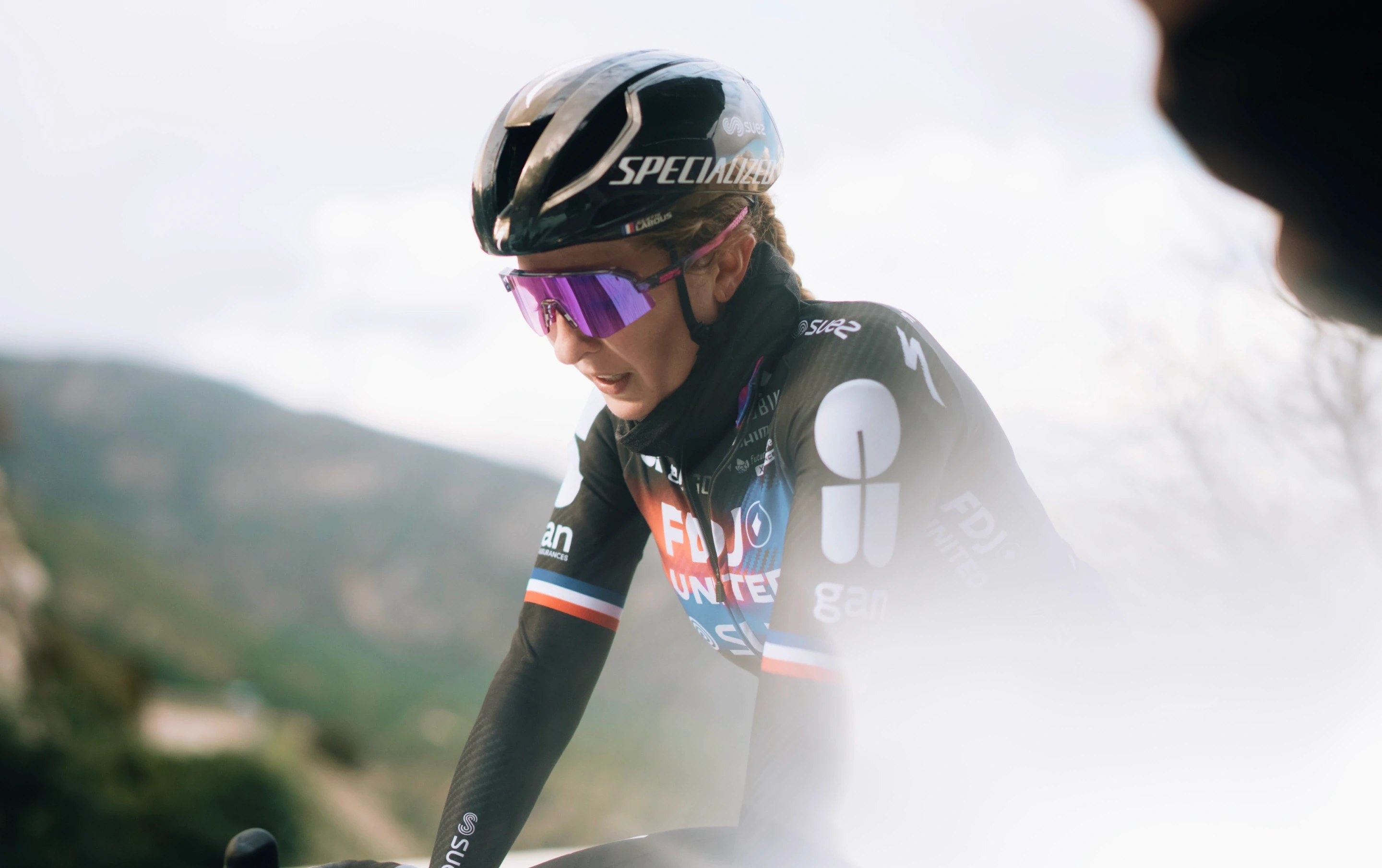
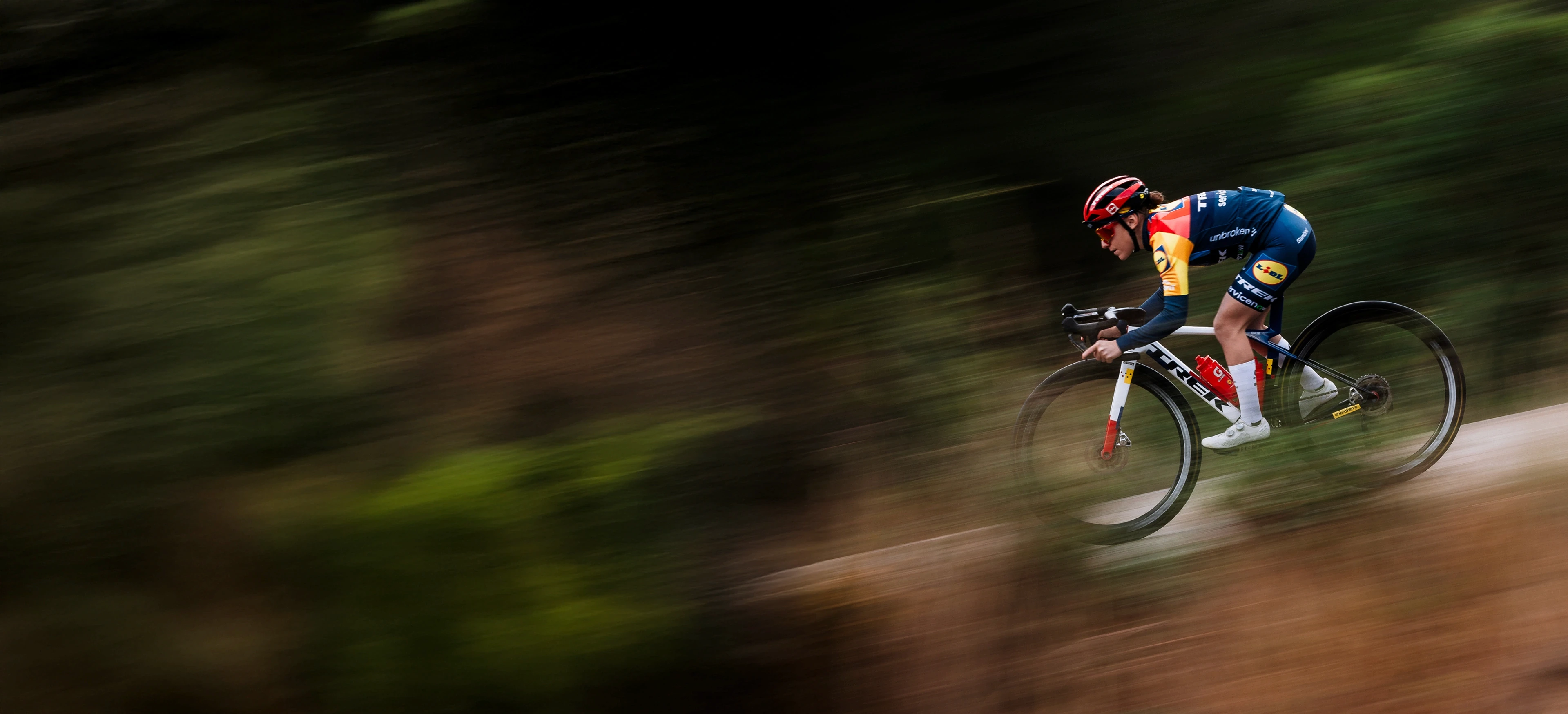
Juliette Berthet went live with Vekta to answer one question: what does preparing for the Tour de France Femmes actually look like from the inside?
Not the highlights. Not the curated Strava posts. The real structure. The sessions, the camps, the decision making, the trade-offs.
For an hour she walked through everything. How a Grand Tour year is built from October onwards. What a 24-hour training week looks like in the middle of an altitude camp. Why the classics and the Tour are not competing goals. What she eats, what she skips, and why most people get the nutrition question wrong.
Here are the eight things that stood out.
1. Tour preparation begins before the season does.
The Tour de France Femmes is not a summer project. It is a year-round one.
"It's pretty much in my head the whole time. Directly when the Tour is finished, you think about the next one. Especially when you have the course revelation, in October, it really starts. You already have in mind where it goes and what you need to be ready."
The thinking is constant. But the formal planning begins in October, when the course is revealed and Juliette sits down with the team to map the entire season around it. Training structure, race calendar, altitude camp scheduling, targeted events. Everything is planned backwards from August.
By December, the first real training camp is underway. Typically in Spain. High volume on the bike, combined with lactate testing, 20-minute power tests, and nutritional profiling. But the riding is only part of it. The December camp is where the race programme is finalised with the sport director and trainer. Where the bike fitting happens, because as Juliette put it, if you are not well positioned on your bike, everything else suffers. Where doctor check-ups, concussion protocols, insole fitting, and sponsor meetings all compete for time in a 10-day window.
The season has not started. But by the time December ends, the architecture of the entire year is in place.
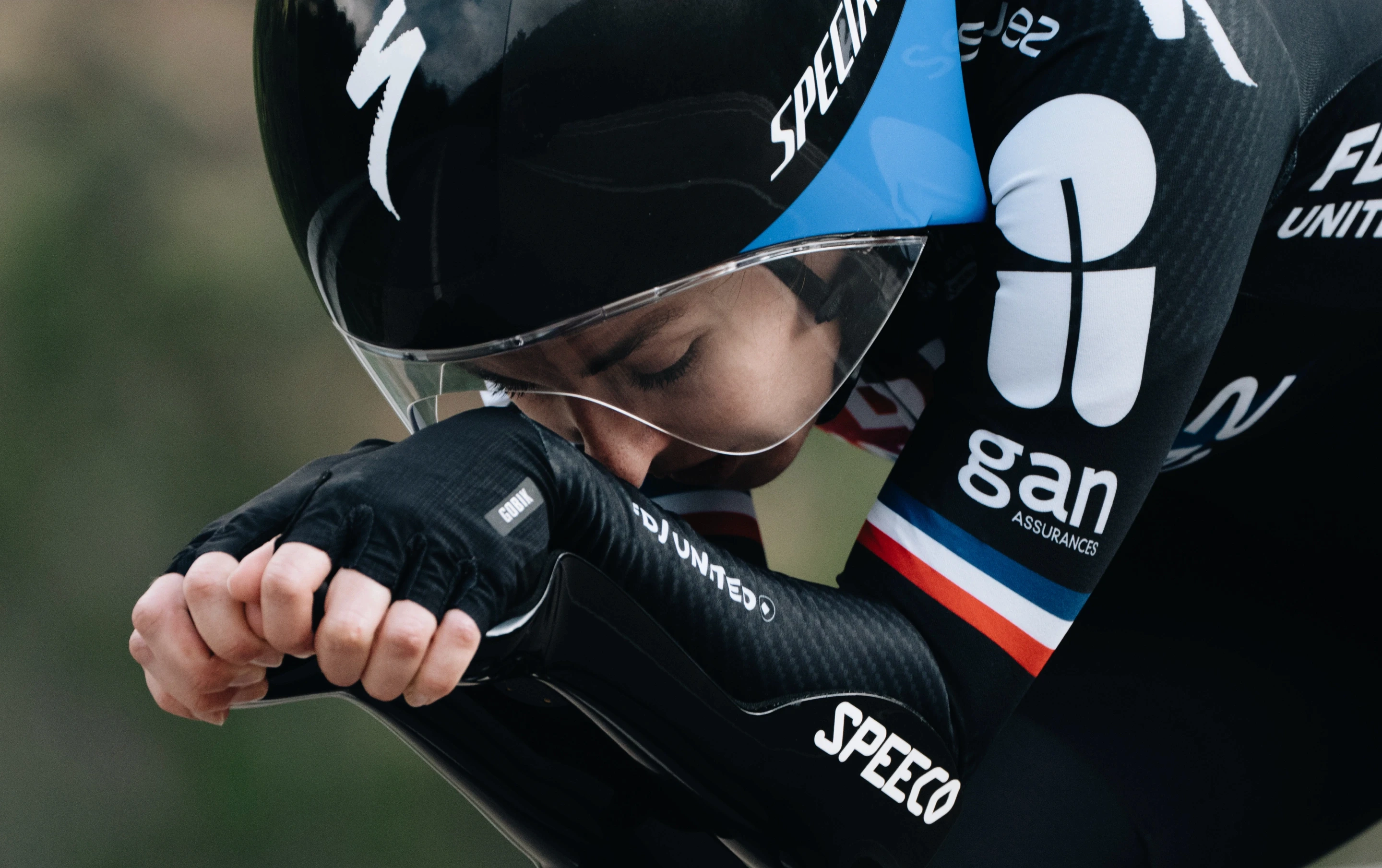
2. Winter camps are not about fitness. They are about foundations.
"The December camp is always full of meetings. You don't have much time to rest."
The winter camps carry none of the nervous energy that comes later in the season. The shape is not there yet. The pressure is not there yet. But the density of work happening off the bike is higher than at any other point in the year.
Three camps define the winter. The first is almost entirely off the bike. Staff meetings, health screenings, nutritional reviews, and season planning with doctors, trainers, and sport directors. The second, in December, is the first real training camp. High volume riding to rebuild the aerobic base after the off-season, combined with specific testing and the full programme of meetings described above. The third follows in January or February with the same structure and purpose.
The difference between these camps and the in-season altitude blocks is fundamental. In-season camps strip everything back to performance. Training, recovery, massage, rest. No meetings. No distractions. Just the question of how to be fast.
The winter camps exist to build the structure that makes that question answerable.
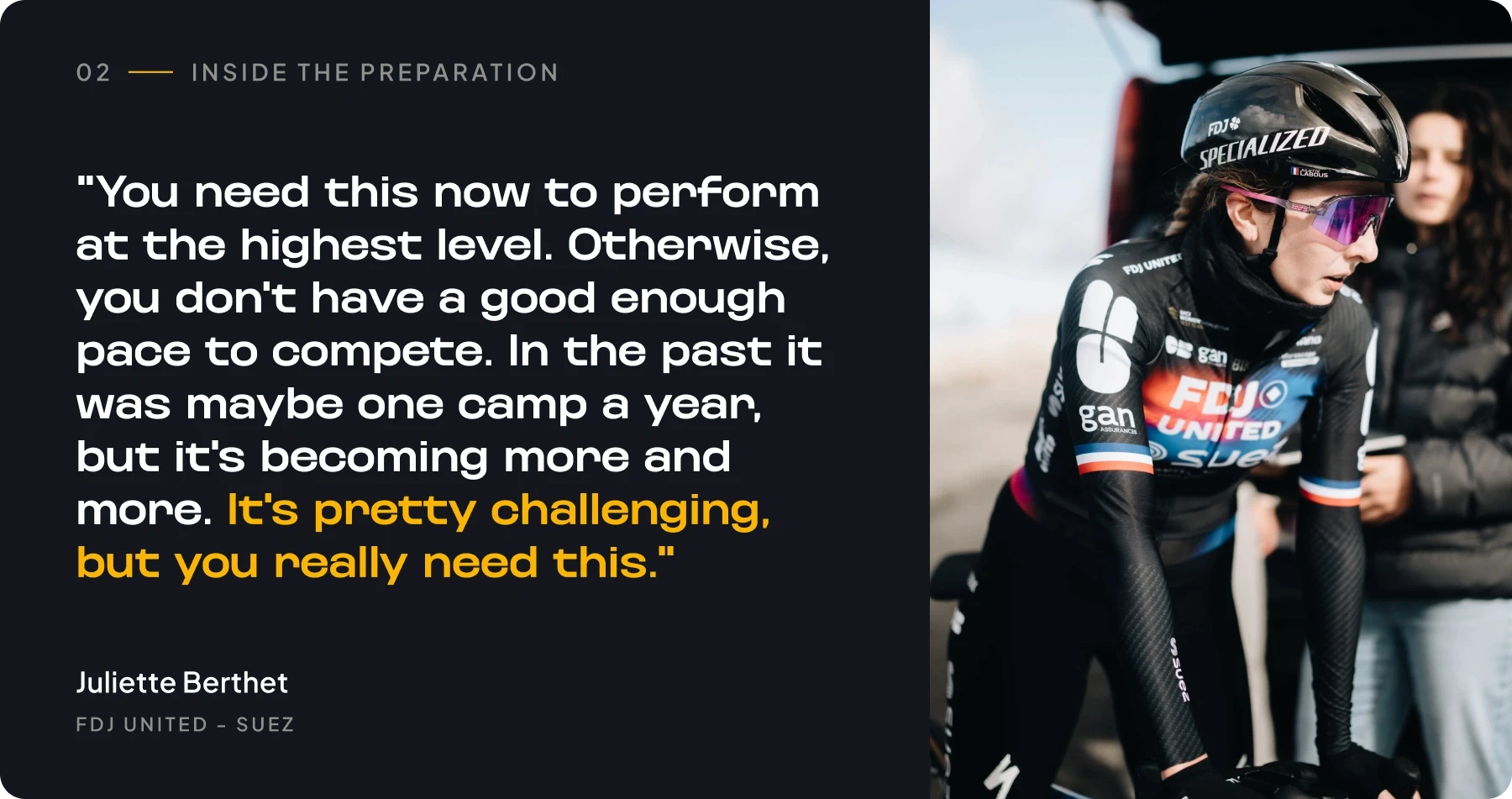
3. Altitude is no longer optional at the top.
Altitude camps used to be once a year. Now they are built into every major block of the season. Juliette does two or three altitude camps per year, typically three weeks each, aiming for 21 nights at high altitude.
The physiology behind it is straightforward. Training at altitude stimulates the body to produce more red blood cells and haemoglobin, increasing its ability to transport and use oxygen. When you return to sea level, the benefit translates directly into sustained power output.
But altitude camps serve more than one purpose. In Tenerife, where Juliette frequently trains, climbs last up to three hours. That kind of sustained climbing builds the specific endurance Grand Tours demand. It builds a different pedalling rhythm. And the environment itself, isolated, distraction-free, fully supported by team staff, creates three weeks of complete focus that is impossible to replicate at home.
There is also a shift happening off the mountain. Home altitude chambers are becoming more common among top riders. Juliette now uses one to extend the adaptation from camp without spending more time away from home. The chamber days also allow her to train at lower altitude on flatter terrain, finding race speed and sharpness that the long climbs of Tenerife do not provide.
A typical camp day follows a consistent rhythm. Breakfast. Mobility and core activation. Four to six hours on the bike. Recovery meal prepared by the team nutritionist. Rest. Then whatever meetings or recovery sessions the programme demands. Rest days are one hour or nothing at all.
4. The classics and the Tour are not competing goals.
"I need some races. But you need to find the balance to not get too tired and to have enough training blocks."
This is one of the most common questions Juliette gets asked. How do you race the Ardennes classics in April and still peak for the Tour in August?
Her answer: they are not separate preparations. The Vuelta Femenina sits at the beginning of May, and the physical demands of preparing for it overlap heavily with Tour preparation. The altitude camp she did in the weeks before the classics was simultaneously building her base for August. The classics themselves add specific intensity for short climbs of two to five minutes, race sharpness, and the kind of competitive edge that training alone cannot replicate.
The real challenge is not the physical overlap. It is selection.
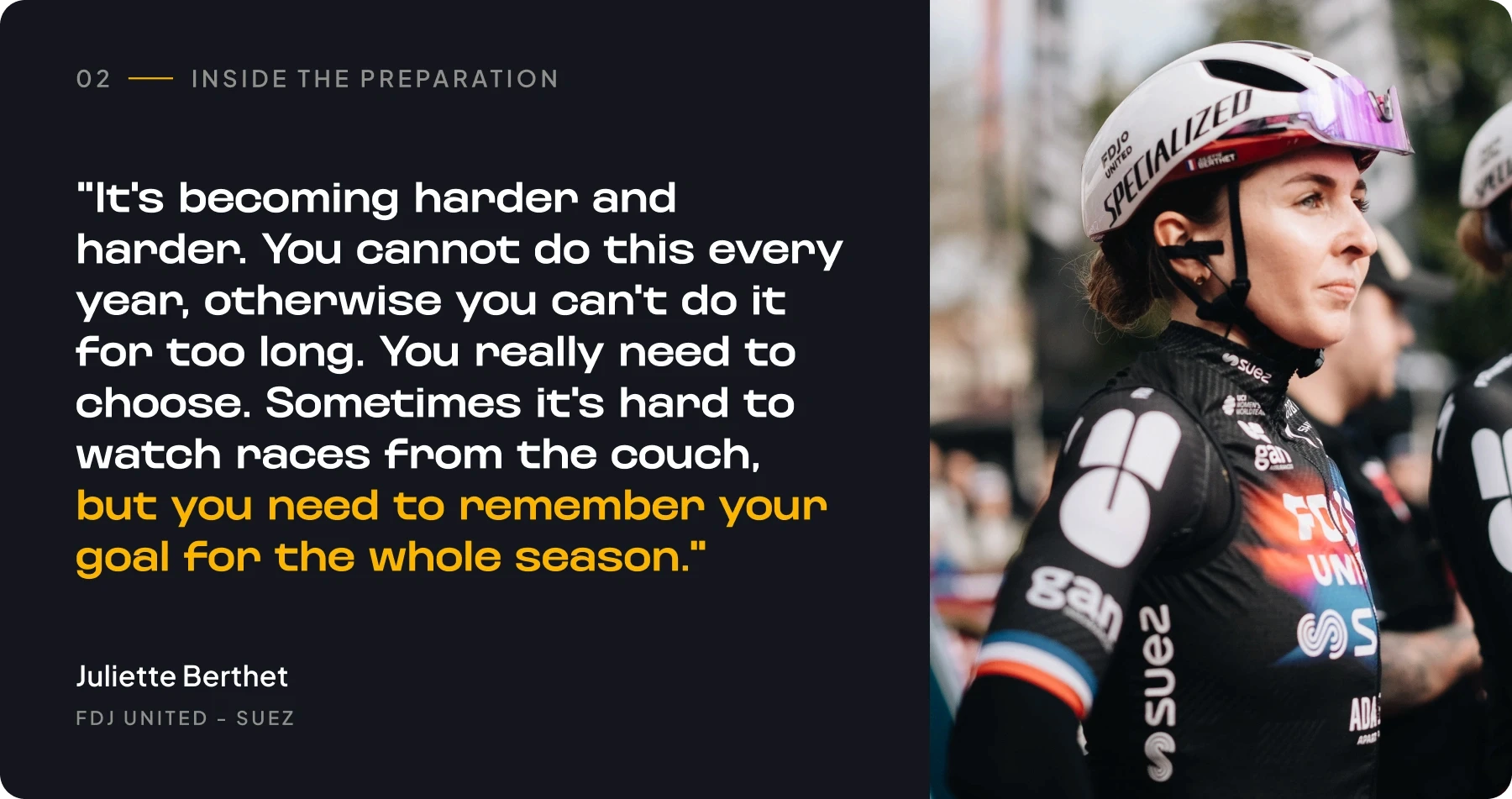
"It's becoming harder and harder, and also mentally. You cannot do this every year, otherwise you can't do it for too long. You really need to choose. Sometimes it's hard to watch races from the couch, but you need to remember your goal for the whole season."
The women's racing calendar has grown significantly. When Juliette turned professional, the best riders did every Women's WorldTour race. That is no longer sustainable. She has raced the Giro, Tour, and Vuelta in the same season before. She has added the Olympic Games on top of that. But the mental and physical toll of combining all of them year after year is too high.
This year, she is skipping the Giro entirely. Racing less, choosing better. That is how the modern calendar is managed at the top.
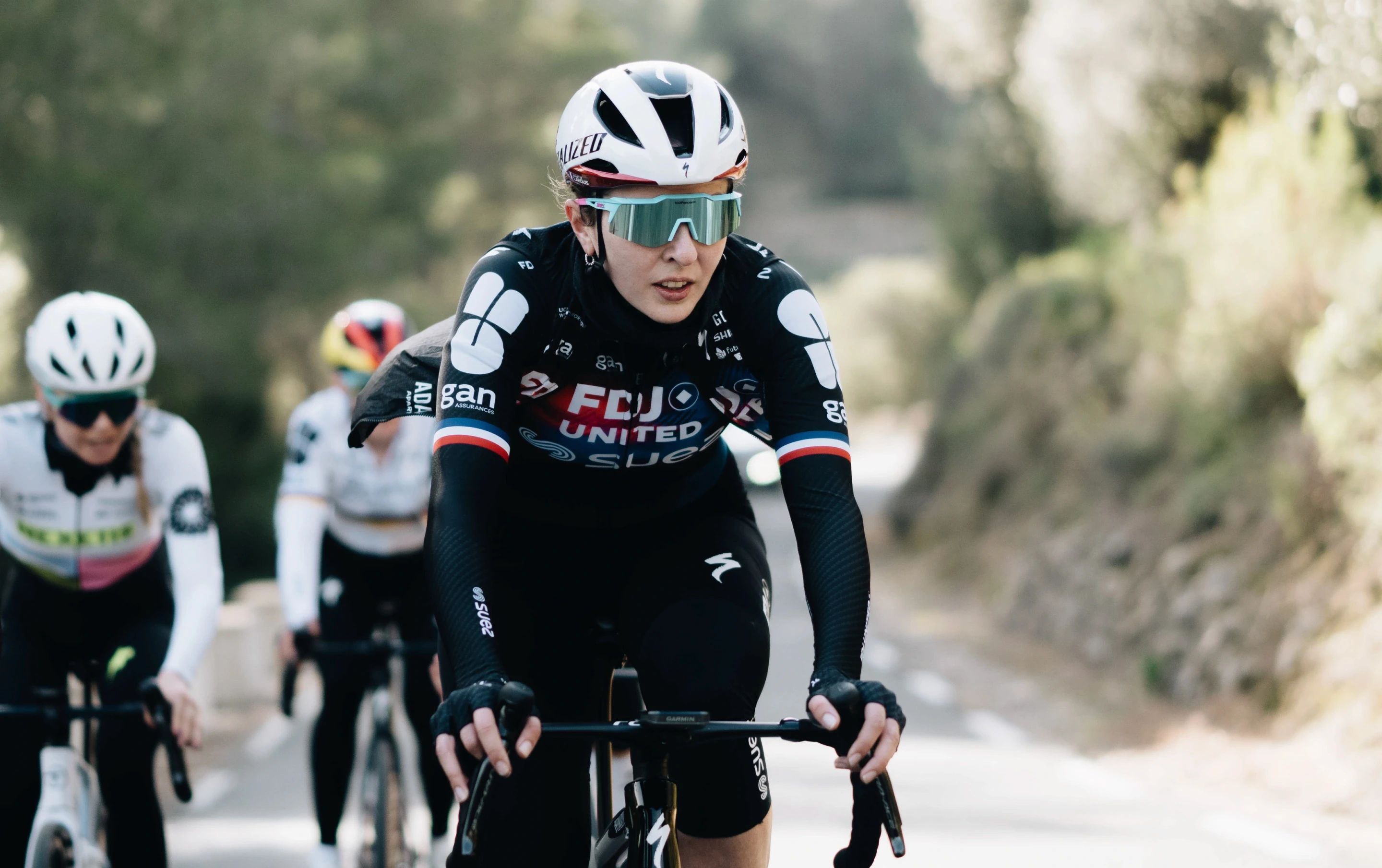
5. 24 hours in one week. Here is what that actually looked like.
"It was a really solid week. But it's good to know, we don't do them a lot. Recovery is really important. If you always overload, you can't handle it for too long."
Juliette shared a specific training week from an altitude camp in Tenerife. 24 hours on the bike, plus strength work. This is what it contained.
Day one: five hours. Hypoxic sprints at altitude, six seconds on, fourteen seconds off, repeated across multiple sets. Then an hour on the time trial bike at altitude for recovery and adaptation.
Day two: four hours. An LSCT freshness test as warm-up, then a bike switch to the TT bike for two sets of 20 minutes at threshold, structured as seven minutes on, three minutes recovery. Then back on the road bike for VO2 max efforts.
Day three: four hours endurance at fat max intensity. Steady. Controlled. The recovery day between high-intensity blocks.
Day four: full rest. No bike. A walk. Massage. Full recovery.
Day five: TT work again. Two sets of 18 minutes, structured as over-unders. Then punchy VO2 max efforts on the road bike.
Day six: five hours. Back to the hypoxic sprints from day one. Tired legs. The end of a big block.
The structure reveals itself when you step back. Two-day blocks of high intensity, separated by an endurance day and a rest day, bookended by longer endurance rides with sprint work. The TT bike features twice because the Tour de France Femmes includes a time trial stage. Every session has a reason.
But the week only works because of what surrounds it. Juliette was clear that weeks like this are rare, not routine. Recovery blocks follow. Lighter weeks protect the adaptation. The body can handle this depth of work, but only if it is not asked to do it too often.
6. The session that gives her the most confidence before a race.
Juliette has a favourite session. It is in the Vekta adaptive plan, and she uses it regularly in the weeks before racing.
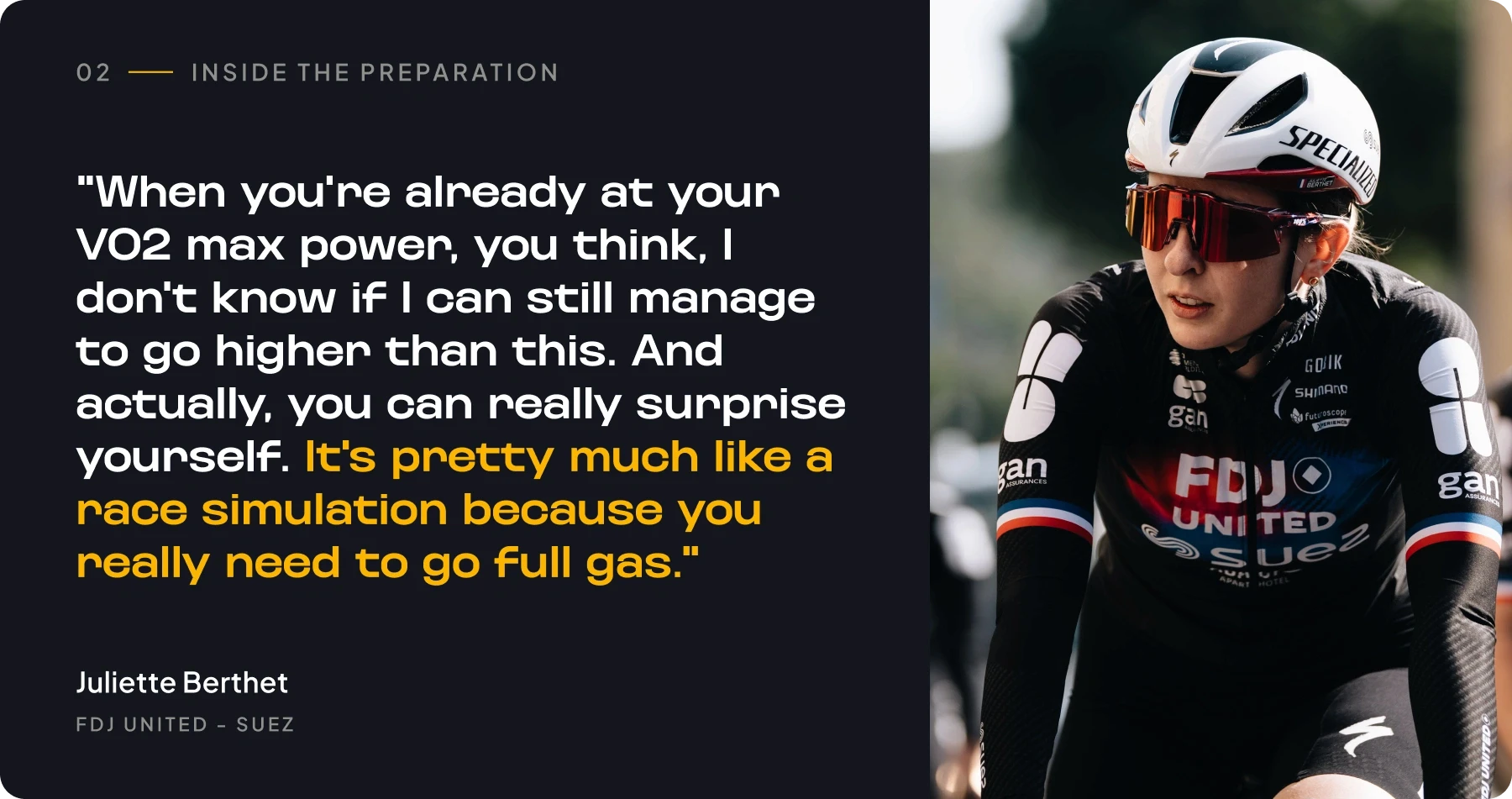
90 seconds at VO2 max power, followed immediately by a 30-second full gas sprint.
At VO2 max you feel like there is nothing left. Every system is working at capacity. Then the sprint demands more. And the body finds it. Power you did not expect. A response you did not think was available.
That is the point. It is a race simulation. The moment an attack goes on a climb and you have already been riding at your limit. The question every Grand Tour asks: can you go again?
"It always gives me confidence for the race. I did this session a few days ago and then you feel really ready to race. You actually feel that you can improve quite quickly. You feel the benefits directly."
Juliette described it as the session where the benefit is felt immediately. Unlike threshold or tempo work, which builds over weeks and months, this session delivers a direct signal that you are ready. Every time she has done it before a race, she has felt prepared.
She also acknowledged it is not for every day. You need a good day. Your body needs to be in the right place to handle it. But when the timing is right, nothing else gives the same confidence.
7. Polarised training is real. Pros go slow more than you think.
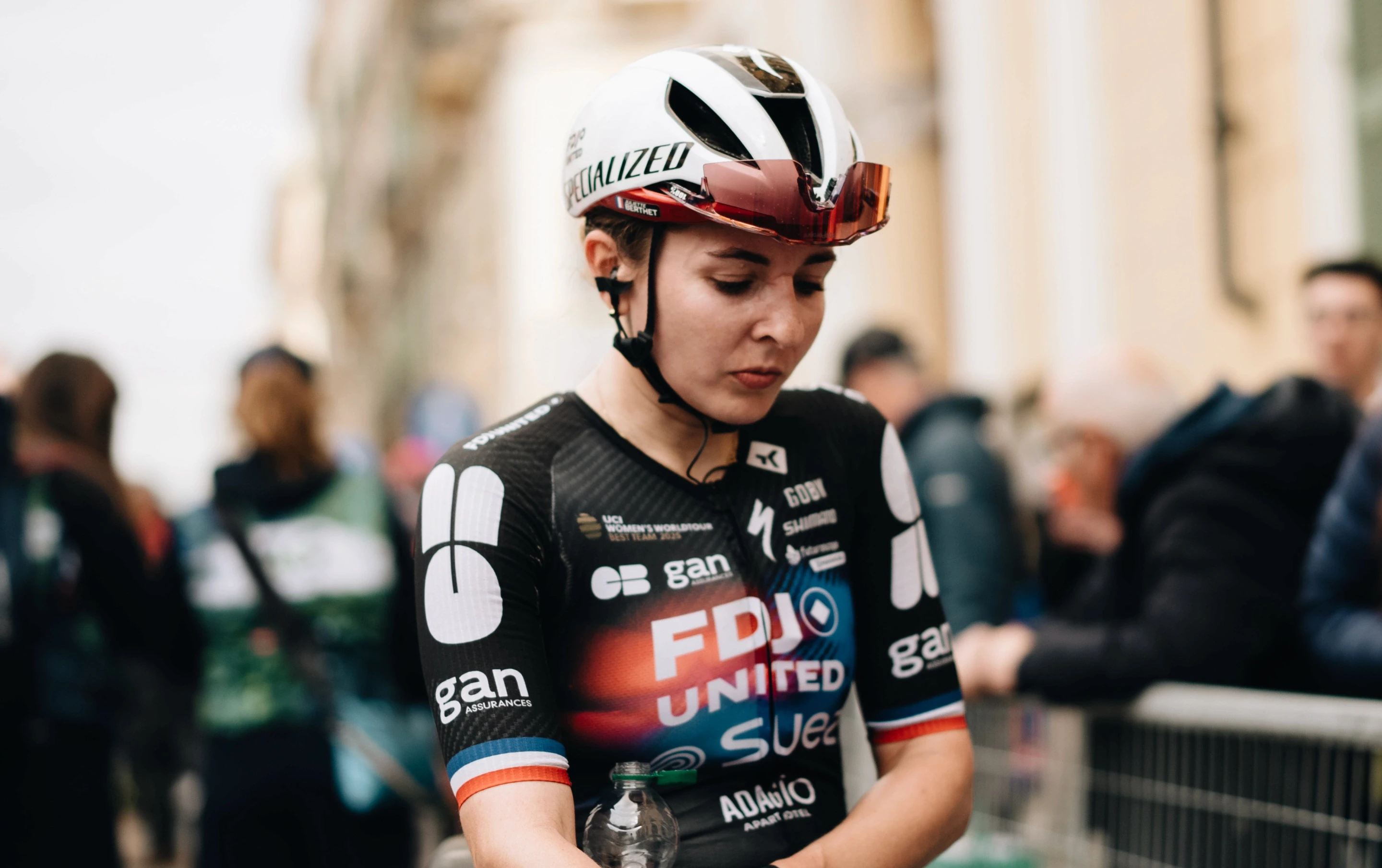
"When you tell someone that you're pro, they are scared to come riding with you because they think you ride full gas the whole time. But actually they drop you on the first climb, because we don't ride full gas the whole time. On an endurance ride, we go easy, really respecting our zones. But when we have to go, then we really go."
The biggest misconception about professional cycling, according to Juliette: that pros are always pushing. The reality is the opposite.
On endurance days, she rides properly slow. When friends join her for a ride, they often attack on the first climb. She sits behind them, holding her zone. Then when the efforts come in structured training, she goes properly hard.
This is polarised training. Easy when it is meant to be easy. Hard when it is meant to be hard. The principle is simple. The execution is not. Especially when riding with others, when the ego gets involved, when you feel good and want to push beyond what the session asks.
The running community has started to embrace this idea publicly. Cycling has practiced it at the top for years. But even among professionals, the discipline is tested constantly. Juliette talked about arriving at camp feeling unwell and having to adjust intensity downwards while maintaining volume. Accepting that the body sets the limit, not the plan.
"Sometimes it can be frustrating if you skip efforts that were planned. But sometimes that's what your body can do. It's a continuous fight with yourself. But that's what I find really interesting with training, because you need to be flexible every time."
The second misconception she addressed was nutrition, and she was direct about it.
"People always ask me, are you allowed to eat this? We basically eat a lot compared to what people think, because you need to fuel well enough. Especially for women, it's really important. We eat well and we eat enough."
The assumption that professional cyclists barely eat is wrong. The weight-to-power ratio matters, but fuelling properly is non-negotiable. Juliette was clear that eating well, eating enough, and protecting health, particularly for women, is fundamental. Not an afterthought. Not a compromise.
8. What transfers to every athlete and coach reading this.
This was the most directly useful part of the conversation, and the part that matters most if you are preparing for your own event.
Planning backwards works at every level. Juliette's entire season is built from the Tour date backwards. October planning. December foundations. Spring racing. Summer altitude. The structure scales. Start from your target event, set specific goals for what you want to improve, and build the blocks to support them. Whether the event is in August or in April, the principle holds.
The foundation phase is where most amateurs fall short. When asked what amateurs miss most, Juliette went straight to the base. The high volume, low intensity weeks at the start of preparation that build your aerobic engine. Most riders skip them or cut them short. Juliette identified this as the single biggest gap between amateurs who perform well and those who do not.
Less time means more intensity, not less structure. The physical training itself is not vastly different between a professional and an amateur. Professionals have more volume, more support staff, more monitoring. Amateurs have less time, so sessions need to be more concentrated on intensity. But the structure, the planning, the discipline of when to go hard and when to hold back, that transfers directly.
A plan brings discipline. "If you go out riding just whenever you want, it's quite hard to be strict enough on yourself. I think it's great to have that structure to help you and have that bit more discipline, even though you need to be flexible depending on how you feel." One of the clearest things Juliette said. A structured plan removes the daily decision of what to do. It tells you when to push, when to recover, and when to listen to your body. That discipline is often harder than the efforts themselves.
Commitment is the same at every level. "I have a lot of friends who train and they suffer as much as I do. When you want to go in the rain and stuff like this, it's not always easy. I think what really transfers is your commitment." The motivation, the early mornings, the days when you do not want to go out in the rain. None of it gets easier because you are a professional. The context is different. The commitment is the same.
Train with Juliette's methodology.
The preparation Juliette described in this webinar is not locked inside a WorldTour team. It is available on Vekta.
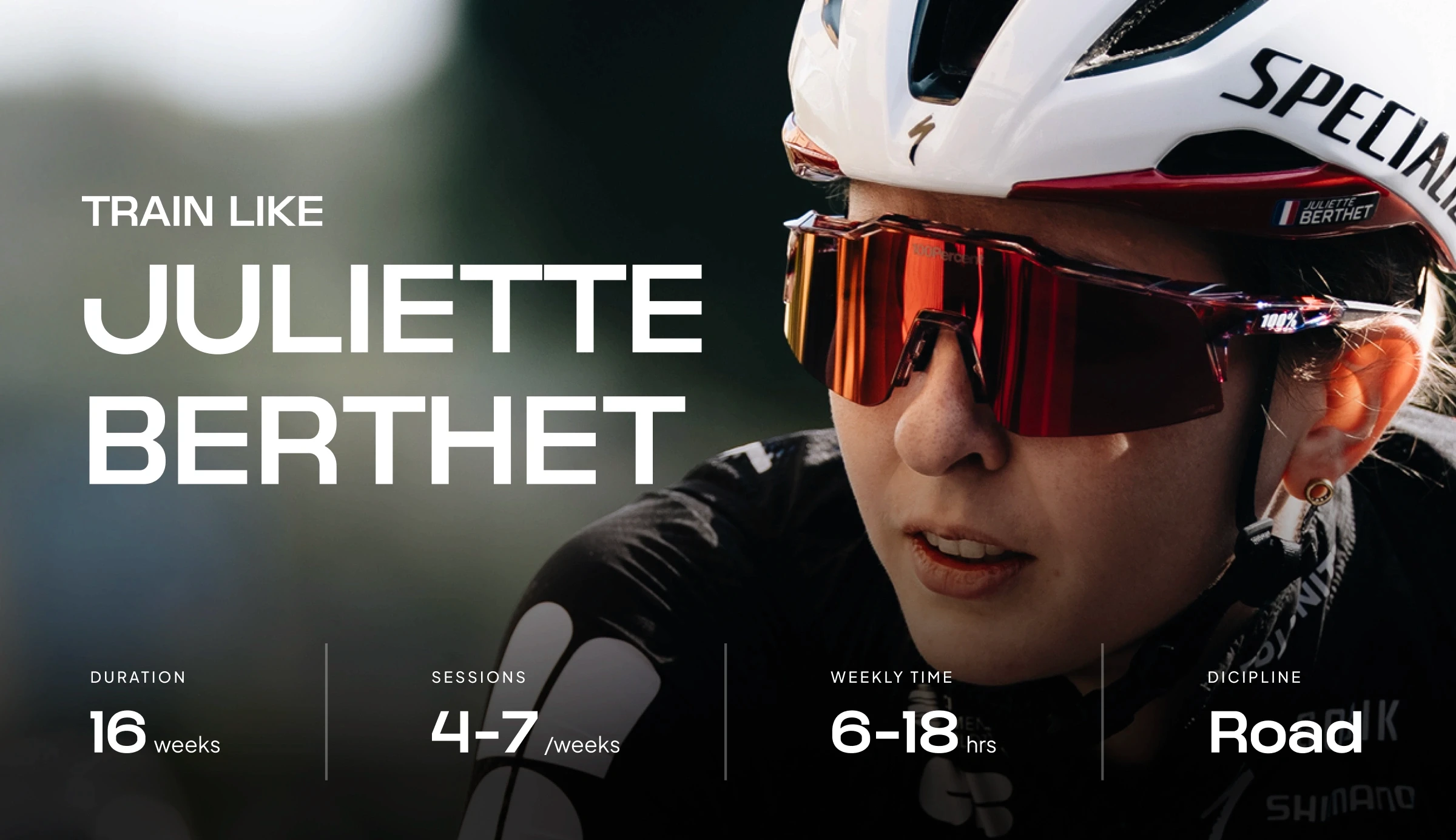
Juliette's adaptive plan is a 16-week programme built from how she prepares for the Tour de France Femmes. It is personalised to your Critical Power profile and your available schedule from day one. The sessions adapt as your fitness changes. The structure reflects the same principles she trains by.
The session she described as her favourite, the VO2 max and sprint combination that gives her confidence before every race, is in the plan. The periodisation, the block structure, the balance between intensity and recovery. All of it is built into the programme.
Build your plan
Inside the Preparation: 8 Insights from Juliette Berthet's Tour de France Femmes Webinar
A live conversation with one of the best stage racers in the world. Here is what she shared.
Juliette Berthet went live with Vekta to answer one question: what does preparing for the Tour de France Femmes actually look like from the inside?
Not the highlights. Not the curated Strava posts. The real structure. The sessions, the camps, the decision making, the trade-offs.
For an hour she walked through everything. How a Grand Tour year is built from October onwards. What a 24-hour training week looks like in the middle of an altitude camp. Why the classics and the Tour are not competing goals. What she eats, what she skips, and why most people get the nutrition question wrong.
Here are the eight things that stood out.
1. Tour preparation begins before the season does.
The Tour de France Femmes is not a summer project. It is a year-round one.
"It's pretty much in my head the whole time. Directly when the Tour is finished, you think about the next one. Especially when you have the course revelation, in October, it really starts. You already have in mind where it goes and what you need to be ready."
The thinking is constant. But the formal planning begins in October, when the course is revealed and Juliette sits down with the team to map the entire season around it. Training structure, race calendar, altitude camp scheduling, targeted events. Everything is planned backwards from August.
By December, the first real training camp is underway. Typically in Spain. High volume on the bike, combined with lactate testing, 20-minute power tests, and nutritional profiling. But the riding is only part of it. The December camp is where the race programme is finalised with the sport director and trainer. Where the bike fitting happens, because as Juliette put it, if you are not well positioned on your bike, everything else suffers. Where doctor check-ups, concussion protocols, insole fitting, and sponsor meetings all compete for time in a 10-day window.
The season has not started. But by the time December ends, the architecture of the entire year is in place.
2. Winter camps are not about fitness. They are about foundations.
"The December camp is always full of meetings. You don't have much time to rest."
The winter camps carry none of the nervous energy that comes later in the season. The shape is not there yet. The pressure is not there yet. But the density of work happening off the bike is higher than at any other point in the year.
Three camps define the winter. The first is almost entirely off the bike. Staff meetings, health screenings, nutritional reviews, and season planning with doctors, trainers, and sport directors. The second, in December, is the first real training camp. High volume riding to rebuild the aerobic base after the off-season, combined with specific testing and the full programme of meetings described above. The third follows in January or February with the same structure and purpose.
The difference between these camps and the in-season altitude blocks is fundamental. In-season camps strip everything back to performance. Training, recovery, massage, rest. No meetings. No distractions. Just the question of how to be fast.
The winter camps exist to build the structure that makes that question answerable.
3. Altitude is no longer optional at the top.
Altitude camps used to be once a year. Now they are built into every major block of the season. Juliette does two or three altitude camps per year, typically three weeks each, aiming for 21 nights at high altitude.
The physiology behind it is straightforward. Training at altitude stimulates the body to produce more red blood cells and haemoglobin, increasing its ability to transport and use oxygen. When you return to sea level, the benefit translates directly into sustained power output.
But altitude camps serve more than one purpose. In Tenerife, where Juliette frequently trains, climbs last up to three hours. That kind of sustained climbing builds the specific endurance Grand Tours demand. It builds a different pedalling rhythm. And the environment itself, isolated, distraction-free, fully supported by team staff, creates three weeks of complete focus that is impossible to replicate at home.
There is also a shift happening off the mountain. Home altitude chambers are becoming more common among top riders. Juliette now uses one to extend the adaptation from camp without spending more time away from home. The chamber days also allow her to train at lower altitude on flatter terrain, finding race speed and sharpness that the long climbs of Tenerife do not provide.
A typical camp day follows a consistent rhythm. Breakfast. Mobility and core activation. Four to six hours on the bike. Recovery meal prepared by the team nutritionist. Rest. Then whatever meetings or recovery sessions the programme demands. Rest days are one hour or nothing at all.
4. The classics and the Tour are not competing goals.
"I need some races. But you need to find the balance to not get too tired and to have enough training blocks."
This is one of the most common questions Juliette gets asked. How do you race the Ardennes classics in April and still peak for the Tour in August?
Her answer: they are not separate preparations. The Vuelta Femenina sits at the beginning of May, and the physical demands of preparing for it overlap heavily with Tour preparation. The altitude camp she did in the weeks before the classics was simultaneously building her base for August. The classics themselves add specific intensity for short climbs of two to five minutes, race sharpness, and the kind of competitive edge that training alone cannot replicate.
The real challenge is not the physical overlap. It is selection.
"It's becoming harder and harder, and also mentally. You cannot do this every year, otherwise you can't do it for too long. You really need to choose. Sometimes it's hard to watch races from the couch, but you need to remember your goal for the whole season."
The women's racing calendar has grown significantly. When Juliette turned professional, the best riders did every Women's WorldTour race. That is no longer sustainable. She has raced the Giro, Tour, and Vuelta in the same season before. She has added the Olympic Games on top of that. But the mental and physical toll of combining all of them year after year is too high.
This year, she is skipping the Giro entirely. Racing less, choosing better. That is how the modern calendar is managed at the top.
5. 24 hours in one week. Here is what that actually looked like.
"It was a really solid week. But it's good to know, we don't do them a lot. Recovery is really important. If you always overload, you can't handle it for too long."
Juliette shared a specific training week from an altitude camp in Tenerife. 24 hours on the bike, plus strength work. This is what it contained.
Day one: five hours. Hypoxic sprints at altitude, six seconds on, fourteen seconds off, repeated across multiple sets. Then an hour on the time trial bike at altitude for recovery and adaptation.
Day two: four hours. An LSCT freshness test as warm-up, then a bike switch to the TT bike for two sets of 20 minutes at threshold, structured as seven minutes on, three minutes recovery. Then back on the road bike for VO2 max efforts.
Day three: four hours endurance at fat max intensity. Steady. Controlled. The recovery day between high-intensity blocks.
Day four: full rest. No bike. A walk. Massage. Full recovery.
Day five: TT work again. Two sets of 18 minutes, structured as over-unders. Then punchy VO2 max efforts on the road bike.
Day six: five hours. Back to the hypoxic sprints from day one. Tired legs. The end of a big block.
The structure reveals itself when you step back. Two-day blocks of high intensity, separated by an endurance day and a rest day, bookended by longer endurance rides with sprint work. The TT bike features twice because the Tour de France Femmes includes a time trial stage. Every session has a reason.
But the week only works because of what surrounds it. Juliette was clear that weeks like this are rare, not routine. Recovery blocks follow. Lighter weeks protect the adaptation. The body can handle this depth of work, but only if it is not asked to do it too often.
6. The session that gives her the most confidence before a race.
Juliette has a favourite session. It is in the Vekta adaptive plan, and she uses it regularly in the weeks before racing.
90 seconds at VO2 max power, followed immediately by a 30-second full gas sprint.
At VO2 max you feel like there is nothing left. Every system is working at capacity. Then the sprint demands more. And the body finds it. Power you did not expect. A response you did not think was available.
That is the point. It is a race simulation. The moment an attack goes on a climb and you have already been riding at your limit. The question every Grand Tour asks: can you go again?
"It always gives me confidence for the race. I did this session a few days ago and then you feel really ready to race. You actually feel that you can improve quite quickly. You feel the benefits directly."
Juliette described it as the session where the benefit is felt immediately. Unlike threshold or tempo work, which builds over weeks and months, this session delivers a direct signal that you are ready. Every time she has done it before a race, she has felt prepared.
She also acknowledged it is not for every day. You need a good day. Your body needs to be in the right place to handle it. But when the timing is right, nothing else gives the same confidence.
7. Polarised training is real. Pros go slow more than you think.
"When you tell someone that you're pro, they are scared to come riding with you because they think you ride full gas the whole time. But actually they drop you on the first climb, because we don't ride full gas the whole time. On an endurance ride, we go easy, really respecting our zones. But when we have to go, then we really go."
The biggest misconception about professional cycling, according to Juliette: that pros are always pushing. The reality is the opposite.
On endurance days, she rides properly slow. When friends join her for a ride, they often attack on the first climb. She sits behind them, holding her zone. Then when the efforts come in structured training, she goes properly hard.
This is polarised training. Easy when it is meant to be easy. Hard when it is meant to be hard. The principle is simple. The execution is not. Especially when riding with others, when the ego gets involved, when you feel good and want to push beyond what the session asks.
The running community has started to embrace this idea publicly. Cycling has practiced it at the top for years. But even among professionals, the discipline is tested constantly. Juliette talked about arriving at camp feeling unwell and having to adjust intensity downwards while maintaining volume. Accepting that the body sets the limit, not the plan.
"Sometimes it can be frustrating if you skip efforts that were planned. But sometimes that's what your body can do. It's a continuous fight with yourself. But that's what I find really interesting with training, because you need to be flexible every time."
The second misconception she addressed was nutrition, and she was direct about it.
"People always ask me, are you allowed to eat this? We basically eat a lot compared to what people think, because you need to fuel well enough. Especially for women, it's really important. We eat well and we eat enough."
The assumption that professional cyclists barely eat is wrong. The weight-to-power ratio matters, but fuelling properly is non-negotiable. Juliette was clear that eating well, eating enough, and protecting health, particularly for women, is fundamental. Not an afterthought. Not a compromise.
8. What transfers to every athlete and coach reading this.
This was the most directly useful part of the conversation, and the part that matters most if you are preparing for your own event.
Planning backwards works at every level. Juliette's entire season is built from the Tour date backwards. October planning. December foundations. Spring racing. Summer altitude. The structure scales. Start from your target event, set specific goals for what you want to improve, and build the blocks to support them. Whether the event is in August or in April, the principle holds.
The foundation phase is where most amateurs fall short. When asked what amateurs miss most, Juliette went straight to the base. The high volume, low intensity weeks at the start of preparation that build your aerobic engine. Most riders skip them or cut them short. Juliette identified this as the single biggest gap between amateurs who perform well and those who do not.
Less time means more intensity, not less structure. The physical training itself is not vastly different between a professional and an amateur. Professionals have more volume, more support staff, more monitoring. Amateurs have less time, so sessions need to be more concentrated on intensity. But the structure, the planning, the discipline of when to go hard and when to hold back, that transfers directly.
A plan brings discipline. "If you go out riding just whenever you want, it's quite hard to be strict enough on yourself. I think it's great to have that structure to help you and have that bit more discipline, even though you need to be flexible depending on how you feel." One of the clearest things Juliette said. A structured plan removes the daily decision of what to do. It tells you when to push, when to recover, and when to listen to your body. That discipline is often harder than the efforts themselves.
Commitment is the same at every level. "I have a lot of friends who train and they suffer as much as I do. When you want to go in the rain and stuff like this, it's not always easy. I think what really transfers is your commitment." The motivation, the early mornings, the days when you do not want to go out in the rain. None of it gets easier because you are a professional. The context is different. The commitment is the same.
Train with Juliette's methodology.
The preparation Juliette described in this webinar is not locked inside a WorldTour team. It is available on Vekta.
Juliette's adaptive plan is a 16-week programme built from how she prepares for the Tour de France Femmes. It is personalised to your Critical Power profile and your available schedule from day one. The sessions adapt as your fitness changes. The structure reflects the same principles she trains by.
The session she described as her favourite, the VO2 max and sprint combination that gives her confidence before every race, is in the plan. The periodisation, the block structure, the balance between intensity and recovery. All of it is built into the programme.
Build your plan
Try Vekta free
Put the theory to work
Vekta is where coaches and athletes plan the work, see the numbers, and track what actually changes.
Try Vekta free
Put the theory to work
Vekta is where coaches and athletes plan the work, see the numbers, and track what actually changes.
Brand Director