Partnerships
Partnerships
Partnerships
7
7
7
min
min
min
Dominic Valerio
Dominic Valerio
How WorldTour Teams Use Vekta at the Giro d'Italia
How WorldTour Teams Use Vekta at the Giro d'Italia
How WorldTour Teams Use Vekta at the Giro d'Italia
Three weeks. 21 stages. 48,700 metres of climbing. The Giro d'Italia is not a race you survive on talent alone. It is a race you survive on information, and what you do with it when your legs are empty and the road is still rising.
The teams using Vekta at the Giro do not simply train harder. They plan more precisely, respond more quickly, and understand their riders more completely than the teams that finish behind them. Every stage adds to the load. Every decision compounds. By the final week, the margin between a GC contender and a rider cracking on the Mortirolo is not fitness. It is preparation.
This is what Vekta is built for. Here is how teams use it across three weeks of racing.
The performance model behind every decision
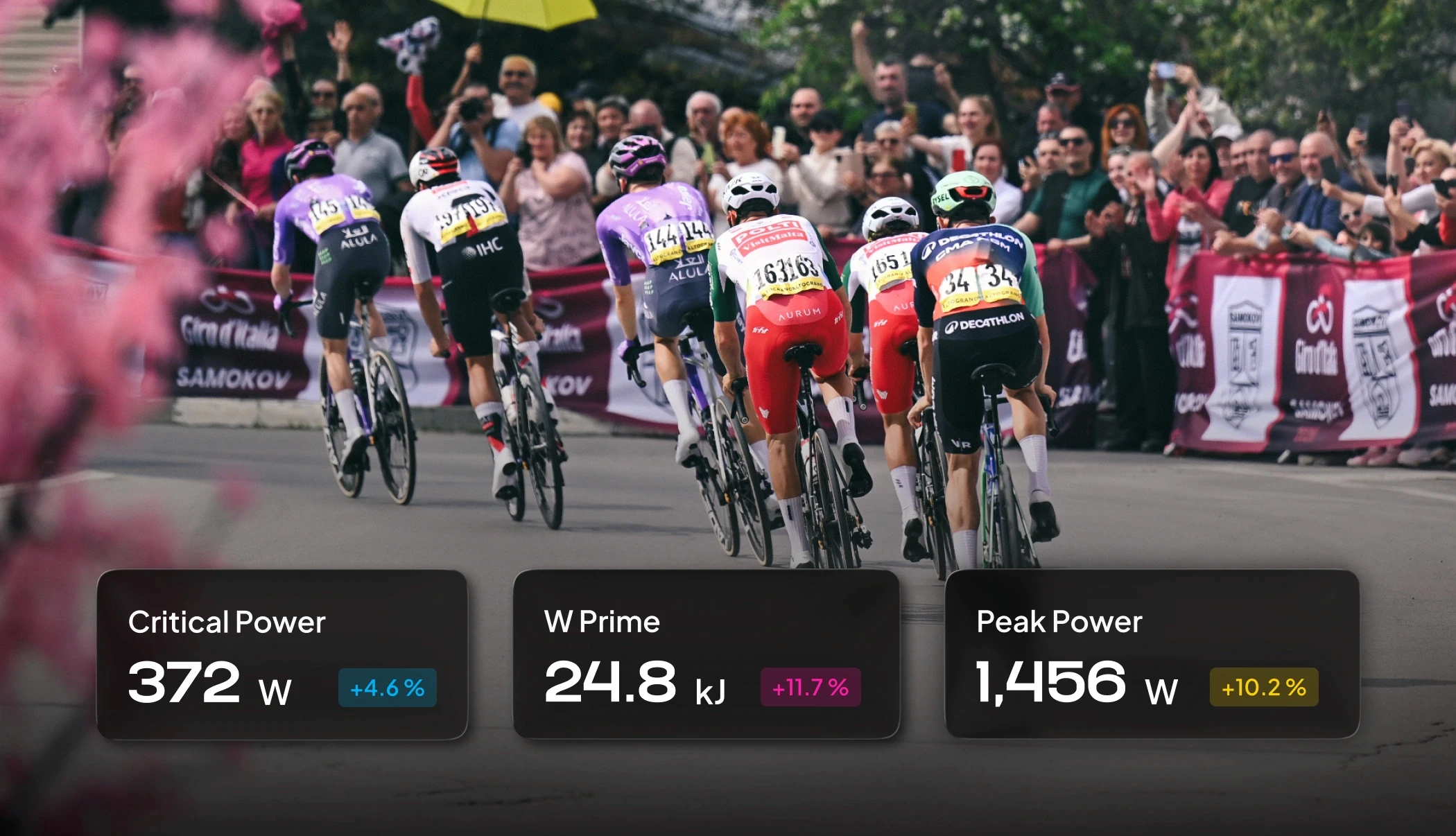
Every stage plan at the Giro begins with two numbers: Critical Power and W′.
Critical Power defines the highest output a rider can sustain indefinitely without accumulating fatigue. W′ is the finite reserve above that threshold — the anaerobic battery that powers every acceleration, every surge, every moment a race is won or lost above CP. Together, they form the physiological model that teams use to plan pacing, manage attacks, and set recovery targets across the full three weeks.
Without this model, stage planning is guesswork. With it, every climb has a target, every effort has a cost, and every stage plan is built on something more than instinct.
W′ is the currency of every attack
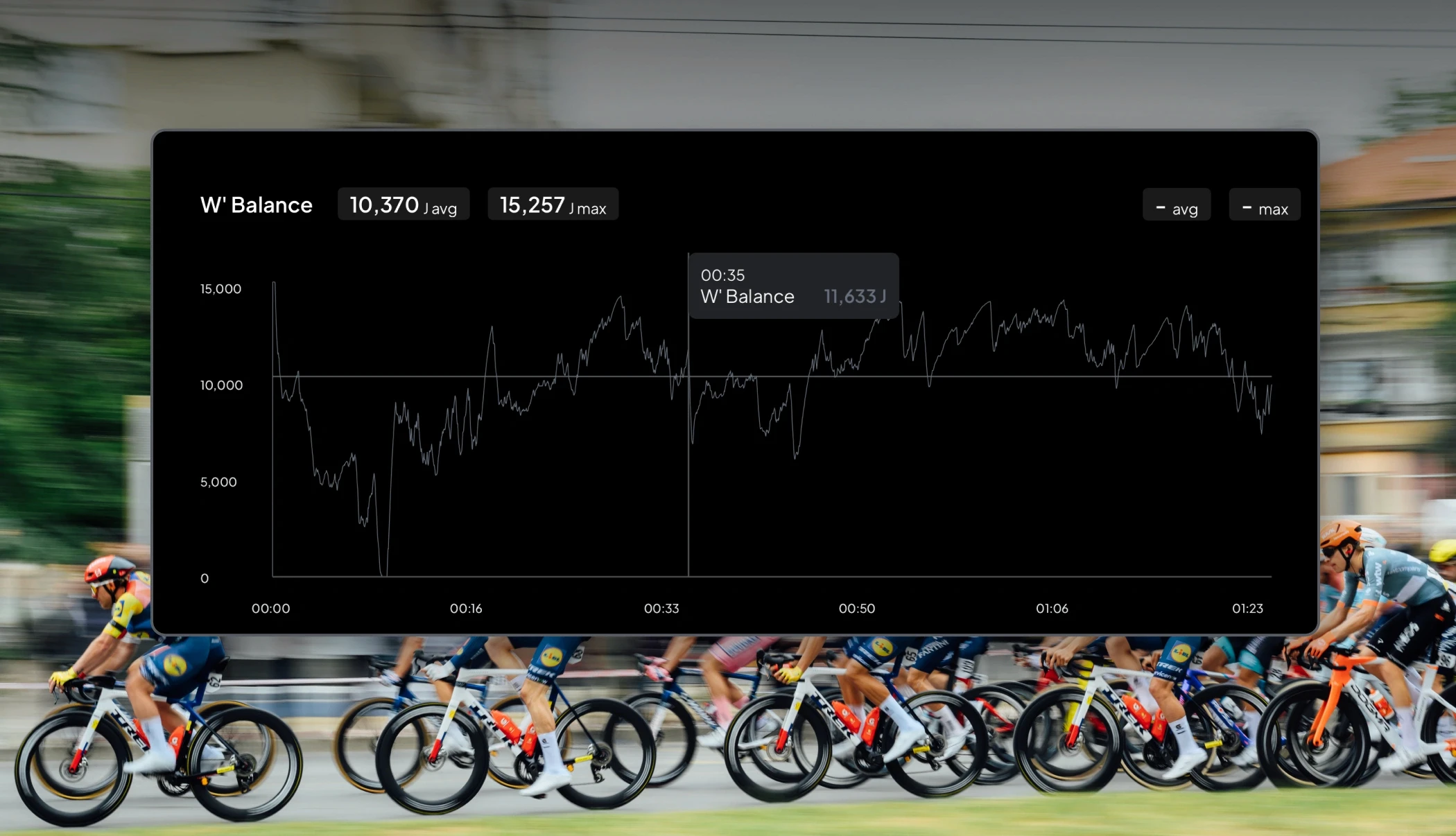
In a Grand Tour, attacks are not free. Every effort above Critical Power draws from W′ Balance, and that balance takes time to recover. Spend too much on stage 14 and you arrive at stage 15 already compromised.
Vekta tracks W′ Balance second by second across every stage, giving teams a precise account of how each rider's anaerobic reserve was spent and recovered throughout the race. After the stage, that data feeds directly into the next day's preparation. Across multiple teams, the same questions are asked after every stage. Which riders went deep? Who has more to give? Where was W′ depleted and never recovered?
These are not abstract questions. In a race decided by seconds across three weeks, the answers shape everything from pacing strategy to race tactics to how hard a rider is asked to work for their leader on the road to the finish.
Every stage, captured automatically
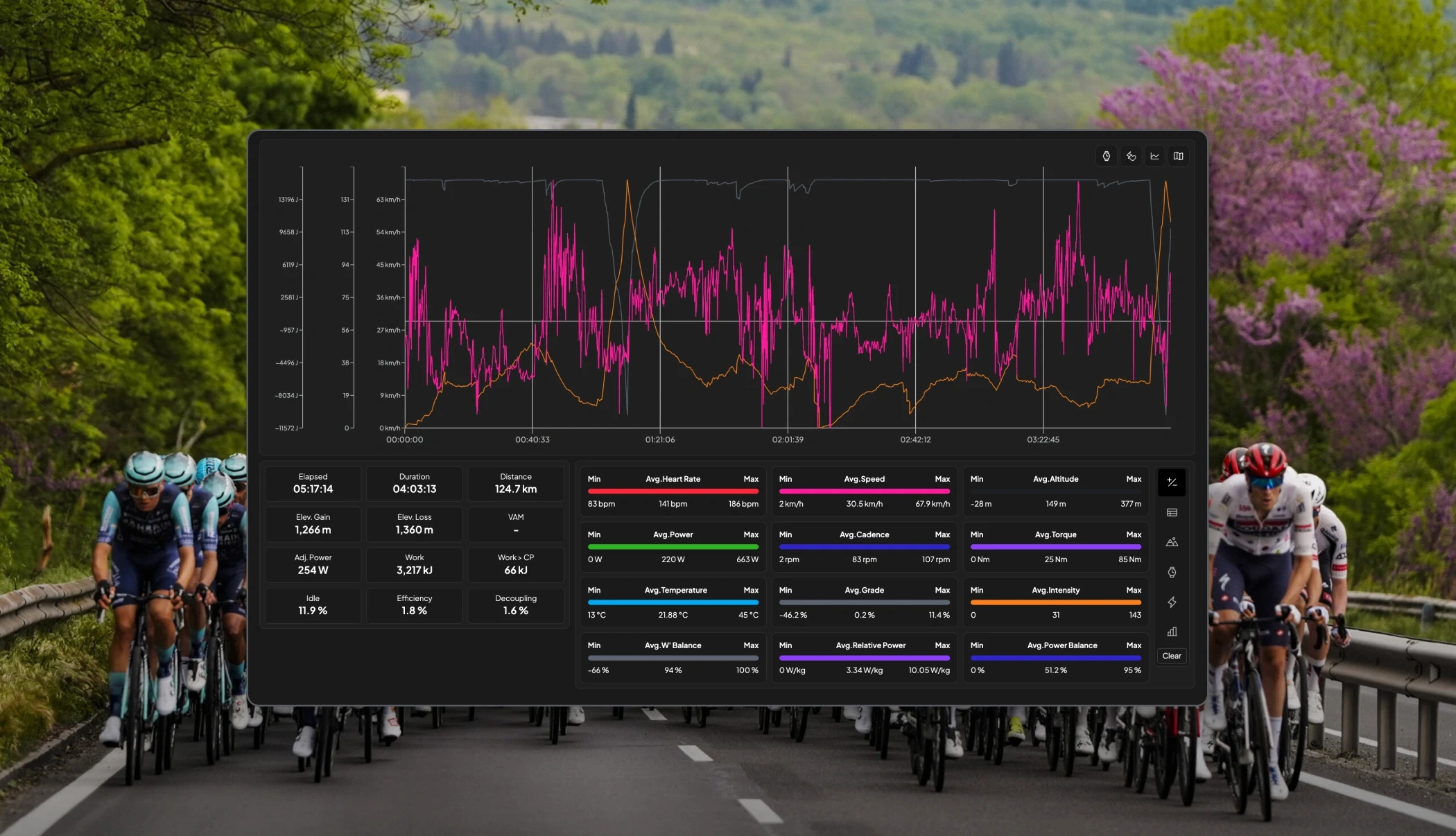
The Giro generates an enormous volume of data. Power, heart rate, W′ Balance, intensity, core temperature, torque, decoupling — every stream from every stage, across every rider in the team.
Vekta AI automatically detects each stage as a race and adds it to a combined Race Analysis view. There is no manual tagging, no post-stage admin, no data lost in the gaps between stages. Every stream is there. Every stage is indexed. The picture builds across the full three weeks without anyone having to construct it.
For performance staff across multiple teams, each managing several riders through three weeks of racing, this matters. Time spent organising data is time not spent analysing it.
The true cost of every stage
Not all hard stages look the same on paper. A mountain stage with repeated short climbs can carry a very different physiological cost to a long rolling stage with a final summit finish, even if the average power numbers are similar.
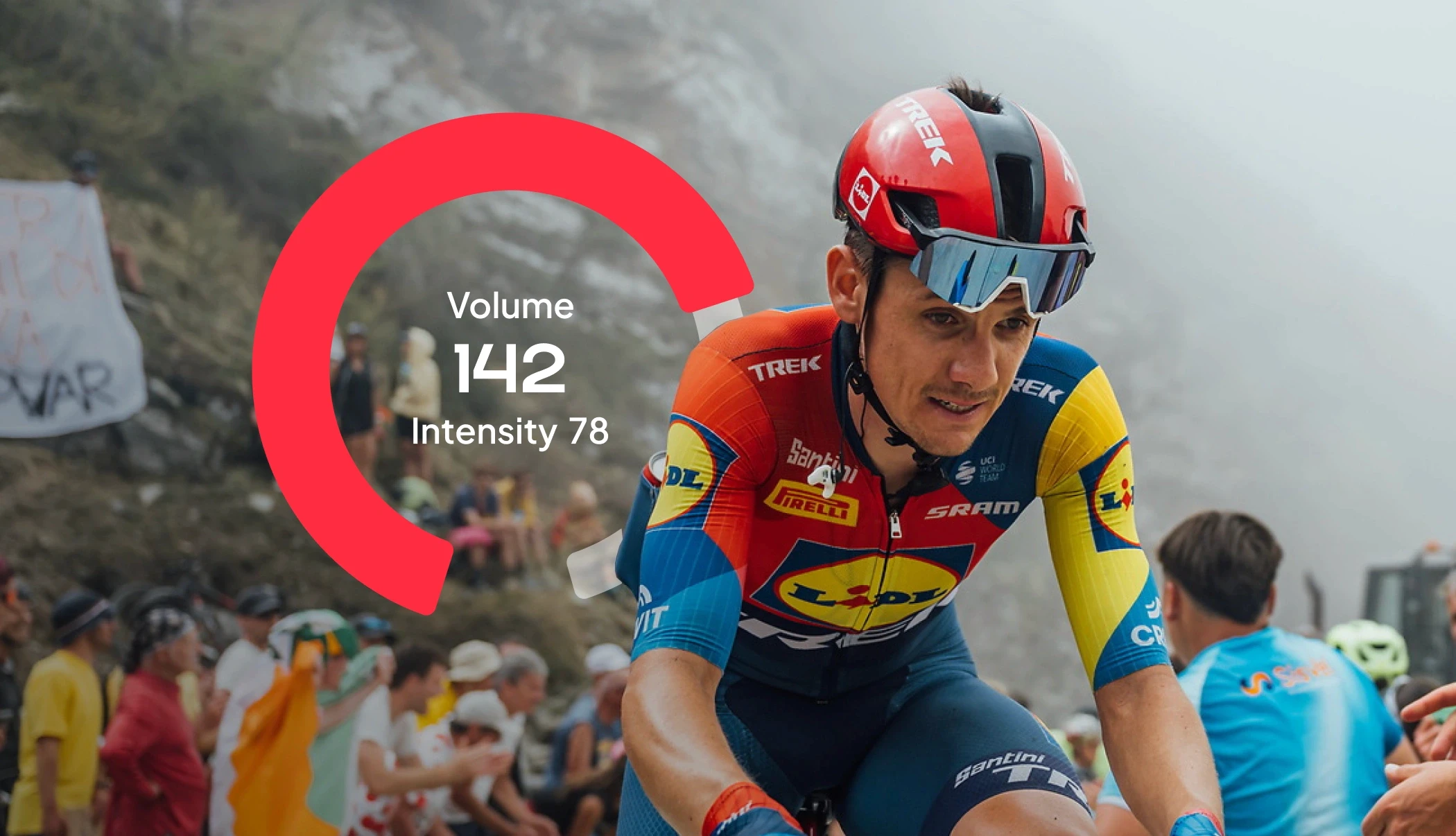
Vekta separates Volume from Intensity to surface the real cost. Volume captures the total work done. Intensity weights efforts above Critical Power disproportionately, because that is where fatigue accumulates fastest. Altitude is factored in. The result is a measure that reflects not just how much a rider worked, but how deeply they were pushed.
Teams use this to manage load across the full race, identifying which stages have genuinely cost the most and adjusting what is asked of riders in the days that follow.
Recovery is the second half of performance
A Grand Tour is won in recovery as much as on the road. The riders who arrive at the final week with something left are the ones whose teams managed the spaces between stages as carefully as the stages themselves.
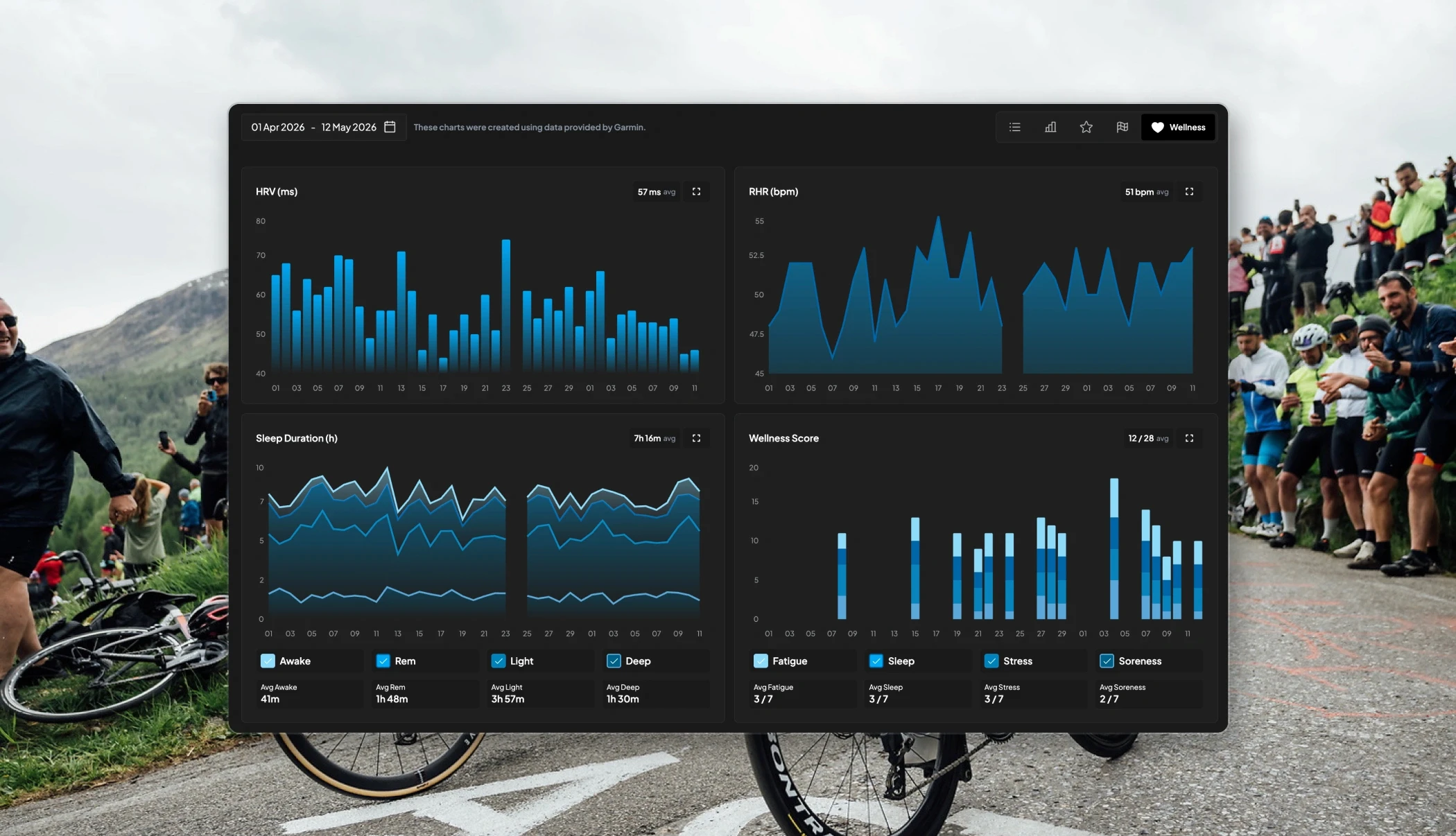
Vekta brings together HRV, resting heart rate, sleep, weight and daily check-ins on fatigue, illness and soreness, all alongside the performance data from racing. Teams see how each rider is responding and recovering, not just how they performed. A rider who produced good numbers on stage 12 but whose HRV has been declining for four days is a different conversation to one who is tracking cleanly across every signal.
Recovery is not passive. It is a performance discipline, and it requires the same quality of information as everything else.
Durability decides Grand Tours
Peak power over five seconds tells you very little about who wins the Giro. What matters is peak power over five seconds after 200km and 4,000 metres of climbing.
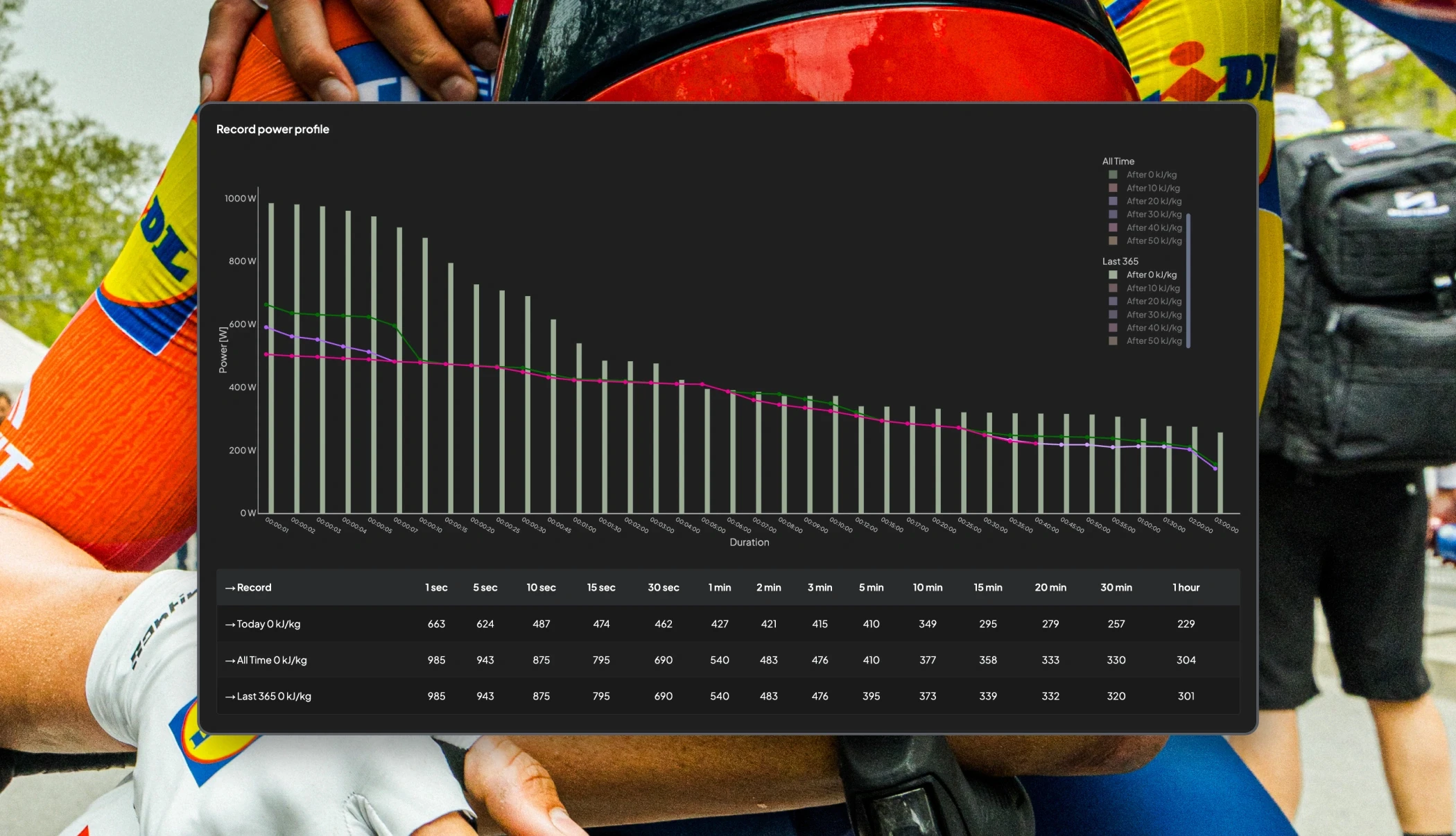
Durability is the measure of how much a rider's power profile degrades under accumulated fatigue. Vekta tracks peak power at every duration from zero to 50kJ/kg of work done, giving teams a clear picture of how each rider's capacity holds as the race wears on. Who stays strong deep into long stages? Who fades? Whose five-minute power is still lethal on stage 20 when everyone else is managing?
This shapes race roles, protects GC leaders, and tells teams exactly where they can attack and where they need to conserve.
Every climb, analysed automatically
The Giro is a race of climbs. Every summit finish, every categorised ascent, every small rise that fragments a peloton on a crosswind day.
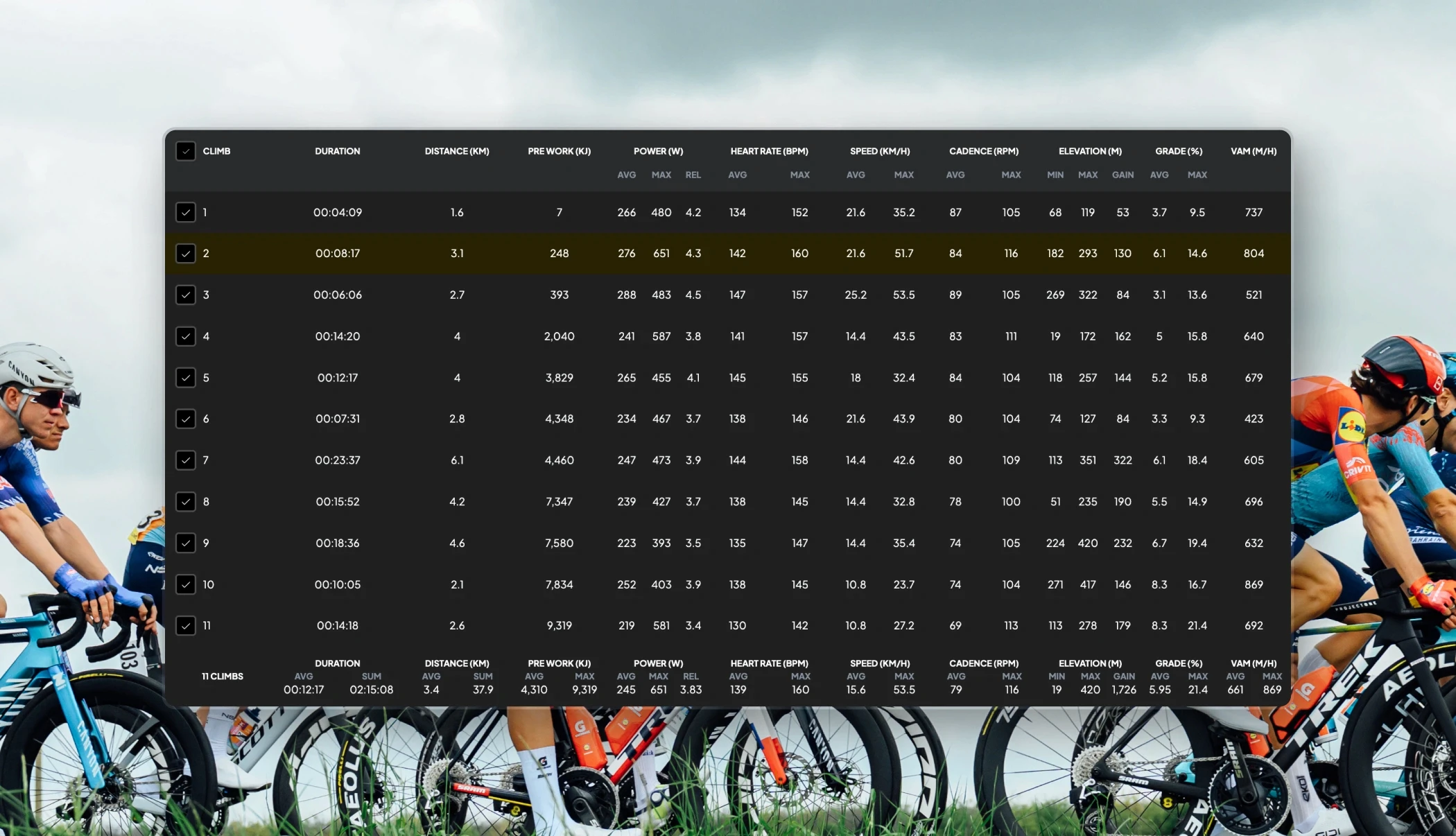
Vekta analyses every climb on every stage automatically: peak grade, power fade, VAM, torque carried, losses scored by gradient. Teams see how each rider is climbing and how that changes as the race progresses. Summaries per stage, per climb, without anyone having to do the work of building them.
By the final week, the data tells a story. Riders who are holding their climbing numbers are moving up the standings. Riders whose VAM is drifting, whose torque is tailing off, whose power fade is steepening, need managing before the road finds them out.
The same platform. Every coach and athlete.
Every Grand Tour, multiple WorldTour teams and individual athletes arrive at the start line running Vekta. The platform is the same whether you are a WorldTour performance director or a coach with a single rider in the race.
The same Critical Power model. The same W′ Balance tracking. The same automatic race detection, durability curves, recovery monitoring and climb analysis.
The Giro asks the same questions of every rider. What is it costing you? What do you have left? What does tomorrow need?
Vekta answers them.
How WorldTour Teams Use Vekta at the Giro d'Italia
Three weeks. 21 stages. 48,700 metres of climbing. The Giro d'Italia is not a race you survive on talent alone. It is a race you survive on information, and what you do with it when your legs are empty and the road is still rising.
The teams using Vekta at the Giro do not simply train harder. They plan more precisely, respond more quickly, and understand their riders more completely than the teams that finish behind them. Every stage adds to the load. Every decision compounds. By the final week, the margin between a GC contender and a rider cracking on the Mortirolo is not fitness. It is preparation.
This is what Vekta is built for. Here is how teams use it across three weeks of racing.
The performance model behind every decision
Every stage plan at the Giro begins with two numbers: Critical Power and W′.
Critical Power defines the highest output a rider can sustain indefinitely without accumulating fatigue. W′ is the finite reserve above that threshold — the anaerobic battery that powers every acceleration, every surge, every moment a race is won or lost above CP. Together, they form the physiological model that teams use to plan pacing, manage attacks, and set recovery targets across the full three weeks.
Without this model, stage planning is guesswork. With it, every climb has a target, every effort has a cost, and every stage plan is built on something more than instinct.
W′ is the currency of every attack
In a Grand Tour, attacks are not free. Every effort above Critical Power draws from W′ Balance, and that balance takes time to recover. Spend too much on stage 14 and you arrive at stage 15 already compromised.
Vekta tracks W′ Balance second by second across every stage, giving teams a precise account of how each rider's anaerobic reserve was spent and recovered throughout the race. After the stage, that data feeds directly into the next day's preparation. Across multiple teams, the same questions are asked after every stage. Which riders went deep? Who has more to give? Where was W′ depleted and never recovered?
These are not abstract questions. In a race decided by seconds across three weeks, the answers shape everything from pacing strategy to race tactics to how hard a rider is asked to work for their leader on the road to the finish.
Every stage, captured automatically
The Giro generates an enormous volume of data. Power, heart rate, W′ Balance, intensity, core temperature, torque, decoupling — every stream from every stage, across every rider in the team.
Vekta AI automatically detects each stage as a race and adds it to a combined Race Analysis view. There is no manual tagging, no post-stage admin, no data lost in the gaps between stages. Every stream is there. Every stage is indexed. The picture builds across the full three weeks without anyone having to construct it.
For performance staff across multiple teams, each managing several riders through three weeks of racing, this matters. Time spent organising data is time not spent analysing it.
The true cost of every stage
Not all hard stages look the same on paper. A mountain stage with repeated short climbs can carry a very different physiological cost to a long rolling stage with a final summit finish, even if the average power numbers are similar.
Vekta separates Volume from Intensity to surface the real cost. Volume captures the total work done. Intensity weights efforts above Critical Power disproportionately, because that is where fatigue accumulates fastest. Altitude is factored in. The result is a measure that reflects not just how much a rider worked, but how deeply they were pushed.
Teams use this to manage load across the full race, identifying which stages have genuinely cost the most and adjusting what is asked of riders in the days that follow.
Recovery is the second half of performance
A Grand Tour is won in recovery as much as on the road. The riders who arrive at the final week with something left are the ones whose teams managed the spaces between stages as carefully as the stages themselves.
Vekta brings together HRV, resting heart rate, sleep, weight and daily check-ins on fatigue, illness and soreness, all alongside the performance data from racing. Teams see how each rider is responding and recovering, not just how they performed. A rider who produced good numbers on stage 12 but whose HRV has been declining for four days is a different conversation to one who is tracking cleanly across every signal.
Recovery is not passive. It is a performance discipline, and it requires the same quality of information as everything else.
Durability decides Grand Tours
Peak power over five seconds tells you very little about who wins the Giro. What matters is peak power over five seconds after 200km and 4,000 metres of climbing.
Durability is the measure of how much a rider's power profile degrades under accumulated fatigue. Vekta tracks peak power at every duration from zero to 50kJ/kg of work done, giving teams a clear picture of how each rider's capacity holds as the race wears on. Who stays strong deep into long stages? Who fades? Whose five-minute power is still lethal on stage 20 when everyone else is managing?
This shapes race roles, protects GC leaders, and tells teams exactly where they can attack and where they need to conserve.
Every climb, analysed automatically
The Giro is a race of climbs. Every summit finish, every categorised ascent, every small rise that fragments a peloton on a crosswind day.
Vekta analyses every climb on every stage automatically: peak grade, power fade, VAM, torque carried, losses scored by gradient. Teams see how each rider is climbing and how that changes as the race progresses. Summaries per stage, per climb, without anyone having to do the work of building them.
By the final week, the data tells a story. Riders who are holding their climbing numbers are moving up the standings. Riders whose VAM is drifting, whose torque is tailing off, whose power fade is steepening, need managing before the road finds them out.
The same platform. Every coach and athlete.
Every Grand Tour, multiple WorldTour teams and individual athletes arrive at the start line running Vekta. The platform is the same whether you are a WorldTour performance director or a coach with a single rider in the race.
The same Critical Power model. The same W′ Balance tracking. The same automatic race detection, durability curves, recovery monitoring and climb analysis.
The Giro asks the same questions of every rider. What is it costing you? What do you have left? What does tomorrow need?
Vekta answers them.
Try Vekta free
Put the theory to work
Vekta is where coaches and athletes plan the work, see the numbers, and track what actually changes.
Try Vekta free
Put the theory to work
Vekta is where coaches and athletes plan the work, see the numbers, and track what actually changes.
Frequently asked questions
Frequently asked questions
Brand Director