
Neuromuscular
135 min
High intensity
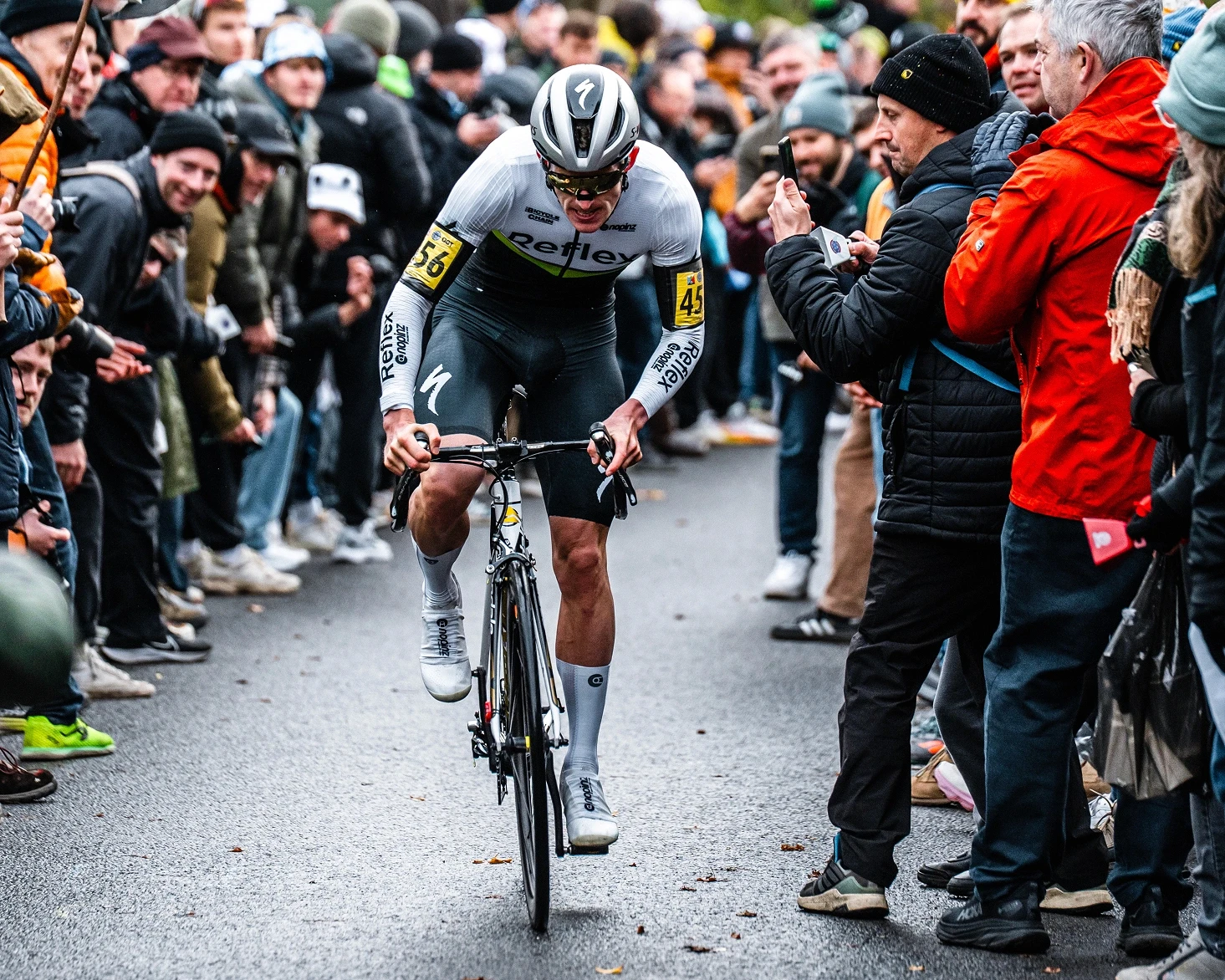
Build the specific strength to push the pedal: four five-minute efforts at 100-110% of CP in a big gear at 50-60 rpm, recruiting the fast-twitch fibres that endurance riding leaves dormant.
Thanh Vo
Coach

Neuromuscular
135 min
High
7 / 10
Intermediate
Indoors
INTERVAL BY INTERVAL
The workout
Written as a share of critical power, so it fits every rider. In Vekta it becomes your watts, with the W′ cost shown before you ride.
Thanh Vo
Why this workout
The breakdown
Inside the workout
The specific strength to push the pedal. Holding power while dropping the cadence raises the torque, the force per pedal stroke, and recruits the bigger fast-twitch fibres that endurance rides leave dormant. The nervous system learns to fire and coordinate under high load, and the same watts should cost less once the cadence returns to normal, especially at higher intensities.
Four five-minute efforts at 100–110% of CP in a big gear at 50–60 rpm, with five minutes between, set inside an endurance ride of over two hours. Thanh Vo uses the session more since reading Hebisz and Hebisz (2024), and the structure reflects it: the efforts are at threshold power, so the stimulus is the torque, not the intensity.
Vekta's torque tab is where this session is read: Nm/kg per effort, and the change across a block. The efforts are written against CP with a cadence band, so the head unit holds both.
Once a week in a strength or base phase, outdoors on a steady gradient or indoors with a big gear. Not on the day before a hard session.
Neuromuscular
Stimulus
Intermediate
Workout level
Indoors
Best ridden
Road,
Hill climb,
DISCIPLINE
WHAT YOU NEED
The stimulus
Neuromuscular, explained
Maximal, explosive efforts that train the nervous system and the top of the curve.
Very short efforts, five to sixty seconds, at 180% of critical power and above, with full recovery between them. Sprints, standing starts, torque efforts and short hill attacks live here. In Vekta's classification anything above 180% of CP is neuromuscular.
Peak power, Pmax, is one of the three numbers in the performance model, and it is the one most riders never train. It decides who wins the sprint, who makes the split when the road kicks, and it feeds the whole power curve: a higher top end makes every effort below it feel easier.
Quality over quantity. These are the only intervals where you should stop the set as soon as power drops, because the point is the maximum, not the fatigue. They are best placed early in the week or before a hard session, never after a long ride.
Track Pmax and the five-second peak over a block; both should move within weeks. Recovery between efforts is the lever: cut it and the session becomes anaerobic capacity work, which is a different adaptation.
The AI Workout Builder handles the nested structure, and the head unit shows the targets. Afterwards the peaks tab flags the best efforts, and the trophy view shows whether the session produced an all-time or eight-week best.




Free for coaches. Test with your whole roster during the trial.