Performance Science
Performance Science
Performance Science
12
12
12
min
min
min
Fabien Rabeau
Fabien Rabeau
From Data to Foresight: AI and Predictive Performance
From Data to Foresight: AI and Predictive Performance
The integration of artificial intelligence (AI) into elite sport represents a significant shift in the analysis and optimisation of performance. Historically confined to video or statistical analysis, AI now extends into strategic areas: training load modelling, physiological monitoring, injury prevention, and decision support during competition.
AI’s strength lies in its ability to process massive volumes of heterogeneous data (big data) in real time. It overcomes the limits of fragmented human analysis by producing predictive, actionable models, paving the way for a more proactive, data-driven approach to performance.
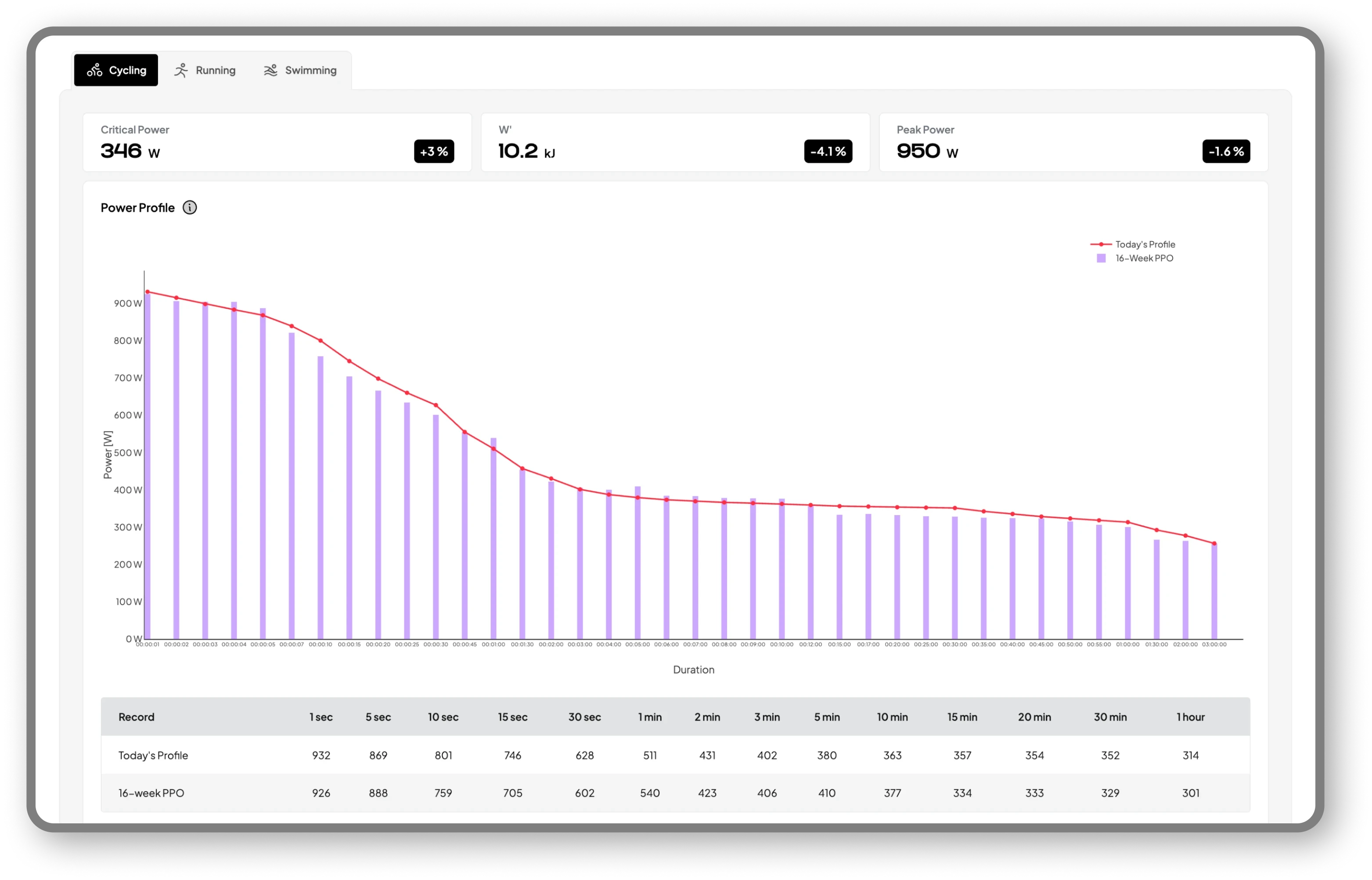
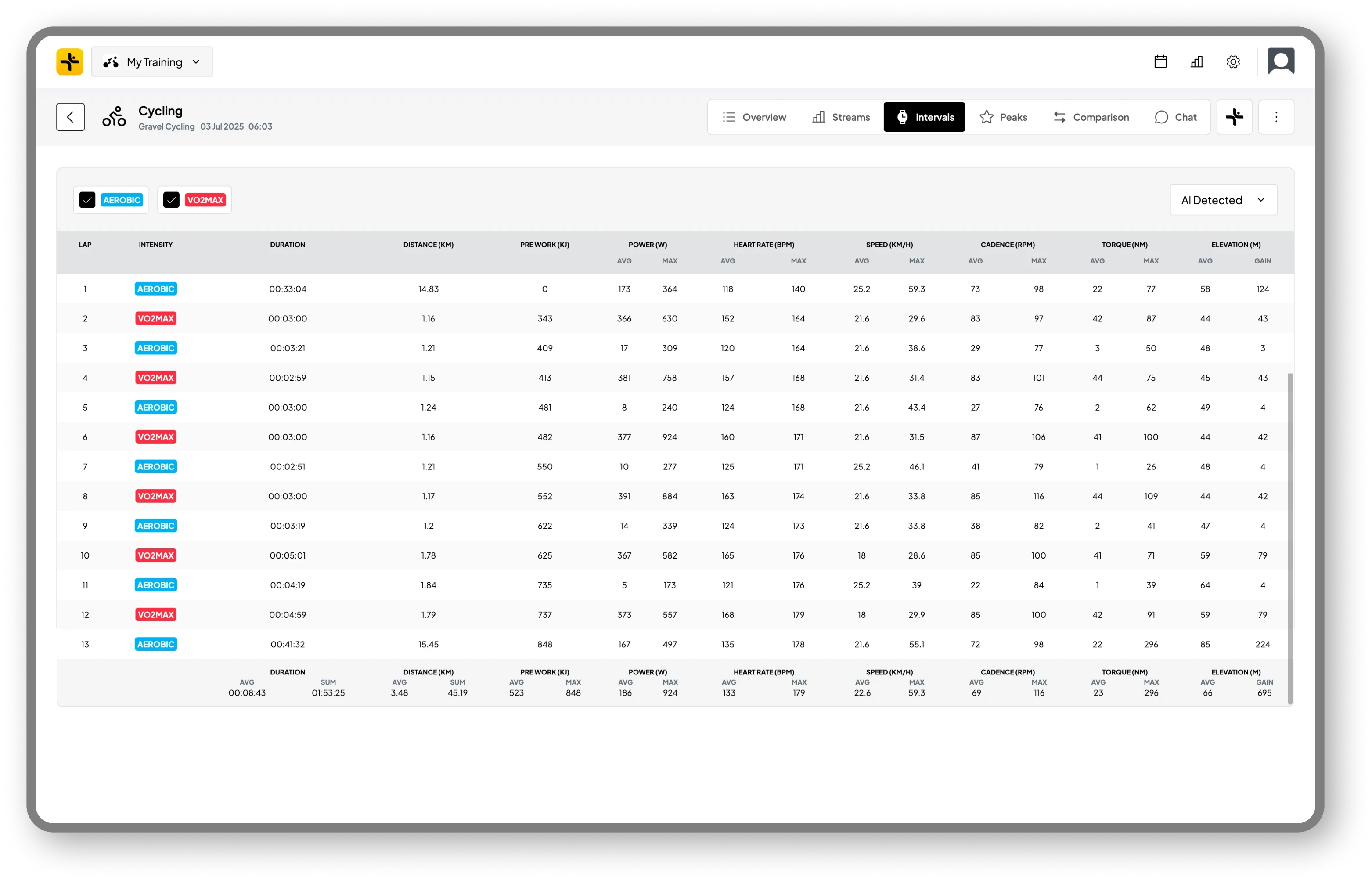
Vekta: A Data-Driven Approach to Endurance
In professional cycling, where performance margins are measured in watts or seconds, Vekta embodies this shift in practice. It brings together:
• Physiological data: power, cadence, heart rate, torque, heart rate variability (HRV), sleep quality;
• Biomechanical and environmental data: GPS, temperature, weather, elevation, race conditions;
• Contextual performance indicators: relative intensity, external constraints, individual responses.
This multi-source integration enables predictive models that connect an athlete’s condition to environmental factors and race demands. The approach moves from descriptive, after-the-fact analysis to prospective modelling of performance.
Operational Applications
Integrating AI into athlete monitoring and preparation turns raw data into true decision-making tools. In practice, this translates into three key applications:
1. Anticipating Critical Moments
Predictive models make it possible to simulate and identify, in advance, phases of a race where the athlete will face maximal physiological stress. These “critical zones” may correspond to:
• Prolonged climbs with high relative intensity,
• Race phases where wind, temperature, or altitude increase energy expenditure,
• Sequences of repeated efforts reducing recovery capacity.
AI estimates the probability of breakdown (physiological or energetic) and anticipates necessary adaptations: pacing, nutritional strategies, or tactical decisions during the race.
2. Optimising Training Load
One of AI’s greatest strengths is its ability to individualise training prescriptions around each athlete’s unique responses.
• Individualisation: adjusting volumes, intensities, and load distribution according to physiological profiles (e.g., aerobic vs. anaerobic capacities, load tolerance).
• Scenario modelling: simulating various strategies and predicting their impact on expected performance.
• Real-time adaptation: dynamic recalibration based on daily signals (HRV, sleep quality, perceived exertion, power data), enabling training to be adjusted “day by day” rather than via rigid planning.
This continuous adaptability reduces risks of overtraining while supporting more robust and sustainable progress.
3. Preventing Injuries and Underperformance
Prevention is essential in endurance sports, where accumulated training load poses constant risk. AI strengthens traditional monitoring by making it early and predictive.
• Early detection of weak signals: abnormal HRV variations, imbalance between internal and external load, unusual cardiac drift.
• Advanced biomechanics analysis: identifying micro-imbalances in technique (pedalling, posture) that may cause joint or muscular overloads.
• Cumulative monitoring: integrating physiological, mechanical, and environmental factors to anticipate risks of chronic fatigue, performance decline, or injury.
This proactive approach reduces injury incidence and helps avoid underperformance linked to inadequate recovery.
Global Impact
These applications strengthen the quality and confidence of decisions made by coaches and medical staff. Uncertainty, an inevitable part of preparation and competition, is reduced through stronger forecasting and projection capabilities.
Instead of reacting after the fact, coaches can now anticipate, adapt, and safeguard performance development before issues arise.
Towards Human–Machine Hybridisation
AI is not a replacement for human expertise, it’s an amplifier. It acts as a decision-support system, broadening coaches’ understanding and refining athletes’ strategies. The goal is not to remove the human element but to create genuine synergy between AI’s computational power and human adaptive intelligence.
AI as an Amplifier of Human Expertise
Coaches and athletes bring empirical experience and tactical insight that no algorithm can replicate. AI enhances that expertise by:
• Analysing thousands of variables simultaneously beyond human capacity,
• Identifying correlations invisible to direct observation,
• Proposing optimised training or competition scenarios.
The coach remains the final decision-maker, but now makes those choices using richer, more objective insights, reducing the risk of intuition-driven error.
The Human Factor Remains Decisive
Despite these advances, endurance performance still depends on human qualities that AI cannot replicate:
• Tactical intuition in unforeseen race situations (sudden attacks, mechanical incidents, changing weather),
• Psychological resilience against adversity, pain, or competitive pressure,
• Improvisational ability in contexts where no prior data can predict the best response.
These traits, rooted in human cognition and experience, remain the true differentiator in a sport where mental strength is often decisive.
A Competitiveness Challenge
In professional cycling, where margins of progress may be a few seconds on a mountain stage or a few watts in a time trial, failing to adopt AI poses a clear strategic risk:
• Loss of competitiveness against teams already exploiting these tools,
• Suboptimal decisions in load management, increasing risks of injury or underperformance,
• Innovation lag in an environment where science and technology continually redefine standards.
Rejecting AI doesn’t just mean overlooking a tool, it means accepting a structural disadvantage in the most competitive environments.
Towards a Sustainable Hybrid Model
The future of sporting performance lies not in machine-augmented athletes alone, nor in coaches guided purely by intuition, but in the hybrid partnership between human and machine. In this model:
• AI provides a macro, predictive, systemic vision of performance
• While humans retain decision-making, emotional management, and tactical creativity.
This partnership also raises important ethical and methodological questions: How far should decision-making be delegated to AI? How can models honour each athlete’s individuality? And how do we preserve the human essence that defines sport itself?
An Intensifying Hybridisation
In the years ahead, technological progress will drive an even deeper integration of AI into athletes’ daily routines. Expected developments include:
• Extreme personalisation: predictive models generating real-time strategies tailored to micro-physiological variations.
• Real-time biofeedback: embedded sensors delivering instant recommendations during competition (pacing, effort management, dynamic nutritional strategies, real-time behavioural analysis).
• Partial tactical automation: live modelling of race scenarios (breakaways, relay management, collective energy distribution) enabling sports directors to anticipate several moves ahead, acting as a digital “strategic assistant.”
In this near future, human–machine collaboration will move beyond diagnostics and prediction into real-time operational and decision-making roles, transforming how coaches prepare and how athletes manage effort on the fly.
Conclusion
Artificial intelligence is rapidly establishing itself as a central lever of predictive optimisation in endurance sports. By integrating physiological, biomechanics, and environmental data, it enables anticipation, individualisation, and more secure performance development.
The growing human–machine partnership is redefining how athletes prepare and compete. The key question is no longer whether AI should be part of elite sport, but how to integrate it, ethically, sustainably, and in ways that amplify rather than replace human expertise.
The integration of artificial intelligence (AI) into elite sport represents a significant shift in the analysis and optimisation of performance. Historically confined to video or statistical analysis, AI now extends into strategic areas: training load modelling, physiological monitoring, injury prevention, and decision support during competition.
AI’s strength lies in its ability to process massive volumes of heterogeneous data (big data) in real time. It overcomes the limits of fragmented human analysis by producing predictive, actionable models, paving the way for a more proactive, data-driven approach to performance.
Vekta: A Data-Driven Approach to Endurance
In professional cycling, where performance margins are measured in watts or seconds, Vekta embodies this shift in practice. It brings together:
• Physiological data: power, cadence, heart rate, torque, heart rate variability (HRV), sleep quality;
• Biomechanical and environmental data: GPS, temperature, weather, elevation, race conditions;
• Contextual performance indicators: relative intensity, external constraints, individual responses.
This multi-source integration enables predictive models that connect an athlete’s condition to environmental factors and race demands. The approach moves from descriptive, after-the-fact analysis to prospective modelling of performance.
Operational Applications
Integrating AI into athlete monitoring and preparation turns raw data into true decision-making tools. In practice, this translates into three key applications:
1. Anticipating Critical Moments
Predictive models make it possible to simulate and identify, in advance, phases of a race where the athlete will face maximal physiological stress. These “critical zones” may correspond to:
• Prolonged climbs with high relative intensity,
• Race phases where wind, temperature, or altitude increase energy expenditure,
• Sequences of repeated efforts reducing recovery capacity.
AI estimates the probability of breakdown (physiological or energetic) and anticipates necessary adaptations: pacing, nutritional strategies, or tactical decisions during the race.
2. Optimising Training Load
One of AI’s greatest strengths is its ability to individualise training prescriptions around each athlete’s unique responses.
• Individualisation: adjusting volumes, intensities, and load distribution according to physiological profiles (e.g., aerobic vs. anaerobic capacities, load tolerance).
• Scenario modelling: simulating various strategies and predicting their impact on expected performance.
• Real-time adaptation: dynamic recalibration based on daily signals (HRV, sleep quality, perceived exertion, power data), enabling training to be adjusted “day by day” rather than via rigid planning.
This continuous adaptability reduces risks of overtraining while supporting more robust and sustainable progress.
3. Preventing Injuries and Underperformance
Prevention is essential in endurance sports, where accumulated training load poses constant risk. AI strengthens traditional monitoring by making it early and predictive.
• Early detection of weak signals: abnormal HRV variations, imbalance between internal and external load, unusual cardiac drift.
• Advanced biomechanics analysis: identifying micro-imbalances in technique (pedalling, posture) that may cause joint or muscular overloads.
• Cumulative monitoring: integrating physiological, mechanical, and environmental factors to anticipate risks of chronic fatigue, performance decline, or injury.
This proactive approach reduces injury incidence and helps avoid underperformance linked to inadequate recovery.
Global Impact
These applications strengthen the quality and confidence of decisions made by coaches and medical staff. Uncertainty, an inevitable part of preparation and competition, is reduced through stronger forecasting and projection capabilities.
Instead of reacting after the fact, coaches can now anticipate, adapt, and safeguard performance development before issues arise.
Towards Human–Machine Hybridisation
AI is not a replacement for human expertise, it’s an amplifier. It acts as a decision-support system, broadening coaches’ understanding and refining athletes’ strategies. The goal is not to remove the human element but to create genuine synergy between AI’s computational power and human adaptive intelligence.
AI as an Amplifier of Human Expertise
Coaches and athletes bring empirical experience and tactical insight that no algorithm can replicate. AI enhances that expertise by:
• Analysing thousands of variables simultaneously beyond human capacity,
• Identifying correlations invisible to direct observation,
• Proposing optimised training or competition scenarios.
The coach remains the final decision-maker, but now makes those choices using richer, more objective insights, reducing the risk of intuition-driven error.
The Human Factor Remains Decisive
Despite these advances, endurance performance still depends on human qualities that AI cannot replicate:
• Tactical intuition in unforeseen race situations (sudden attacks, mechanical incidents, changing weather),
• Psychological resilience against adversity, pain, or competitive pressure,
• Improvisational ability in contexts where no prior data can predict the best response.
These traits, rooted in human cognition and experience, remain the true differentiator in a sport where mental strength is often decisive.
A Competitiveness Challenge
In professional cycling, where margins of progress may be a few seconds on a mountain stage or a few watts in a time trial, failing to adopt AI poses a clear strategic risk:
• Loss of competitiveness against teams already exploiting these tools,
• Suboptimal decisions in load management, increasing risks of injury or underperformance,
• Innovation lag in an environment where science and technology continually redefine standards.
Rejecting AI doesn’t just mean overlooking a tool, it means accepting a structural disadvantage in the most competitive environments.
Towards a Sustainable Hybrid Model
The future of sporting performance lies not in machine-augmented athletes alone, nor in coaches guided purely by intuition, but in the hybrid partnership between human and machine. In this model:
• AI provides a macro, predictive, systemic vision of performance
• While humans retain decision-making, emotional management, and tactical creativity.
This partnership also raises important ethical and methodological questions: How far should decision-making be delegated to AI? How can models honour each athlete’s individuality? And how do we preserve the human essence that defines sport itself?
An Intensifying Hybridisation
In the years ahead, technological progress will drive an even deeper integration of AI into athletes’ daily routines. Expected developments include:
• Extreme personalisation: predictive models generating real-time strategies tailored to micro-physiological variations.
• Real-time biofeedback: embedded sensors delivering instant recommendations during competition (pacing, effort management, dynamic nutritional strategies, real-time behavioural analysis).
• Partial tactical automation: live modelling of race scenarios (breakaways, relay management, collective energy distribution) enabling sports directors to anticipate several moves ahead, acting as a digital “strategic assistant.”
In this near future, human–machine collaboration will move beyond diagnostics and prediction into real-time operational and decision-making roles, transforming how coaches prepare and how athletes manage effort on the fly.
Conclusion
Artificial intelligence is rapidly establishing itself as a central lever of predictive optimisation in endurance sports. By integrating physiological, biomechanics, and environmental data, it enables anticipation, individualisation, and more secure performance development.
The growing human–machine partnership is redefining how athletes prepare and compete. The key question is no longer whether AI should be part of elite sport, but how to integrate it, ethically, sustainably, and in ways that amplify rather than replace human expertise.

Try Vekta free
Put the theory to work
Vekta is where coaches and athletes plan the work, see the numbers, and track what actually changes.
Try Vekta free
Put the theory to work
Vekta is where coaches and athletes plan the work, see the numbers, and track what actually changes.
Frequently asked questions
Frequently asked questions

Head of Performance | ARKEA-B&B HOTELS
Exercise Intensity and Training Load: Fabien Rabeau
Heat Training for Cyclists: The Protocol and the Adaptations
